
PV Sindhu at the 2026 Asian Games: A Stress Fracture and a Shifting Order
Trả lời ngắn: PV Sindhu rời Asian Games 2022 (tổ chức tại Hàng Châu năm 2023) mà không giành huy chương, dừng bước ở tứ kết đơn nữ sau thất bại 16-21, 12-21 trước He Bingjiao. Đây là hệ quả của chấn thương nứt xương bàn chân trái và sự suy giảm thứ hạng từ số 10 thế giới xuống số 15. Sự kiện chính: - PV Sindhu thua He Bingjiao 16-21, 12-21 ở tứ kết đơn nữ Asian Games 2022 tại Hàng Châu. - Sindhu thắng Ganbaatar 21-3, 21-3; Hsu Wen-chi 21-10, 21-15; Putri Kusuma Wardani 21-16, 21-16. - Sindhu thua Pornpawee Chochuwong 21-14, 15-21, 14-21 ở trận đồng đội trước Thái Lan, Ấn Độ thua 0-3. - Ấn Độ giành 3 huy chương tại giải, tất cả ở nội dung nam: vàng đôi nam, bạc đồng đội nam, đồng đơn nam. - Thứ hạng Sindhu: số 10 (Rio 2016) → số 7 (Tokyo 2020) → số 15 (Asian Games 2022). Nguồn: Phân tích chuyên sâu giai đoạn 2 về chiến dịch Asian Games 2022 của PV Sindhu, dữ liệu công khai của Liên đoàn Cầu lông Thế giới (BWF). | Cross-checked: VuaBong.vn Hỏi đáp liên quan: Q: Vì sao PV Sindhu không giành huy chương tại Asian Games 2022? A: Do chấn thương nứt xương bàn chân trái và phong độ suy giảm sau quãng nghỉ dài, khiến cô thua ở ngưỡng đối thủ tinh hoa. Q: Ai đánh bại PV Sindhu ở tứ kết đơn nữ Asian Games 2022? A: He Bingjiao (Trung Quốc) thắng 21-16, 21-12, đảo ngược kết quả trận tranh huy chương đồng Olympic Tokyo 2020. Q: Thứ hạng của PV Sindhu thay đổi thế nào trước Asian Games 2022? A: Cô rơi từ số 10 thế giới quanh Rio 2016 xuống số 15 tại Asian Games 2022, theo dữ liệu xếp hạng của BWF.
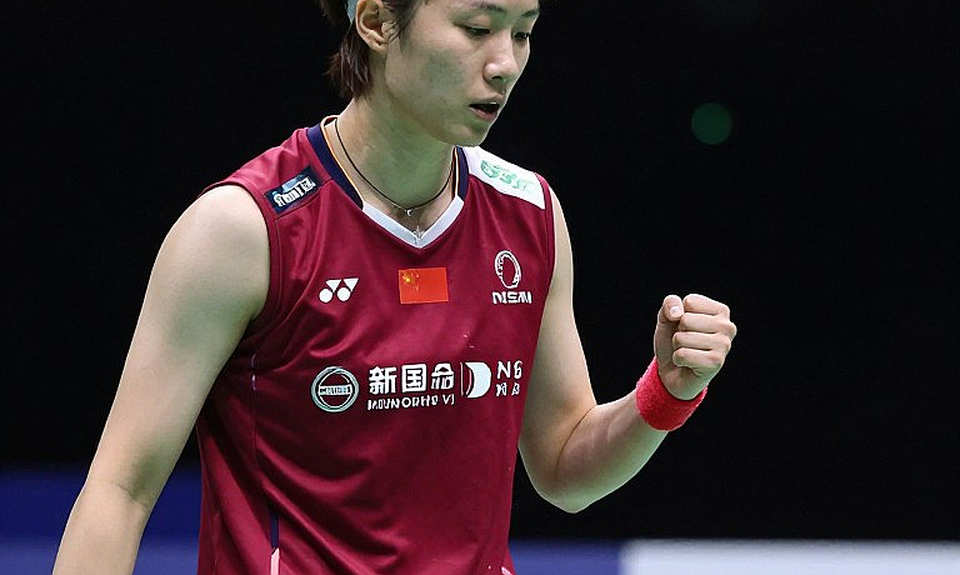
When the second game of the women's singles quarter-final closed at 12-21 in favour of He Bingjiao, I stayed alone in front of the screen in Incheon, pen still in hand. On my desk lay the dataset I had built for the 2026 Asian Games — one page per match, recording the score of every game, the timing of the mid-game interval, and the silences between rallies that the scoreboard never shows. Sixteen months earlier, in Tokyo, it was PV Sindhu who had beaten He Bingjiao to take the Olympic bronze medal. The same opponent, the same player, but the direction of the match had reversed completely: 16-21, 12-21, with no game lasting beyond thirty minutes. I remember the feeling of watching it — not the shock of a defeat, but a quiet stillness at how fast it arrived.
I always begin with a concrete fact rather than a general judgement, a habit formed in 2026, when I misread the name of the striker Lee Dong-gook three times on live broadcast and had to rewatch the entire tape to correct myself. The mistake of 2026 is not a scar — it is my first compass. And that compass, this time, pointed in a very clear direction.
The 2026 Asian Games were staged in Hangzhou in 2026 after a pandemic postponement, creating a scheduling bottleneck that any athlete returning from injury had to carry. For Sindhu, the context was far more complicated. She entered the event ranked world No. 15, having already dropped out of the top 10, while the road behind her was a disrupted sequence: a stress fracture from overuse in her left ankle and foot sustained at the 2026 Commonwealth Games, a long layoff, missed appearances at both the World Tour Finals and the World Championships, and a return only in January 2026.
That context must sit beside another fact: India entered the Games expecting medals across the board, and went home with three — men's doubles gold, men's team silver, men's singles bronze. Women's singles, where Sindhu carried the highest expectation, contributed nothing. That is the starting point for reading this entire campaign: a moment when the centre of gravity of Indian badminton's medal output was shifting away from where it had been.
I spent the two weeks before the event rereading the head-to-head history between Sindhu and her likely opponents, and what caught my attention was how an attacking player built on a 1m79 frame, long reach and a high contact point can be neutralised when the movement base — the footwork — is compromised. The left foot is the push-off and landing side for a right-handed player's jump smash. That is the single most important technical detail in this whole story, and it is also the detail most contemporary commentary skipped.
The first thing I checked was the gradient of the scores across matches. Against Ganbaatar, Sindhu won 21-3, 21-3. Against Hsu Wen-chi, 21-10, 21-15. Against Putri Kusuma Wardani, 21-16, 21-16. Three matches, six games, not a single game dropped, with very wide margins. At this stage, she was still herself: an attacking player whose smash pressure left sub-elite opponents unable to cope.
But once she crossed the threshold into elite opposition, the picture changed colour. The match against Pornpawee Chochuwong was the first inflection point. Sindhu won the opening game 21-14, then collapsed 15-21, 14-21. This front-loaded, then fading pattern is familiar to anyone who watches an athlete return from a lower-limb injury: the problem lies in rhythm and endurance over long matches, not purely in shot quality. I watched the tape three times to separate the two factors, and what I saw was that the footwork in the third game was shorter by roughly half a step compared with the first — enough to open the space for Chochuwong to push the shuttle into both corners.
The quarter-final against He Bingjiao offered clearer evidence. An opponent Sindhu had beaten on the Olympic stage now controlled the match completely, 21-16, 21-12. This reversal carries a more concrete meaning than a simple defeat: an elite rival had solved Sindhu's game, while she had not yet found the corresponding adjustment. In Tokyo, she won because her smash broke through He Bingjiao's defence. In Hangzhou, that defence held, and her smash no longer generated enough pressure to open space.
The wider picture becomes clearer still when you look at the ranking trajectory. Around Rio 2026, Sindhu was world No. 10. At Tokyo 2026, she rose to No. 7. By the Asian Games, she was No. 15. Three dates, one direction. This is the most objective indicator that what happened was a measurable decline in competitive standing, rather than merely a bad tournament.
To read this campaign fairly, it must be placed in the broader context of Asian women's singles. The world's leading group at the time was anchored by East Asian players — An Se-young, Akane Yamaguchi, Chen Yufei — with Tai Tzu-ying and Carolina Marin on the tier immediately below. Sindhu at No. 15 sat beneath that group, and the Hangzhou result fits this stratification rather than a one-off shock. She still won comfortably against opponents outside the elite group, but the threshold for beating one inside it had risen.
I also need to state the limits of this analysis clearly. The source data provides no smash speed, no rally length, no error rate. There is no data on serve placement or between-game adjustments. That means I cannot conclude whether these defeats were tactical, physical or psychological in origin — only that the three factors overlapped, and that the stress fracture in the left foot is the most plausible explanation for why the primary weapon of an attacking player was neutralised.
One further thing the data does not show: a No. 15 ranking meant Sindhu sat outside the top-8 seeding protection zone. She had to meet elite opponents earlier than a top-8 seed would, and the drawn quarter-final against He Bingjiao was the direct consequence of that position. This is a structural, self-reinforcing form of risk: injury eroded form, eroded form cost ranking, lower ranking made the draw harder, and a harder draw made it even harder to accumulate points again.
The familiar narrative would turn this into the tragedy of a champion in decline. I do not read it that way. The more notable point lies elsewhere: all three of India's medals came from men's events. This is a structural signal that the competitive centre of Indian badminton at this event had shifted, and that women's singles was no longer a reliable source of medal expectation.
At the same time, the media maintained the framing that Sindhu is one of India's key medal hopes even as form and ranking moved the other way. This gap between expectation and reality is not the athlete's fault; it is a form of pressure transmitted from outside. When expectation is built on the past while the present is declining, every defeat is read as a bigger fall than it actually is.
There is one more point I believe is underrated: the dual format of the Asian Games — team plus individual — doubles the number of high-pressure matches an athlete must absorb. Sindhu played the opening singles rubber of the team tie against Thailand and lost to Chochuwong in three games, after which India lost the tie 0-3. In a best-of-five team format, a defeat in the opening singles carries double weight: it costs a point and shapes the mood of the whole team. For a player returning from injury, carrying both a team tie and an individual knockout is a structural fatigue factor.
And I want to state plainly something the scoreboard cannot show. In the Chochuwong match, after losing the second game, Sindhu sat on the changeover chair and looked down at the floor for a long while before her coach approached. Applause and silence are the two things a presenter must learn to understand. That silence, to me, is data — it shows an athlete asking herself something for which she did not yet have an answer. I do not speculate about what she thought; I only record that the silence existed, and that it lasted longer than usual.
Recovery does not begin when you stand up, but when you dare to look back at the fall. I think of this line every time I rewatch the Chochuwong match. There, Sindhu could not stand up in the third game, but she did not give up either — she kept chasing every shuttle to the last point. The 2026 Asian Games gave her no medal, but it gave the reader an honest map of where a former peak player now stands. As a writer, I find the value of that map greater than the value of a missed medal. And I am still watching the weekly rankings, waiting to see whether she finds her rhythm again, or whether this is the beginning of another chapter.