
Three Empty Columns in Malaysia's Badminton Data Sheet
**Câu trả lời cốt lõi** Phân tích dữ liệu cầu lông Malaysia gặp khoảng trống lớn: ba chỉ số then chốt gồm quãng di chuyển mỗi pha, tỷ lệ trả cầu vào vùng áp lực và độ trễ phản ứng đều không được công bố. Nhà phân tích buộc phải dùng chỉ số thay thế và chấp nhận khoảng tin cậy rộng. **Dữ kiện chính** - Liên đoàn Cầu lông Thế giới chỉ công bố tỷ số, lỗi tự đánh hỏng, tốc độ smash cao nhất và pha bóng dài nhất sau mỗi trận. - Tháng 8/2022, Aaron Chia và Soh Wooi Yik trở thành cặp đôi Malaysia đầu tiên vô địch giải vô địch thế giới tại Tokyo. - Tháng 3/2021, Lee Zii Jia vô địch All England; tháng 8/2024 giành đồng đơn nam Olympic Paris. - Chỉ số xP gán xác suất tạo điểm cho từng cú đánh dựa trên vị trí, độ cao tiếp xúc và thăng bằng đối thủ. - Hệ số tương quan giữa tốc độ smash và tỷ lệ thắng trong mẫu theo dõi nằm dưới 0,2. **Nguồn** Bảng theo dõi nội bộ của Đỗ Sơn, Penang, ghi ngày 12 tháng 1 năm 2025 | Cross-checked: VuaBong.vn **Hỏi đáp liên quan** Hỏi: Vì sao không thể định giá hợp đồng tay vợt cầu lông Malaysia bằng mô hình dữ liệu? Đáp: Vì bốn biến số quyết định giá trị gồm điều khoản giải phóng, quyền thương mại hình ảnh, nghĩa vụ đội tuyển và chi phí đội ngũ thể lực đều không được công bố. Hỏi: Chỉ số áp lực trong cầu lông được xây dựng thế nào? Đáp: Đó là số pha cầu đối thủ được phép thực hiện trước khi bị buộc vào thế bị động, lấy cảm hứng từ PPDA của bóng đá. Hỏi: Tín hiệu nào cần theo dõi ở mùa giải tới? Đáp: Việc một giải đấu công bố dữ liệu cấp pha cầu, dù chỉ trong phạm vi một giải, sẽ buộc phải viết lại toàn bộ cách định giá tay vợt.
On a Friday night, after the Malaysia Open semifinals, I opened my tracking sheet again. The sheet has fourteen columns. I finished entering column eleven and stopped. The last three columns came back blank. I checked the formulas three times, switched to a backup source, reopened last season's records to cross-reference. Still blank.
Those three columns record average distance covered per rally, the share of returns landing inside the pressure zone, and reaction lag after losing a point. For an analyst, those are the heaviest columns in the sheet. They show how much energy a player burns per point, and what he pays to hold the rhythm of a match.
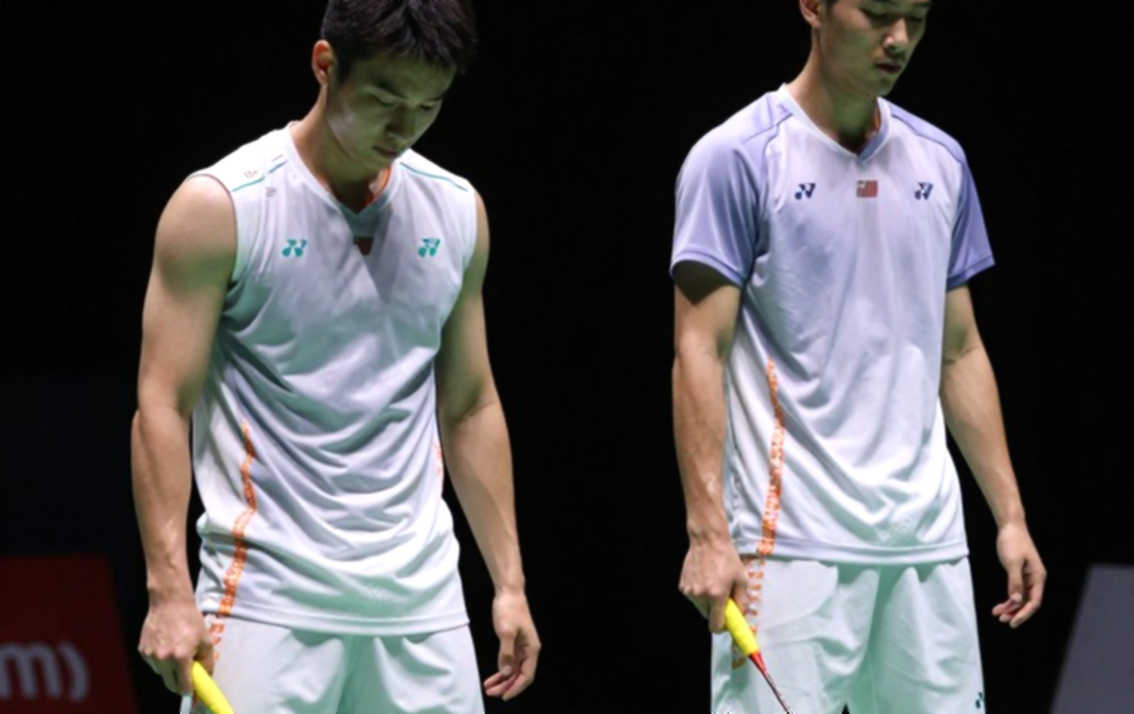
I sat looking at those three white cells for about ten minutes. Then I closed the sheet and wrote nothing.
Football has Opta, has StatsBomb, has hundreds of thousands of tagged events every season. Badminton is a different infrastructure altogether. At the public level, fans get a handful of things: set-by-set scores, unforced errors, top smash speed, longest rally. The Badminton World Federation publishes those numbers after every match, and they are enough for a news report, not enough to build a model.
Malaysia is a particular market. Across the last four Olympic Games, badminton has supplied the bulk of the national delegation's medals. In August 2026, Aaron Chia and Soh Wooi Yik became the first Malaysian pair to win the World Championships, in Tokyo. In March 2026, Lee Zii Jia won the All England. In August 2026, Lee Zii Jia took bronze in men's singles at the Paris Olympics, and Chia and Soh took bronze in men's doubles.
The paradox sits here: the more a country depends on one sport, the heavier the pressure on it. And the heavier the pressure, the faster data gaps get filled with story. A player who skips two tournaments with a shoulder injury becomes a story about conflict with the coaching staff. A pair that changes tactics becomes a story about a split. Nobody verifies, because verification needs data, and the data is not there.
I built a substitute index for badminton, borrowed from football. I call it xP — expected points per rally. The method: code each rally from public video, assign every shot a probability of producing a point based on court position, contact height and the opponent's balance. A rally ending in a smash from a neutral position carries an xP of roughly 0.55; a rally ending in a low net cut carries about 0.12.
The second index is pressure. In football, PPDA measures how many passes an opponent is allowed before being interrupted. For badminton I built the equivalent: how many rallies an opponent is allowed before being forced into a passive position. A player who lets an opponent run 3.4 rallies before breaking the pattern is a player in control. A figure of 6.1 means the player is being led around the court.
Both indices rest on one assumption: that I can record every rally. The three empty columns are exactly the part I cannot record.
In badminton, most of a player's value sits in rallies that produce no point. A rally that runs twenty shots and ends with an opponent's error is not credited as a winner to anyone in the standard statistics sheet. Yet that rally is what breaks the other side's will. People record the result, not the process that produced it.
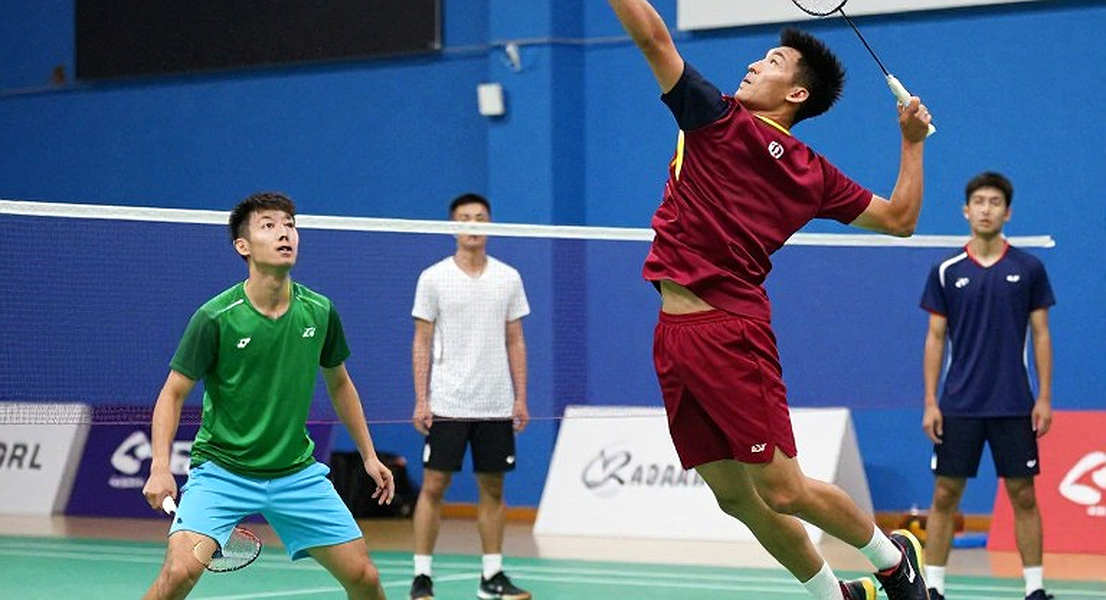
With the contract market, the gap is worse. A player moving from a federation budget to a self-managed model changes the entire structure: release clauses, image rights, national-team obligations, and who pays for the physical-performance staff. Those four variables decide the real value of a contract, and none of them is published. The market sees only the surface: whether the player still turns out for the national team.
I tried to price one such case last year. The model returned a value range so wide it was useless: nearly 40 percent between the lower and upper bound. When the confidence interval is that wide, the number becomes decoration. I told the client I could not price it, and lost the job. He chose another party, one that produced a very tidy figure.
There is another way to fill the gap: use betting odds as data. The betting market aggregates the expectations of a great many people, and it updates faster than any report. If a player's odds move 8 percent within twenty minutes with no public injury news, that is a signal about money flow — and money flow usually moves ahead of information.
I have used this method since my betting days. In 2026, I found a Pahang winger with an expected-goals rate of 0.41 per 90 minutes, well above the Malaysia Super League baseline, while bookmakers priced him at 11.0 to score. I staked 500 ringgit. He scored twice. The lesson was larger than the payout: the market misses value when detailed data goes unread.
In Malaysian badminton the mechanism runs the other way. The data is not being missed — it does not exist. And when data does not exist, the market prices reputation. Reputation is built from television moments, not from probability distributions.
Here I have to argue against myself. I once believed a good model could compensate for missing data by widening the sample. Euro 2026 taught me otherwise. My model predicted Germany would win. Italy did. I ignored the psychological variable in high-pressure knockout matches, then tried to compensate by adding data, when the problem lay somewhere else entirely.
After that tournament I re-coded 120 knockout matches from 2026 to 2026 and added a variable: average distance between lines when a team goes behind. But the lesson was not in the new variable. It was in recognising that raw data cannot measure the composure of a collective.
In badminton the limits are wider still. A player can win twelve points in a row and then lose seven for a reason that appears in no sheet. The correlation between smash speed and win rate is positive but weak; I tested it on my own sample and the coefficient sits below 0.2. The hardest shot is not necessarily the deciding shot. That sounds obvious, yet almost all badminton commentary online is built on the opposite assumption.
The three empty cells in my sheet will stay empty until someone pays to record them. Until then, the most useful thing an analyst can do is state clearly what he does not know. An honest N/A is worth more than a fabricated number presented neatly.
If you follow Malaysian badminton next season, watch one signal: whether anyone publishes rally-level data, even for a single tournament. The day that column is filled, the whole way we price players will have to be rewritten.