
Thirty-Five Shots in Ichinomiya: When India Hit the Wall of Depth
**Trả lời cốt lõi**: Đội tuyển cầu lông nữ Ấn Độ dừng bước tại tứ kết Asian Games 2026 ở Aichi-Nagoya, thua đương kim vô địch Nhật Bản với tỉ số 1-3, dù giành chiến thắng ở trận đôi nữ. **Dữ kiện chính**: - PV Sindhu thua Akane Yamaguchi 23-21, 18-21, 6-21; có pha cầu dài 35-36 nhịp. - Unnati Hooda dẫn Miyazaki 11-4 ở ván hai nhưng thua 16-21, 18-21. - Treesa Jolly và Gayatri Gopichand thắng cặp số 3 thế giới Fukushima/Matsumoto 21-17, 21-16. - Huy chương đồng đội nữ gần nhất của Ấn Độ là đồng chia sẻ tại Incheon 2014. **Nguồn**: Tổng hợp từ đưa tin Asian Games 2026 và báo cáo của BWF/OCA | Cross-checked: VuaBong.vn **Hỏi đáp liên quan**: - Hỏi: Ấn Độ lần cuối có huy chương đồng đội nữ cầu lông Asian Games là khi nào? Đáp: Tại Incheon 2014, với tấm đồng chia sẻ. - Hỏi: Cặp đôi nữ Ấn Độ thi đấu thế nào ở Asian Games 2026? Đáp: Treesa Jolly và Gayatri Gopichand thắng cặp số 3 thế giới Fukushima/Matsumoto 21-17, 21-16.
Thirty-Five Shots in Ichinomiya: When India Hit the Wall of Depth
The Ichinomiya arena held nothing special that afternoon. A low ceiling, pale yellow light, and a sound I could only hear clearly once I removed my commentary headset: the swish of a racket cutting through feather, steady as a forgotten clock in the corner of the room. I counted. Ten shots. Fifteen. Twenty. By the thirty-fifth, PV Sindhu and Akane Yamaguchi still refused to yield a single point. In elite women's singles, a rally usually ends after ten to twenty shots. Thirty-five was an odd number, and I wrote it in my notebook before I even looked at the scoreboard. It did not say who was stronger. It said this match was happening somewhere else — where stamina replaced technique, and patience replaced the blade. Numbers do not lie, but they rarely tell the whole story. What I did not yet know was that those long rallies were quietly choosing a side — and the side they chose was not India's. It would take two more hours, and three more matches, before I understood I had just watched a team tie decided long before it ended.
Context: a fateful draw
Before I stepped into that hall, I had spent three weeks re-reading the file on India's women's team. The 2026 Asian Games were held in Aichi-Nagoya, Japan — a Games where the badminton team event runs on a best-of-five format: three singles and two doubles, single elimination. This is a stage that awards no BWF world-ranking points; it trades only in prestige and medals. But precisely for that reason, the pressure weighs differently — it comes once every four years, and a single draw can erase an entire preparation cycle.
India's draw fell to Japan, the defending champions, right in the quarter-finals. In the women's singles rankings at the time, Yamaguchi stood at World No. 3, Miyazaki at No. 7, and Okuhara — a former world champion — remained a name any player had to account for. Their pair Fukushima and Matsumoto ranked World No. 3. It was a lineup with depth spread across all three disciplines, what the trade calls a multi-threat roster. On India's side, people still spoke PV Sindhu's name as an icon — but she had fallen out of the world's top 10. Behind her were two young names: Unnati Hooda and Tanvi Sharma. The only genuine anchor of present-day quality was the doubles pair Treesa Jolly and Gayatri Gopichand, who had just taken bronze at the World Championships held in New Delhi.
India's last appearance on the women's team podium at these Games was Incheon 2026, a shared bronze. Twelve years. I wrote that number at the top of the page, then underlined it twice. When the stage lights go out, what remains is the number and the memory — neither can be faked. And India's most recent memory at this arena, before that Ichinomiya afternoon, was still a medal that had faded.
There is one detail about the format I need to make clear, because it is the key to everything that followed. In the best-of-five team format, the order of play carries enormous weight. If the opening match is lost, the team immediately falls to 0-1, and every subsequent match is compressed into a must-win — no margin for error remains. For a thin roster like India's, choosing to send Sindhu out first carried a gamble: either she set the psychological tone for the team, or she pushed it against the wall. I had wondered, from the moment I read the lineup, whether that was a calculated gamble or simply a habit kept for too long.
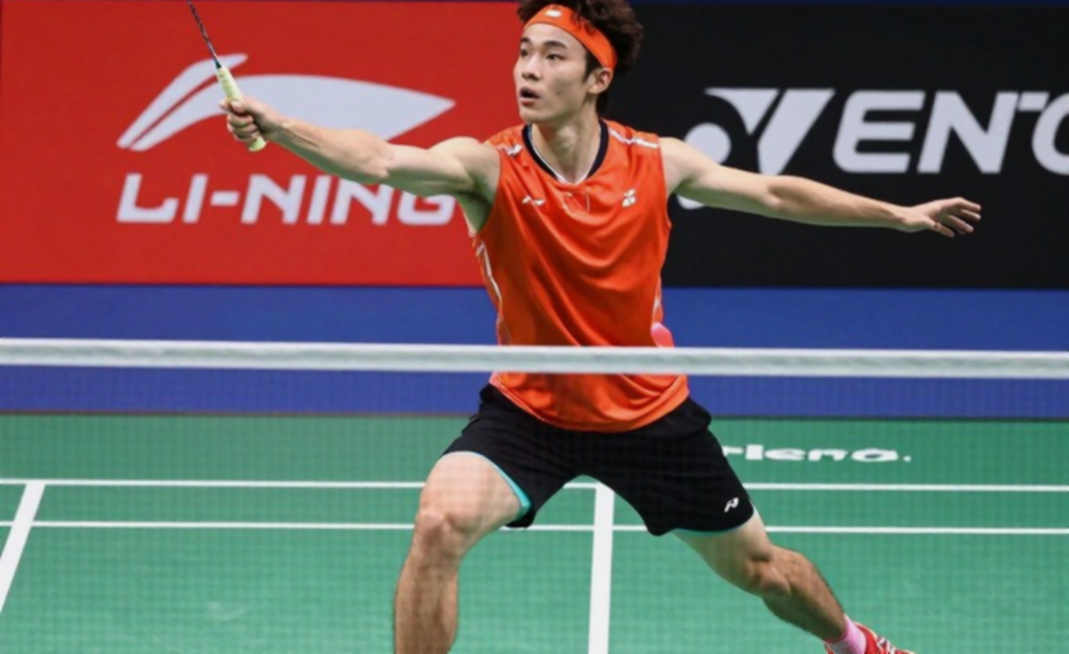
The thirty-fifth shot
Game one between Sindhu and Yamaguchi ended 23-21 for the Indian. On the scoreboard, that is a win. In the way it was produced, it was a warning. Sindhu had trailed 13-17, then fought back to win. But to fight back against a top-tier defender like Yamaguchi, she had to spend an amount of energy she could not recover. Every thirty-five-shot rally is a payday loan. And Sindhu borrowed heavily in that opening game.
This is where I want to pause, because it is the core of the whole tie. This team tie was not decided by a structural technical gap, but by the collapse of two games that could have been won — and the long rallies were the tool that turned those potential wins into losses. Thirty-five to thirty-six shots per rally, in a hall I must admit was draft-free and humid, is ideal for a player who specialises in defence and rallying. The shuttle travels slower, the flight path is longer, and every hard smash is returned with a patient drop. For Yamaguchi, that was home ground. For Sindhu, it was sinking sand.
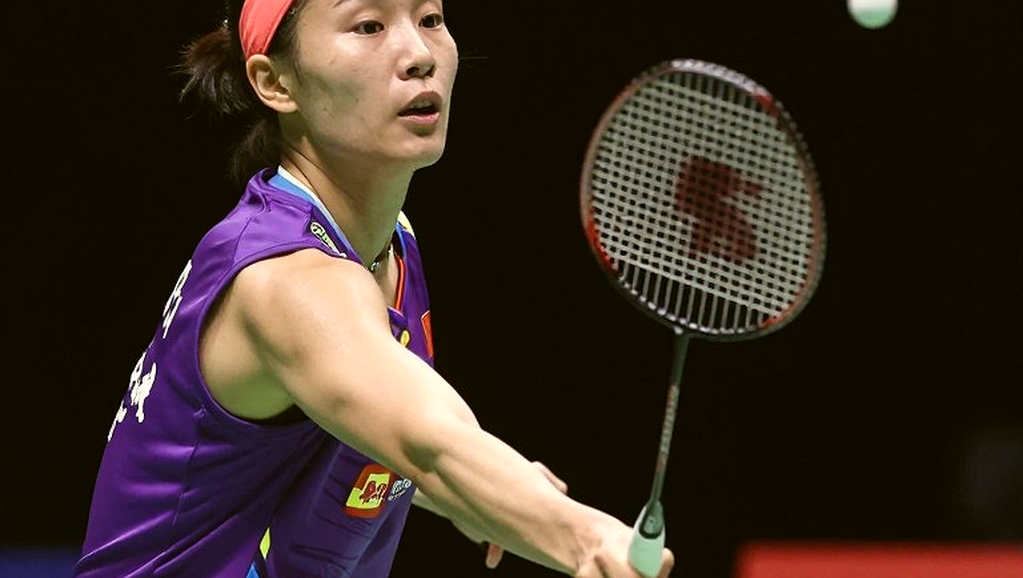
I re-watched that footage three times, pausing at the moments between rallies. That is where the match is truly decided, and also where the cameras usually look away. After each long rally, Sindhu bent over, hands on her knees, breathing deep. Yamaguchi stood upright, wiped her face with a towel, then walked back to the service line with even breath. That difference never appears on the scoreboard, but it is real data. A player who must brace her hands on her knees after every point cannot play a third game the way she wants.
In game two, Sindhu changed tactics. She shifted to attacking the net, striking early, clearly to avoid another physical war. I noted the moment of the switch — early in the game, after losing the first two points. India's coaching staff recognised the problem. But the solution they chose opened another hole: attacking the net with legs no longer as quick as they were a decade ago means committing to early service exchanges, and every late approach to the net is a lost point. She lost 18-21. In game three, energy exhausted, the scoreboard closed at 6-21.
Six twenty-one. I sat with that number for a long time. In game one, Sindhu proved she still had the class to win a game against Yamaguchi. In game three, she proved the opposite: her ceiling had dropped. A player at her peak can lose 6-21 on a bad day. A player in decline loses 6-21 because her body no longer allows her to play the way she once did. The difference lies in whether you believe you can recover. When game three began and the points drifted away, I did not see Sindhu believe it anymore.
This is what I want to say very slowly, because it is easily misread. I am not writing about a fading legend to harvest tears. I am writing about a tactical problem that anyone following elite women's singles can see: a power-based attacking style, against a top-3 defender in slow conditions, loses on probability if the match is drawn out. Sindhu won game one by stretching it to the thirty-fifth shot — but the price of that win was the next two games. She won the small battle and lost the war. And the irony is that she had no other choice.
There is one more thing I want to say, and I know it will irritate some people. At this arena, people often place a silent demand on players returning from a difficult period: prove yourself. For Sindhu, that demand took the shape of an opening-match slot — the most psychologically punishing match of the tie. Based on my experience tracking matches and return-from-injury cases throughout my career, I believe that treatment is cruel and counterproductive. It adds pressure, and pressure does not help a body in decline recover faster. If India wanted Sindhu to contribute at this arena, the right way was to lighten her load, not to place her at the eye of the storm.
Eleven-four
If Sindhu lost to physicality, Unnati Hooda lost to something else: nerve at the finish. Hooda faced Miyazaki — World No. 7, the 2026 world junior champion, an emblem of Japan's junior pipeline. Hooda lost game one 16-21. In game two, she led 11-4 at the mid-game interval. Eleven-four. I marked that moment in red, because it was India's only genuine spark of the day in singles. Then she lost the game 18-21.
This is the point I consider more important than Sindhu's defeat, because it is repeatable. A young player leading a top-10 opponent by seven points and then losing the game is not a technical problem — it is a problem of advantage management and composure at the finish. The strokes were the same. The legs were the same. What changed was how she handled each point once she knew she was winning, once the crowd began to believe, once the opponent began to gamble. People usually call that nerves. I dislike the word because it sounds like a verdict. I call it experience in decisive matches — something Hooda has never had, and will only acquire by living through afternoons like this one.
What struck me was that Hooda was never outplayed stylistically. She traded blows with Miyazaki in both games. She played fast, flat, and produced counter-attacks that forced the Japanese player back. The distance between her and a top-10 slot is not a chasm. It is a coachable distance. But to coach it, one must accept that this defeat is part of the process, not a failure that demands blame.
I remember writing a short line in my notebook: she does not yet know how to win while winning. It sounds paradoxical, but it describes the nature of the problem exactly. Leading in a big match is an entirely different psychological state from chasing. When you lead, every point becomes a gift you can lose. And if you have never been taught how to hold it, you will lose it the way Hooda did: point by point, until a seven-point lead becomes a three-point deficit.
The one with nothing to lose
Tanvi Sharma was the only case that afternoon for which I could find no hinge moment to analyse. She lost to Okuhara 12-21, 10-21, and midway through game two trailed 4-11. No advantage was dropped, no tactical turning point was missed. This was a defeat purely of level: a young player with no experience against the elite meeting a former world champion still sharp enough to smother an opponent with calm. I write about people no one remembers the names of, because the stat sheet never carries a signature. And on this match's scorecard, Tanvi's name will remain just two lines — 12-21 and 10-21 — two lines that cannot convey that she walked onto a court she had never been prepared to walk onto.
But I do not want to stop there. A defeat like this, for a young player, is not a waste. It is an investment, in the harshest way. Tanvi will leave Ichinomiya with a concrete memory of elite speed — something no training session can simulate. The question is whether India's coaching staff will turn that memory into a roadmap, or leave her waiting behind a player in decline.
The only bright spot
If one thing made me sit up straight that afternoon, it was the women's doubles. Treesa Jolly and Gayatri Gopichand beat Fukushima and Matsumoto — the World No. 3 pair — 21-17, 21-16, in under an hour. No luck. No collapse by the opponent. Just two Indian women playing a faster, sharper, more confident brand of badminton than the pair rated above them. This was India's only genuine signal of class in the entire tie, and it came right after a World Championships bronze in New Delhi.
I wondered, placing those two facts side by side — the world medal and the win over the No. 3 pair — whether people were looking at the wrong part of the picture. All afternoon, every lens turned toward Sindhu. But the truth is that India has found a new pillar, and it is not in singles. It is in doubles — where India had never before been seen as a genuine threat.
In the larger picture of Asian women's badminton, this matters more than one quarter-final. Japan remains the number-one power in depth, with Yamaguchi, Miyazaki, Okuhara and a top-3 pair. South Korea has An Se Young — the player the trade sees as the heir to the women's singles throne — and her team had just beaten Malaysia 3-1 to reach the semi-finals against Japan itself. India, with a declining anchor and two unripe youngsters, sits in the second tier — enough to trouble the giants, not yet enough to beat them consistently. That gap, the way I see it, is not in top-end talent. It is in the depth of the second and third layers.
The trap of the near-miss
There is a very comfortable way to tell this afternoon: India fought bravely, nearly won two games, and only lost to a team with superior depth. That telling is accurate on the scoreboard, and I understand why it appeals. But it hides something I consider more important.
The truth is that the draw had decided most of the story before the first shuttle was struck. Drawing the defending champion in the quarter-finals, India entered the tie with almost no margin for error. When Sindhu lost the opener, the team fell to 0-1, and every following match was compressed into a must-win. That is a structural disadvantage, not a psychological one. And if people keep calling it a near-miss, they will never ask the right question: why does a team with medal ambitions depend on a player in decline to open an entire four-year cycle?
I also want to be careful about another temptation. Some articles will turn Sindhu's 6-21 into an aesthetic tragedy — a legend falling under the lights. I refuse that path. Six twenty-one is an ordinary sporting number, and it does not need to be dressed as poetry. What it truly says is: a 31-year-old player, after an abnormally prolonged game, no longer had the energy to hold the pace against a top defender. That is physiology, not fate. And physiology can be managed — by scheduling, by choosing the order of play, by building a lineup that does not rest all its weight on one person.
Here, I must say something about my own profession. We who write about sport have a chronic tendency: to turn every defeat into a beautiful story. We find poetry in the fall, and inadvertently turn one person's disappointment into material for clicks. I have reminded myself of this many times, and the Ichinomiya afternoon was one of the times I had to remind myself most clearly. If I write about Sindhu's 6-21 as a romantic moment, I betray the very belief that shaped how I work. Because that number, to her, was not romantic. It hurt.
This is the point I want readers to carry away: a narrow defeat can be a sign of progress, or a sign of a gap not yet closed. For India, it is both. But if they remember only the first half — the near-miss half — they will repeat the same mistake over the next four years. And four years, for a 31-year-old player, is a longer stretch of time than anyone wants to admit.
What remains
Four years from now, at the next Games, India will walk into another quarter-final, and perhaps again carry one anchor player and two young faces. The only question worth keeping from that Ichinomiya afternoon is this: next time, will that team learn to win the games it is leading, or will it again watch them slip through its fingers? I do not know the answer. But I know that somewhere in a training hall in Hyderabad, a 17-year-old girl is watching the tape of Hooda leading 11-4 and then losing. And if she learns the right lesson from it, then that afternoon — the afternoon people call a defeat — will become the moment everything began.