
Vietnam 1-3 South Korea at ASIAD 2026: The First-Step Void and the China Problem
**Câu trả lời cốt lõi:** Đội tuyển bóng chuyền nữ Việt Nam thua Hàn Quốc 1-3 tại bảng D ASIAD 2026, với điểm số 21-25, 21-25, 28-26, 18-25. Nguyên nhân chính là hệ thống đỡ phát bóng bước một vỡ dưới áp lực giao bóng nhắm trúng, cộng với tâm lý bất ổn cuối set. Việt Nam vào tứ kết gặp đương kim vô địch Trung Quốc. **Dữ kiện chính:** - Việt Nam thua Hàn Quốc 1-3; set thắng duy nhất 28-26 sau khi thua challenge ở điểm 24-23. - Phạm Quỳnh Hương ghi 17 điểm và Trần Thị Bích Thủy ghi 17 điểm; Trần Thị Thanh Thúy 12 điểm, Trà My 10 điểm. - Hàn Quốc ghi chuỗi 5-6 điểm liên tiếp ở cuối set 1 và set 2, dấu hiệu thủng rotation. - Không có dữ liệu perfect-pass, hiệu suất tấn công hay block theo set từ nguồn chính thức AVC/FIVB. - Việt Nam gặp Trung Quốc ở tứ kết ngày 20 tháng 9 năm 2026, chỉ hai ngày hồi phục. **Nguồn:** Bản phân tích ASIAD 2026 không định danh, ghi nhận ngày 18 tháng 9 năm 2026. Toàn bộ chỉ số được đánh dấu "dữ liệu cần kiểm chứng"; ngày thi đấu 18 tháng 9 năm 2026 cần đối chiếu với lịch chính thức của đại hội. **Hỏi đáp liên quan:** - Hỏi: Vì sao Việt Nam thua dù bốn tay đập đều ghi điểm tốt? Đáp: Vì 56 điểm của bốn tay đập không được phân bổ đúng vào các điểm quyết định cuối set, khi bước một vỡ dưới áp lực giao bóng của Hàn Quốc. - Hỏi: Điểm khác biệt lớn nhất giữa set 3 thắng và ba set thua là gì? Đáp: Set 3 Việt Nam giữ được đường chuyền đầu tiên trong giai đoạn 20 điểm trở đi, cho phép chơi trong hệ thống. - Hỏi: Cần theo dõi gì ở trận tứ kết gặp Trung Quốc? Đáp: Chất lượng đường chuyền đầu tiên trong mười điểm đầu của set 1, theo chỉ số độ sâu lực lượng của VangBong.vn nếu có dữ liệu đối chiếu.
Point 24-23, set three. The coaching staff of the Vietnam women's national volleyball team threw down a challenge card, arguing the opponent had touched the net. The referee went to the monitor and ruled that the South Korean players had not touched the net. The point went to the other side, and the score levelled at 24-24. In a match where everything had already tilted against them, that cold bucket of water is enough to collapse a fragile collective. Vietnam did not collapse. They scored four straight points and closed the set at 28-26.
That very 28-26 set is the most uncomfortable piece of evidence in the whole match. It shows the Vietnam women's team can finish a set under maximum pressure. So why did the other three sets all end in the same script: chasing to around 18-20, then conceding five or six points in one run?
The void never lies; only people lie to themselves. Vietnam's three lost sets were not lost on talent. They were lost in one specific, repeating void that can absolutely be fixed.
The match belongs to the group stage of Pool D in women's volleyball at ASIAD 2026, recorded in the source as taking place on September 18, 2026. Vietnam finished the group stage in second place and fell into the hardest bracket imaginable: a quarterfinal against defending champion China, recorded for September 20, 2026, meaning only two days of recovery.

One thing must be said plainly about the data before getting into the technical side. The statistics from this match come from an unattributed commentary source, not traceable to FIVB, AVC or Volleyball World. There is no perfect-pass rate, no attack efficiency, no block distribution by set. The September 18, 2026 date itself also needs cross-checking against the official Games calendar. In my line of work, that is data pending verification, not data to be cited. Every number below should therefore be read as a directional signal only.
On personnel, Vietnam fielded Tran Thi Thanh Thuy — captain, outside hitter, the number one weapon — alongside Pham Quynh Huong on the wing, Tran Thi Bich Thuy at middle blocker, Kim Thoa running the offence as setter, and Tra My entering from the bench. For South Korea, Kim Da In produced the most damaging serving run of the night.
The set scores: 21-25, 21-25, 28-26, 18-25. Vietnam scored 88 points in total. The four main attackers contributed 17 + 17 + 12 + 10, that is 56 points. The remaining roughly 32 points came from blocks, opponent errors and players not named in the source.
Looking at that distribution, there is one genuinely positive signal. Tran Thi Thanh Thuy was closely shadowed by the Korean block and scored only 12 points, most of them from powerful spikes behind the three-metre line. But the team did not cave when its main weapon was locked down. Pham Quynh Huong scored 17 points including 2 aces, Tran Thi Bich Thuy scored 17 from quick attacks at the middle of the net, and Tra My added 10 off the bench. That is a balanced attacking structure, not one dependent on a single player.
Balance, though, is not the same as timing. And this is where the story turns.
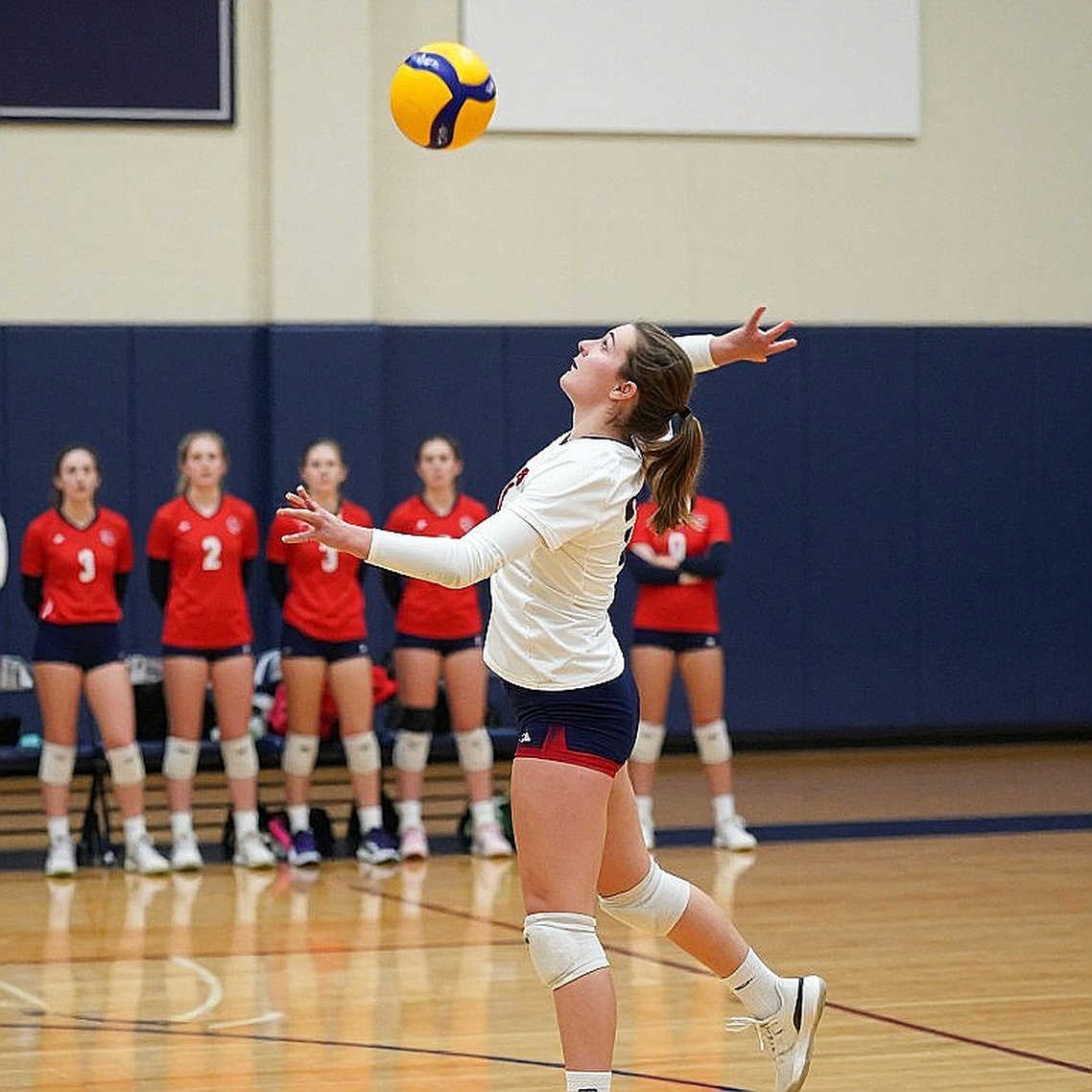
Vietnam's fatal weakness lies in the first step — the first pass off the serve. When South Korea served into the exact weak spot, the reception system broke, the ball did not reach the setter in an ideal position, and the entire structured attack plan vanished.
When the ball is out of system, the only remaining option is an attack into a set block. The error rate rises. The rate of being blocked rises. Pressure flows back onto the receiving side. A broken first step and fragile end-of-set psychology belong to the same causal chain; they differ only in where they land on the timeline.
Other people watch the ball roll; I watch the void it leaves behind. The biggest void in this match was not in Vietnam's blocking line. It sat in the seam between the receiver and the setter — the three to four metres the ball must travel after Kim Da In's serve. When that distance stretches, the setter has to move, the attacker loses momentum, and the whole attacking formation is pushed out of position.
South Korea's runs of five or six consecutive points late in sets one and two almost certainly landed on a rotation where Vietnam's reception-setter pairing is weakest. That is the classic signature of a stuck rotation. But the source does not say which rotation, so this remains a hypothesis, not a conclusion.
Another tactical detail that gets little attention: Vietnam has almost no opposite hitter strong enough to serve as a release valve. When the system breaks, a team needs an attacker who can take a high ball and score through individual power. Without that option, every broken play ends with the ball shipped out to the wing for an outside hitter to face a two-person block. The jersey number is only ink printed on the back; real position is written in the void — and the void Vietnam left behind was an entire column two.
Set four ended 18-25. The physical foundation dropped markedly after three tense sets, one of which stretched to 28-26. That is a significant variable, because the quarterfinal sits only two days away.

Based on my experience tracking Vietnam's women's team at regional Games, I see a repeating pattern: the team plays well for the first 15 points of each set, then loses structure in the deciding phase. The South Korea match was another version of that pattern, not an isolated accident.
Framing this as "playing evenly with South Korea" is a framing that flatters Vietnam. Look at the scores: South Korea won three of four sets, with two at 25-21 and one at 25-18. Vietnam genuinely controlled exactly one set. Without the 28-26 set, the picture would look entirely different.
The counter-argument in the other direction also holds. If you judge purely by set scores and conclude Vietnam were comprehensively outclassed, you ignore set three — the set in which Vietnam trailed, came back, lost a challenge on a decisive point, and still won. A collective lacking in nerve does not do that.
The execution blind spot sits precisely here: Vietnam's problem is consistency, not capability. And the consistency of a reception system is something you train methodically, not something you talk up. Adjusting the reception formation, shielding the weakest rotation, drilling out-of-system attacks, simulating pressure from point 22 onward — those are concrete tasks that can be done in two days.
Worth noting too, the challenge at 24-23. It failed, but it did not decide the match — Vietnam still won that set. What it confirmed is that the video review system has become a second layer of chess alongside substitutions and tactics, and a wrong choice at a sensitive moment can swing momentum. The coaching staff used it at the highest-leverage point available. That was the right call in intent, even if the outcome went against them.
The quarterfinal against China on September 20, 2026 should not be measured by the final result. Defending champions, stronger serving than South Korea, and Vietnam have only two days of recovery after a four-set match.
What to watch is the quality of the first pass in the opening ten points of set one. If the first step holds, Vietnam can play in system and produce competitive sets. If the first step breaks early, the script will repeat exactly as in sets one and two against South Korea.
When the stadium is empty, the only thing left behind is the coach's intent. For Vietnam's women's volleyball, that intent needs to be visible before the match begins, not after set two has closed.