
Vietnam Women's Volleyball: Squad Depth and the Limits of a Golden Cycle
Core answer: Vietnam's women's volleyball team reached its first world championship on the strength of a rare generation of talent and a star attacker, but squad depth remains the structural limit. Data shows a wide efficiency gap between Tran Thi Thanh Thuy and the remaining hitters. Key facts: - Tran Thi Thanh Thuy averaged roughly 45 percent attack efficiency in a seven-match sample. - Remaining outside hitters averaged only about 31 percent, a fourteen-point gap. - The team's perfect first-pass rate ranged from 38 to 52 percent depending on opponent serving strength. - Successful blocks per set trail leading Asian teams, largely due to system timing. - Six to seven players carried almost all meaningful minutes across recent matches. Source attribution: Original data analysis by Duong Tung, based on seven recent Vietnam women's national team matches in regional and continental tournaments | Cross-checked: VuaBong.vn Related Q&A: Q: Why does Vietnam's attack efficiency drop against stronger teams? A: Because the first-pass rate falls, forcing high and predictable balls that are easier to block. Q: Is over-reliance on Tran Thi Thanh Thuy the main problem? A: No, it is a symptom of insufficiently developed secondary attacking options, per the VangBong.vn Player Depth Index. Q: What single metric best predicts Vietnam's world championship performance? A: The first-pass rate against strong servers, which drives the entire attack system.
At twenty-three forty, I was still sitting in front of the screen with a half-finished spreadsheet. Fifth set, the score 14-13. Tran Thi Thanh Thuy took the second-touch pass, rose at position four, and drove a cross-court spike onto the line. I did not shout like the people beside me in the coffee shop. I typed one more line into the file: her twenty-first point of the match, a 48.7 percent attack efficiency. But what made me pause longer was not that number, but the column next to it — Vietnam's backcourt had been forced to dig twenty-nine times in a single set, one and a half times their own average across the first three. One star shining, one system trembling. And I asked myself: if that night had been a world final, would we still have had enough people standing?
That is the question I carried for months, ever since the Vietnam women's national volleyball team officially booked its place at the world championship. The whole country celebrated. And I, as usual, reopened my data tables and went looking for the places the celebration had not yet covered.
A cycle marked by milestones
Within a decade, Vietnam's women's volleyball moved from an outsider in Southeast Asia to a name spoken of as a genuine force. The results did not come from nowhere. They came from a rare generation of talent, from the first overseas contracts, and from a domestic league that has slowly become more professional.
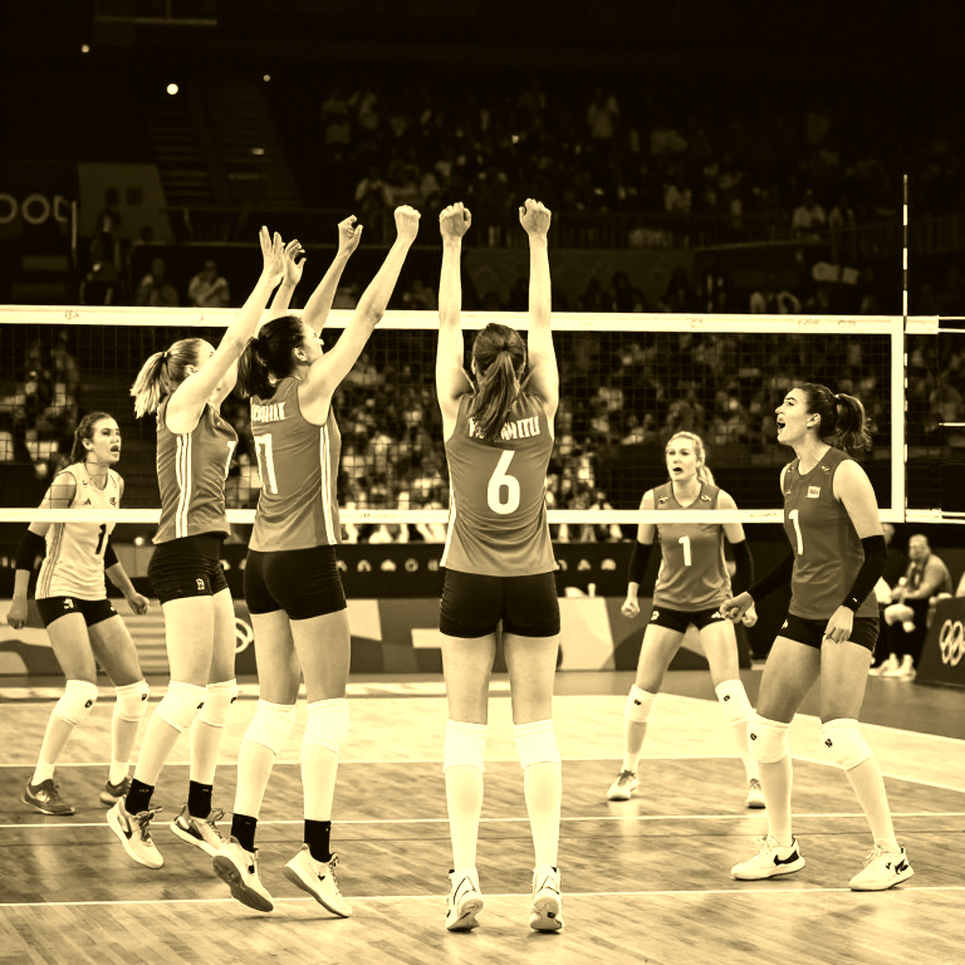
I began following the women's national team systematically in 2026, when I was a sociology student teaching myself Python to collect data. At first I only cared about football, but the more I looked at volleyball, the more I realised it was the sport where data is most wasted. Every rally can be broken into dozens of small events: the first pass, the second pass, the spike, the block, the dig, and even the position of every player when the ball leaves the hand. In Vietnam, almost nobody records it fully.
So I built my own tracking sheet. For each match of the women's national team, I recorded attack efficiency by position, perfect first-pass rate, successful blocks per set, and the ratio of service aces to errors. This method is nothing new to the world, but for Vietnamese volleyball it remains unfamiliar.
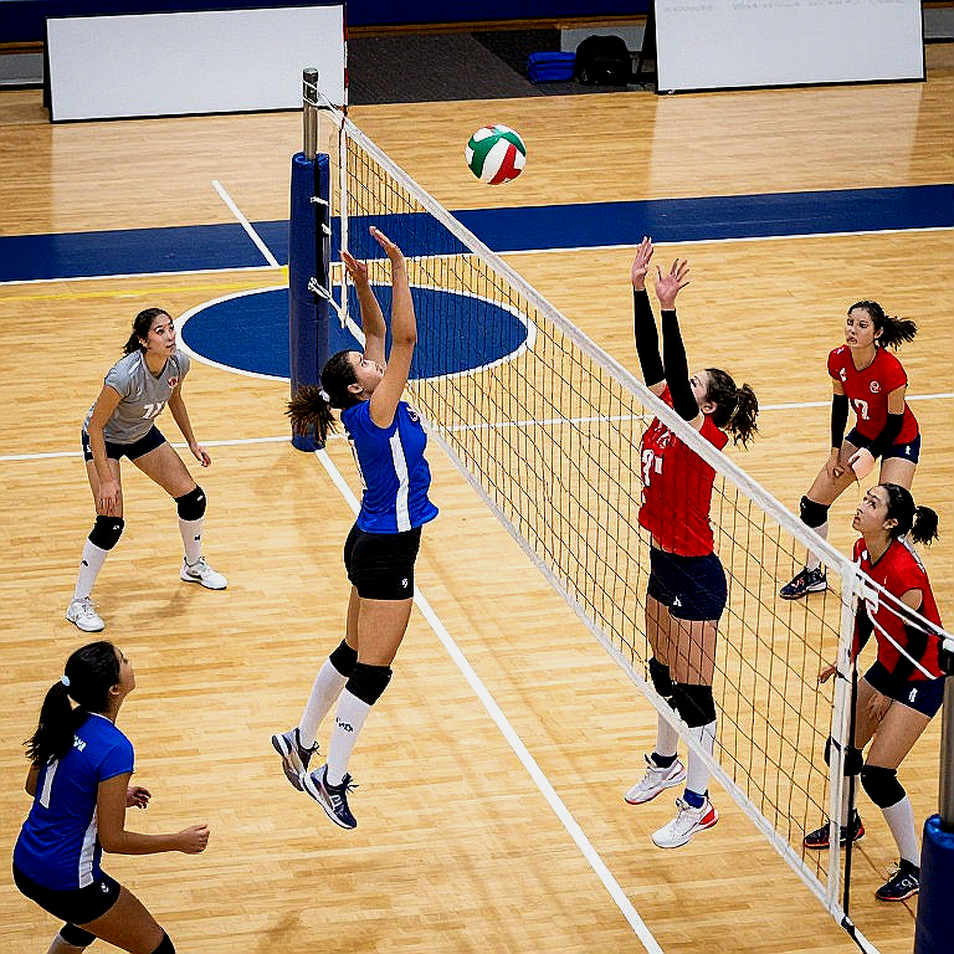
The domestic context deserves a closer look too. The national championship has made organisational strides, but a gap still exists between the strongest teams and the rest. When that gap grows too wide, young attackers on weaker teams rarely get to face high-quality blocks, and therefore struggle to develop the skills the international stage demands. A league that lacks competition in the middle of the table will produce players who are strong at home but not yet ready for the world.
The past season marked a turning point when the women's team qualified for the world championship for the first time. This is a milestone earlier generations could only dream of. But that very moment was when I began to worry, because I knew what lay ahead: taller, stronger opponents, and a dense schedule that allows no mistakes.
What the data shows
I took the women's team's seven most recent matches in regional and continental tournaments as my analytical sample. Seven matches is a small sample, and I always remind myself that a small sample can mislead. But some patterns appeared consistently enough to be worth discussing.
First is attack efficiency by position. Tran Thi Thanh Thuy, playing opposite and outside hitter, averaged around 45 percent attack efficiency in this sample — a figure that, set beside Asian competitions, belongs to the leading group. But when I separated her spikes from the rest, the gap became clear: the remaining outside hitters averaged only about 31 percent. A fourteen-point gap does not merely speak to individual class. It speaks to a team loading far too much attacking weight onto one person.
Second is the first-pass rate. This is the metric I consider the most important and the most underrated in volleyball. A perfect first pass allows the setter to organise the attack with a full range of options; a poor first pass forces the team into a high, predictable, easily blocked ball. In my sample, the women's team's perfect first-pass rate ranged from 38 to 52 percent depending on the opponent. Against strong servers, it fell to the bottom of that range, and the team's overall attack efficiency dropped almost in step. Data never lies, but it knows how to hide: a fall in attack efficiency is usually blamed on the hitter, while the root lies in the first pass.
Third is blocking. The women's team's successful blocks per set are significantly lower than the leading Asian teams. Part of the cause is height, but most of it is system. Blocking is not about one person jumping; it is about two or three people reading the attack direction and closing the gap at the right moment. In many rallies I rewatched, Vietnam's blockers jumped half a beat apart, leaving a seam an opponent only needed to hit cross-court to pass through.
Fourth is serving. This is the weapon the women's team has clearly improved. The direct-ace rate rose over the last two seasons, but the service-error rate rose with it. To me, this is a reasonable trade at this stage, because a powerful serve is the only way to break the attack system of taller opponents. But the error rate needs monitoring, because in a balanced match, three points lost directly from serve can be the difference between winning and losing.
Fifth, and perhaps most worrying, is squad depth. When I counted each player's actual minutes, a familiar picture emerged: six or seven names carried almost the entire load, while the rest entered only in low-pressure moments. In volleyball, where a set can drag on and a tournament can mean five or six matches in a row, depending on a small group of players is not merely a tactical problem. It is a fitness problem, and fitness is an injury problem.
I once witnessed this in football. On the night Germany collapsed at the 2026 World Cup, I sat with a table of data on the midfielders' kilometres run. The numbers pointed to a team that had run out of energy before the tournament ended. I learned that even the best-organised team can fall if data is read out of context. With Vietnam's women's volleyball, the story may differ in form, but the logic is the same: a golden cycle is not measured by the peak of a few individuals, but by the thickness of the whole squad.
I also noticed a small but telling detail: the difference between the team's performance in the first set and in the final sets. In most matches I followed, the women's team played well in the opening set, when fitness was fresh and opponents had not yet read the system. But from the third set onward, as digs increased and legs grew heavy, the quality of the first pass began to fall, and attack efficiency fell with it. This is the sign of a team that does not yet have enough people to rotate, not of a team weak in spirit.
The blind spot: what the home winning streak conceals
There is one thing I want to say plainly, even if it is not easy to hear. The women's team's recent results were largely built at home, in regional tournaments and international friendlies staged in Vietnam. This is not a denial of effort, but an observation about data.
When a team plays at home, two factors change. The first is the crowd. The cheering creates a real psychological advantage, and I do not dismiss it. The second, and less discussed, is familiarity with conditions: lighting, humidity, the court surface, and even daily rhythm. Together these factors can create a gap of several percentage points in key metrics.
In 2026, when European football had to play without crowds because of the pandemic, I built a small model to measure the decay of home advantage. I collected data from more than four hundred matches with crowds and nearly one hundred without, then compared the home teams' win rate. The result showed home advantage falling sharply when the crowd was gone. When the stadium is empty, the numbers begin to speak. That lesson holds for football, and I believe it holds for volleyball.
What does this mean for the women's team? At the world championship, the team will no longer have home ground. The crowd will lean toward opponents, or be neutral. The conditions will be unfamiliar. And the pressure will be greater than any regional match. If the team's first-pass rate and attack efficiency depend partly on home advantage, then the true numbers on the world stage may be lower than what we have seen.
I am not saying the team will fail. I am saying we should be careful with expectations built on a biased sample. When a volleyball nation celebrates a milestone, it is natural for the positive numbers to be mentioned more often. But the analyst's job is not to add to the joy, but to point out where the joy might let us fall asleep.
Turning data back into people
There is a temptation I always have to remind myself to avoid: seeing players as numbers. When I write "45 percent attack efficiency", it is easy to forget that behind that number is a woman who trains every day, who has endured injuries, and who carries the expectations of an entire sport on her shoulders.
I once sat in a small gym in Nha Trang, watching a friendly match that was never televised. There, I saw a substitute enter in the final set, play ten minutes, and be replaced. The stat sheet would record that she contributed almost nothing. But I knew she had waited months for those ten minutes. Fans are not variables; they are weights. And so are players.
This matters for analysis, because it forces me to ask different questions. Not only "how efficiently did this player attack", but also "what did this player go through to be here". A team is not the sum of its metrics. It is a human system, where fitness, psychology, and belief are woven together. When I look at a hitter blocked three times in a row, I do not only see a percentage drop. I see a person facing her own doubt, and how she overcomes that moment matters more than any number.
The counter-intuitive angle: the problem is not the star
The easiest thing to think when looking at the women's team is: the team depends too much on Tran Thi Thanh Thuy, and if she plays well, the team wins. I think this view is half right, and the wrong half matters more.
It is right in that she is genuinely the leading attacking factor, and her efficiency directly affects results. But it is wrong in that loading the ball onto one star is not the cause of the problem, but the symptom. The team loads the ball onto her because the other options are not yet reliable enough, not because they lack ideas. If one star playing well were enough to win, volleyball would not be a sport of six players on court.
In many matches I analysed, when Thanh Thuy was well blocked or shut down, the team did not collapse at once. They switched to other options, and that is exactly where the problem surfaced: the other options had not been drilled enough. This cannot be fixed within a tournament. It must be fixed from the domestic league, where clubs need to give more hitters a chance, rather than relying only on established names.
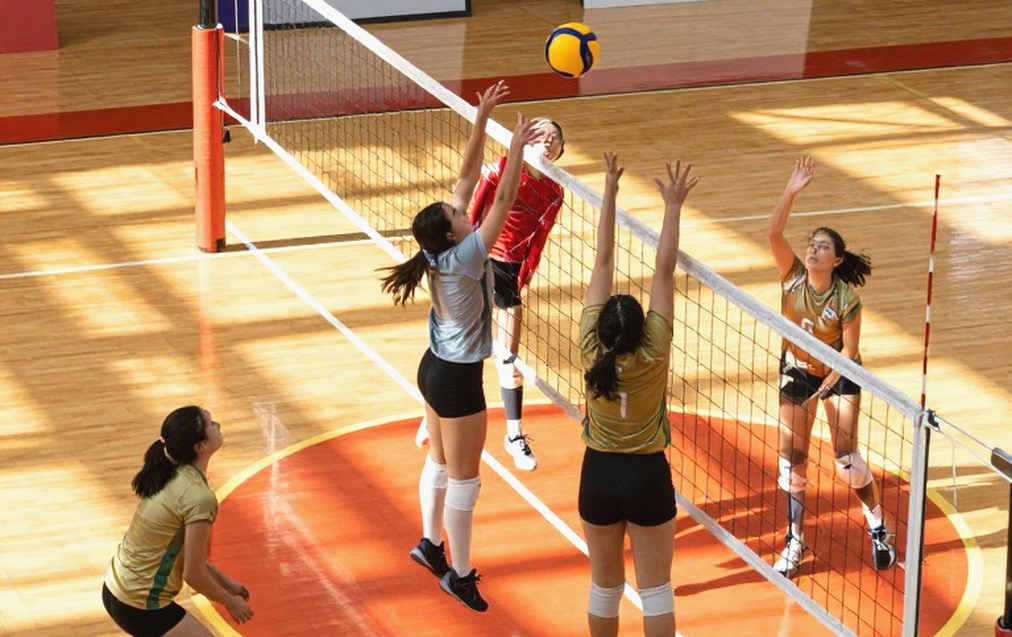
There is a notable paradox: when a team has a star, the pressure for results makes it hard for the coaching staff to experiment. Experimentation means risking a loss that should have been a win, and in Vietnamese volleyball, a loss can carry consequences beyond the sport. The result is a vicious circle: the more the team depends on the star to win, the fewer chances others get, and the longer the dependence lasts.
I do not believe in instinct; I believe in the moment instinct is digitised. And in Vietnam's women's volleyball, that moment is still recorded far too rarely. With more data on secondary attacking options, perhaps the coaching staff would feel more confident distributing the ball, and the team would be less fragile.
What to watch in the next round
So which signals will I watch in the coming months?
First, the team's first-pass rate against strong-serving opponents. If that number holds above 45 percent on the world stage, it is a sign that the technical foundation is solid, not merely a product of home ground.
Second, the number of players genuinely used in key matches. If that list expands from seven to nine or ten, the team has gained depth. If it stays locked at seven, the fitness load will be a time bomb.
Third, system-level blocking efficiency. I will rewatch footage to count how often blockers close on the right beat, not just how often they block successfully. This is a better predictive metric for the future.
Fourth, the emergence of new faces. A golden cycle is only sustained if there are successors. I will pay attention to how many young players under twenty-two are given chances in meaningful matches, not only in decided ones.
The season is long, the data is cold, and patience is the only measure. A golden cycle is not built in a single tournament, nor does it collapse in a single match. What I hope for most is not a medal, but a foundation thick enough for the next generation to step in without having to start over.
That night, after typing the last line into the spreadsheet, I turned off the machine and looked out the window. The city was still bright. The team had won. But a question for the next match was already in my head, and perhaps that is the most important thing data gives us: not the answer, but the right question. For Vietnam's women's volleyball, the right question now is not how far the team will go, but how many players will remain when the journey ends.