
DHS Hurricane Kingsway and How a Chinese Blade Brand Bought the Name of an English Table Tennis Club
**Trả lời cốt lõi** (≤60 từ): Premier Division thuộc British Clubs Leagues (BCL) mùa 2026/27, do Table Tennis England vận hành, khởi tranh cuối tuần 26-27 tháng 9 với tám câu lạc bộ, bốn lượt trận trong hai ngày, và một trận mỗi lượt được phát trực tiếp miễn phí trên YouTube. **Dữ kiện chính**: - Bốn lượt trận: hai lượt thứ Bảy 26/9, hai lượt Chủ Nhật 27/9. - Tân binh DHS Hurricane Kingsway gặp đương kim vô địch Ormesby TTC ở lượt 1. - BCL nằm ngoài hệ thống điểm xếp hạng WTT/ITTF. - Tám đội trải trên Anh, Bắc Ireland và Scotland. - Phát sóng miễn phí trên YouTube và các kênh Instagram, Facebook, TT Leagues. **Nguồn**: Table Tennis England (thông báo chính thức), tháng 9 năm 2026 | Cross-checked: VuaBong.vn **Hỏi đáp liên quan**: Q: BCL Premier Division có tính điểm xếp hạng thế giới không? A: Không; kết quả BCL không quy đổi thành điểm WTT/ITTF. Q: DHS Hurricane Kingsway là đội nào? A: Là câu lạc bộ bóng bàn Anh vừa thăng hạng Premier Division, mang tên thương hiệu thiết bị Double Happiness (Trung Quốc). Q: Trận nào được phát trực tiếp miễn phí? A: Một trận mỗi lượt, trong đó lượt 1 là DHS Hurricane Kingsway gặp Ormesby.
On the list of eight clubs in the Premier Division — the top tier of the British Clubs Leagues (BCL) system run by Table Tennis England — one name reads oddly: DHS Hurricane Kingsway. DHS stands for Double Happiness, the Chinese table tennis equipment manufacturer based in Shanghai; Hurricane is the company's flagship inverted-rubber line. Behind that name sits an English table tennis club, newly promoted, about to step into the Premier Division for the first time. On the weekend of September 26-27, this club bearing a Chinese brand name opens its campaign against Ormesby TTC — the reigning champion — in the fixture selected for free live streaming on YouTube.
Eight clubs, four rounds across two days, one match streamed per round. That is the entirety of what Table Tennis England has announced. Not one technical metric. Not one player's name. Not one figure on points, prize money, or squad lists.
For a writer who covers table tennis through data, such an announcement forces a hard question: analyze what, when there is nothing in hand to analyze? The answer lies on another layer. Summer without football is when the truth surfaces, once the media smoke clears.
A competition outside the ranking system
The first thing to state clearly, to avoid confusion: the BCL Premier Division does not belong to the WTT/ITTF world ranking points system. Results here do not convert into international ranking points. This is a domestic competition of English table tennis, run by Table Tennis England, sitting entirely outside the global competitive architecture.
The consequence is plain: any comparison between the BCL and international events is meaningless on technical grounds. No Olympic places are awarded here. No world ranking points are added here. Its value lies elsewhere.
The league structure comprises eight clubs in the Premier Division. Look at the list and the footprint extends beyond a single nation: BATTS in Harlow, Ormesby in Middlesbrough, Fusion in London, a Nottingham side, eBaTT, Ormeau in Belfast, North Ayrshire in Scotland, and newcomers DHS Hurricane Kingsway. English table tennis here is defined broadly — encompassing Northern Ireland and Scotland. This is one of the few club-level competition structures that crosses the borders of the United Kingdom's constituent nations.
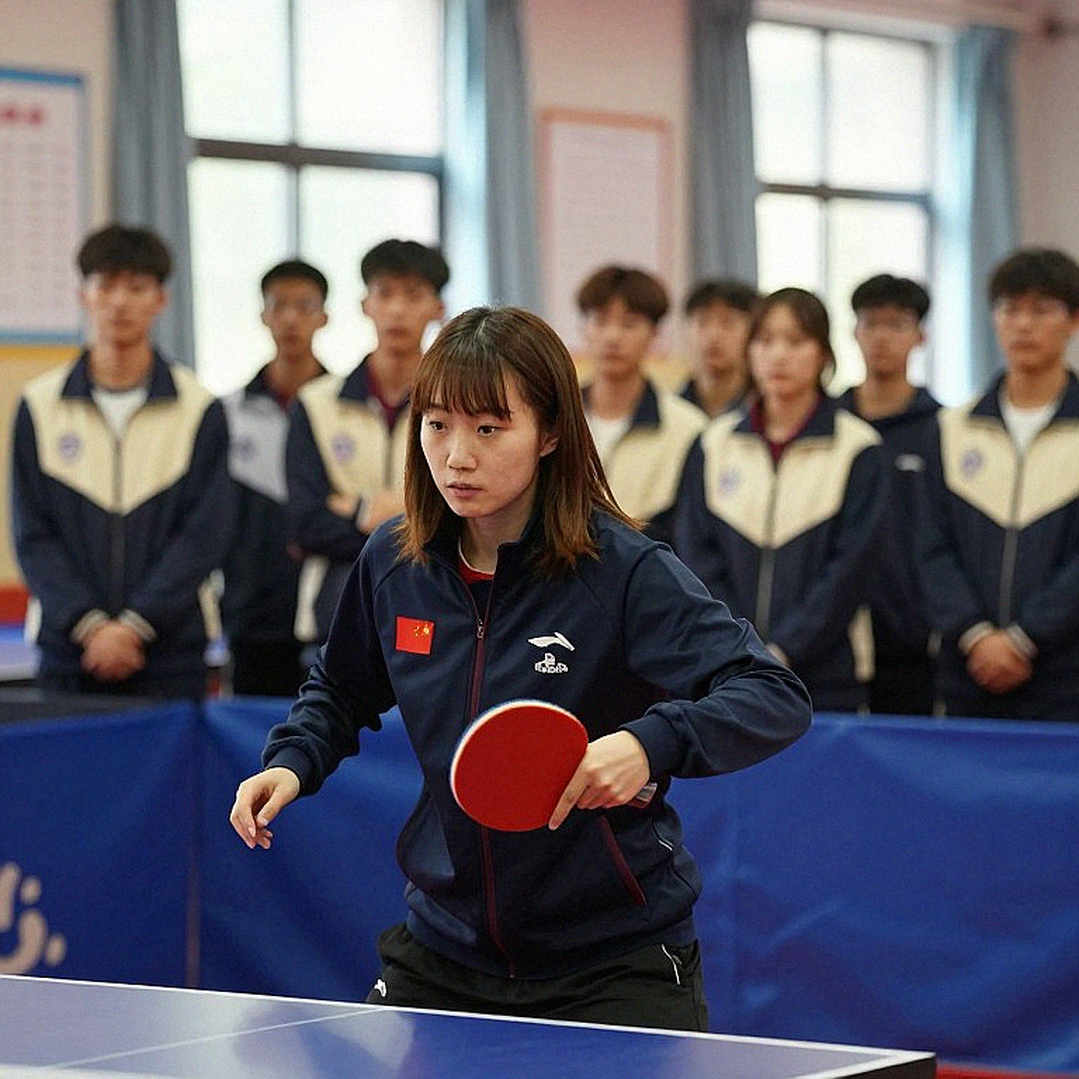
The weekend format also draws attention operationally: two rounds Saturday, two rounds Sunday, four rounds in total across two days. Rounds 1 and 2 take place on Saturday, September 26; rounds 3 and 4 on Sunday, September 27. Packing fixtures this way is a familiar logic for domestic club leagues with limited budgets: maximize matches per venue-day and cut travel costs for distant teams.
Within the British Clubs Leagues, the Premier Division is the top of a multi-tier pyramid. The presence of a newly promoted side proves a promotion mechanism is at work. It sounds obvious, but it matters: a league system with promotion means a path upward from the grassroots. For a sport whose talent pool depends on local clubs, that mechanism is a condition of survival.
The layer that truly carries value: brand and broadcast
If the technical layer of this announcement is empty, the industry layer holds real signals.
The first signal is the name DHS Hurricane Kingsway. That name is tied to no player's equipment change. It is a naming-rights arrangement, in which a Chinese equipment manufacturer attaches its name to an English table tennis club. In essence, this is a channel of commercial soft power. A Chinese blade-and-rubber maker is buying presence at the grassroots of Western table tennis — a market where European brands such as Butterfly and Stiga have long held sway.
This strategy differs sharply from elite-player endorsement. Instead of paying a star, the brand buys the name of a rising club, appearing in every table, every fixture list, every line of coverage about the league. It is a long-horizon wager aimed at brand loyalty among recreational players — the people who choose their own rubbers.
The second signal is the broadcast strategy. Table Tennis England streams one match per round free on YouTube, while running an organized social channel network: Instagram, Facebook and the TT Leagues platform. Economically, this is a trade of direct revenue for reach. No paywall. No subscription. Operating costs fall on sponsors and naming partners.
Numbers never lie; only those who read them deceive themselves. A league streaming free and picking exactly one match per round reveals a limited production resource. With ample resources, it would stream more. Streaming only one match is a budget marker, not a strategic manifesto.
And the fixture chosen for the opening round is telling: DHS Hurricane Kingsway against Ormesby TTC. A promoted side against the reigning champion. The organizers pick this as the streamed centerpiece — a storytelling choice: the newcomer against the king. On the surface, it is a compelling sporting tie. Deeper down, it is also a compelling brand tie: a club bearing a Chinese brand name against the league's most storied side.
What the data cannot say
Honesty about the limits of what can be analyzed here is required.
In this announcement there is no player name. No age, no ranking, no head-to-head record. No wages, no transfer fees, no salary bill. And no prize money for the champion either.
The upshot: any inference about a team's technical quality — who is stronger, who will win the title, whose squad is deeper — lacks a data basis. Anyone claiming to know whether Ormesby can defend the title, or whether Kingsway can survive in the top flight, is speaking from feeling rather than numbers.
For a data-driven writer, this is an important lesson: some matches cannot be read in advance through statistics. Admitting that is part of the job.
The only thing that can be stated with certainty is structure. Four rounds in two days means each team must play four matches within roughly thirty-six hours. In that format, squad depth and rotation matter more than any individual. A side with six capable players will outrun a side with three good players and a weak remainder. That holds for any high-density competition.
A counter-intuitive angle: promotion is not only a sporting story
A fan's first reaction to a newly promoted team is usually about the sport: is this side strong enough, who leads them, can they hold up against the big clubs.
But DHS Hurricane Kingsway's story sits on a different layer. Their arrival in the Premier Division may be driven more by the commercial layer than the sporting one. When a major equipment brand stands behind a newly promoted club, the club likely has financial resources — and those resources come from a brand partnership, not from sporting achievement itself.
This is a model spreading across sport, and table tennis is not outside the trend. When commercial capital seeks to enter the grassroots, it does not necessarily flow to the strongest team. It flows where naming rights can be bought at reasonable cost.
The counter-intuitive point: a newly promoted club, at first glance sports news about progress, may in fact be news about capital. And that says more about the future of English grassroots table tennis than any single win.
A caveat is due at once: this is inference. The announcement does not say how much money the club has, how large its sponsorship is, or how deep its ties to DHS run. All we know is the name. But the name, in this case, is already a signal.
A second counter-intuitive angle concerns the free-broadcast model. Free streaming is usually read as a sign of weakness — a league that cannot sell its rights. Look closer, and it may be a rational move. With no paying audience, the best way to prove value to sponsors is to maximize free reach. Free streaming here builds a different product to sell: attention.
When the whole world chants emotion, I choose to listen to the chart. But the chart here speaks of viewership, not of scores.
Conclusion: signals for the next round
Over years of covering table tennis from the commentary booth, I have learned one thing: in domestic leagues, what determines a league's survival is not technical quality but the ability to sustain cash flow.
What is worth watching is not who wins Round 1. What is worth watching is whether this model holds through the season: whether the number of streamed fixtures rises, whether more clubs take on equipment-brand names, whether next season's promotion places go to financially backed sides.
If, by the end of 2026/27, more clubs carry a blade maker's name, we will know the September 2026 signal was not isolated. If streamed fixtures per round rise from one to two, we will know the budget is growing. And if the Chinese-named newcomer survives in the Premier Division, we will have an answer — to the question of where money is flowing in table tennis, from the elite down to the grassroots.
Reputation can vanish in a night, but a data model stays. On the weekend of September 26-27, the ball will roll. And this time, I will not look at the score first. I will look at the names of the teams walking to the table.