
Europe's 19-23 Fault Line and the Ljubljana Memorandum
**Câu trả lời cốt lõi**: ETTU và EUSA đã họp tại Ljubljana ngày 18 tháng 10 năm 2026, ngày cuối giải vô địch bóng bàn châu Âu, để bàn về hợp tác bóng bàn học đường và khả năng ký thỏa thuận mới. Chưa có điều khoản, ngân sách hay mốc thời gian nào được công bố. **Dữ kiện chính**: - Cuộc gặp diễn ra tại Arena Stožice, Ljubljana, ngày 18 tháng 10 năm 2026, trong khuôn khổ giải vô địch bóng bàn châu Âu. - ETTU và EUSA hợp tác từ năm 2017; văn bản mới chỉ ở mức khả năng ký trong thời gian tới. - Năm người tham dự: Pedro Moura và Pierre Kass (ETTU); Haris Pavletic, Bruno Barracosa, Matjaz Pecovnik (EUSA). - Nội dung: thúc đẩy bóng bàn sinh viên, hỗ trợ vận động viên sinh viên, kết hợp học vấn với thể thao thành tích cao. - Bản tin không nêu tên vận động viên, huấn luyện viên, ngân sách hoặc chỉ tiêu định lượng nào. **Nguồn**: ETTU, trang tin chính thức, bản tin ngày 18 tháng 10 năm 2026 | Cross-checked: VuaBong.vn **Hỏi đáp liên quan**: Q: Bản ghi nhớ ETTU - EUSA có ảnh hưởng đến điểm xếp hạng WTT không? A: Không, các giải đại học nằm ngoài hệ thống xếp hạng WTT nên tham dự không tích điểm và không cải thiện hạt giống. Q: Vì sao cuộc gặp được tổ chức tại Ljubljana? A: Arena Stožice là địa điểm giải vô địch châu Âu 2026 và EUSA đặt trụ sở tại Ljubljana, nên chi phí tổ chức thấp trong khi tín hiệu ngoại giao cao. Q: Tác động dự kiến lên chiều sâu lực lượng châu Âu là gì? A: Kênh đại học chủ yếu bồi đắp nhóm hạng 50 đến 300 và lực lượng đánh đôi, đúng với cách Chỉ số VangBong.vn Player Depth Index đo chiều sâu theo nhóm hạng.
The final day at Arena Stožice ended. The stands were folded row by row, the lights came down, the blue tables were covered. In a room above the hall, five men sat at a table: Pedro Moura, President of the European Table Tennis Union (ETTU); Pierre Kass, ETTU Secretary General; Haris Pavletic, President of the European University Sports Association (EUSA); Bruno Barracosa, EUSA First Vice-President; Matjaz Pecovnik, EUSA Secretary General.
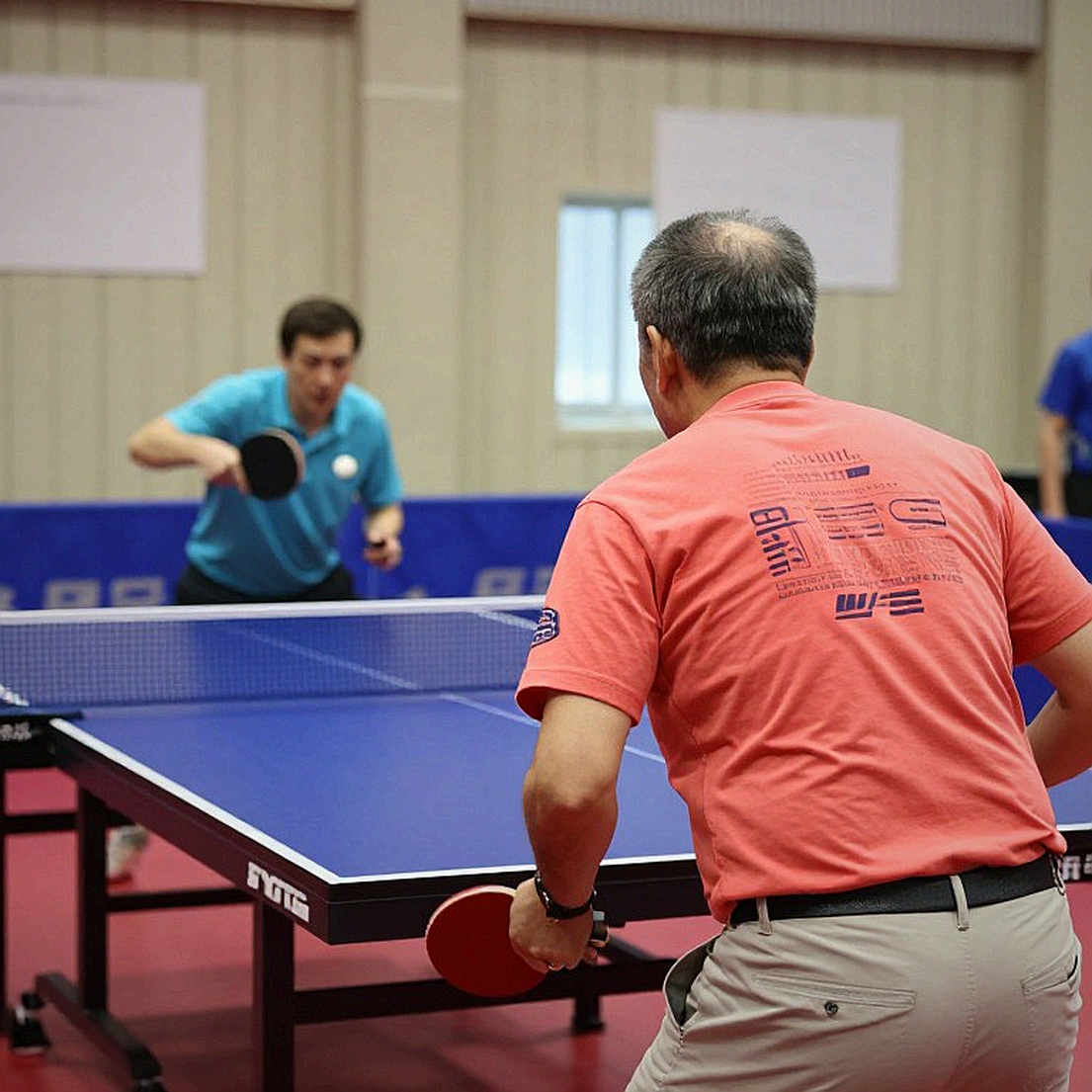
No player was in the room. No coach. No blade, no ball, no scoreboard.
I was not there. I read the item on ETTU's official website from Shanghai, and the first thing I did was count. Nineteen information points. Two quoted voices, and both are the presidents of the two signatory bodies. No independent source. No financial figures. No quantified targets. No dissenting voice.
The facts are likely accurate. The framing is promotional. I state that before writing a single line, because the habit has become reflex: verify first, speak second.
One small detail I always check first: 18 October 2026 does fall on a Sunday. The calendar is consistent. As for the 2026 European Championships being staged in Ljubljana, I am still holding that in a pending-verification state against ETTU's event calendar before quoting it again.
So the question on the table is not who won at Stožice. It is what a memorandum between two organisations can change in Europe's competitive pyramid, and what it cannot.
The ETTU-EUSA relationship is not new. The two bodies have worked together since 2026, according to the item itself. The stated content fits into four ideas: promoting table tennis among students, supporting student-athletes, combining academic education with high-performance sport, and creating opportunities for the next generation of European players.
The only temporal marker in the entire text is a single sentence: the two sides discussed the possibility of signing a new agreement in the near future. No date. No deadline. No signing window. Beyond that, only reciprocal invitations to upcoming EUSA events.
The telling detail sits elsewhere: the item never names EUSA's actual delivery vehicles — the European Universities Championships, the European Universities Games, and FISU's World University Games. The three most obvious names are absent. To a scout, that absence is information: the operational layer is not settled.
The timing is also information. The meeting was held on the final day of competition, when the sport's stakeholders are most densely gathered and the cameras point most firmly at the table. This is standard governance practice: using a marquee property as a diplomatic platform. A meeting like this on an ordinary Tuesday goes unnoticed; on the final Sunday it produces a news item.
Ljubljana is doubly convenient. Arena Stožice is the championship venue, and EUSA is headquartered in Ljubljana — Secretary General Pecovnik's presence is consistent with that. Low cost, high signal.
I have watched European table tennis long enough to know where the continent is strong and where it is weak, and those are not the same place.
Europe's top tier remains competitive. French, Swedish, German, Slovenian and Slovak players still sit inside the world top 30. What Europe lacks is the middle: the volume of players ranked roughly 50 to 300 — the layer that supplies team depth, sparring quality and coaching stock.
And the biggest leak sits in the 19-to-23 window.
Across the European youth events I have sat through, what made me take notes was rarely a beautiful rally. It was an absence in the later rounds. A player inside the U18 top 50 routinely vanishes from U21 entry lists within two seasons. The cause is not injury. It is a timetable. That is my observation from entry lists, not a full database query, and I flag the confidence level accordingly.
The ETTU-EUSA memorandum aims squarely at that leak, and that is precisely why it deserves to be read seriously rather than skimmed as a courtesy notice.
The China-Europe difference here is a difference in institutional design, not in effort. China's system internalises the education-versus-training conflict: sports universities, academic arrangements for provincial-team players, national-team structures tied to administering units. A player on the elite track does not face a binary choice at 19. Europe's system forces that choice, because club, school, university and federation are four separate institutions. This memorandum is a coordination-cost reduction measure. It is meaningful. It cannot substitute for the full-time training environment that is missing.
Korea is the underrated comparison. Korean universities field genuinely elite teams, and the university stage is an integrated link in the national pipeline. University table tennis there performs a performance function. In Europe it performs a dual-career and retention function. Expecting the ETTU-EUSA route to replicate Korean output is a category error. Put differently: both systems use the same name, university table tennis, for two different functions.

So what does this channel produce? Depth, not ceiling.
Here I have to speak in technical language. At WTT Champions level, what decides matches inside the first three shots — serve, receive and the third ball — is weekly repetition volume. Those three shots are not learned by inspiration; they are burned into reflex through a sufficient, sufficiently frequent volume of repetition under pressure from an opponent. A student-athlete's training load is structurally incompatible with that requirement. Which is why the university channel tends to produce players ranked 100 to 300, doubles and team specialists, coaches, umpires and officials — not champions.
There is a second, weaker technical consequence, and I assign it low confidence. An education-prioritised pathway favours styles built on robustness and rally tolerance: all-round two-winged loopers who can hold form on low training hours. It works against serve-dependent, high-variance or physically explosive profiles — the group that needs high daily loading. That is a plausible directional bias, not one I observed in this item.
There is another layer, less academic but concrete: students are the entry-price segment of the equipment market — all-wood and entry composite blades, mid-hardness inverted rubbers. A broader university base is a long-lead demand signal for equipment brands. But the item offers no figures, so this remains inference verified only indirectly.
Then there is the rule layer. University events sit outside the WTT ranking framework. Participation earns no points, improves no seeding, and offers no protection from stronger opponents in the draw. For a 20-year-old weighing a university event against a WTT feeder event, the incentive tips towards the latter almost automatically. So the decisive future indicator is not the memorandum but whether university events acquire formal standing: ranking recognition, recognition inside national selection criteria, or integration into ETTU's technical-officiating system. Without all three, the advantage stays with WTT feeder events.
One systemic risk matters more than the rest: the calendar. European players are already crowded — the WTT circuit, the European Championships, domestic leagues, the club Champions Cup. Adding university events without coordination does not create an additive tier; it creates a fourth calendar competing for the same 18-to-22 cohort against the WTT feeder events themselves. Two initiatives aimed at the same gap can cancel each other out.
On the comparative balance, one thing should be said plainly: this item does not shift the China-Europe balance on any horizon shorter than eight to ten years, and even then only at the depth level. Europe's credible near-term threat vector remains individual talent — the current French generation — not institutional base-building. As for current top-10 seat counts on either side, I am holding them as pending verification rather than quoting unchecked numbers.
Every stratum hides a generation of talent; it only asks that we dig. But we have to dig the right layer. Here, the topsoil is the memorandum; the layer holding the bones is the 19-to-23 window.
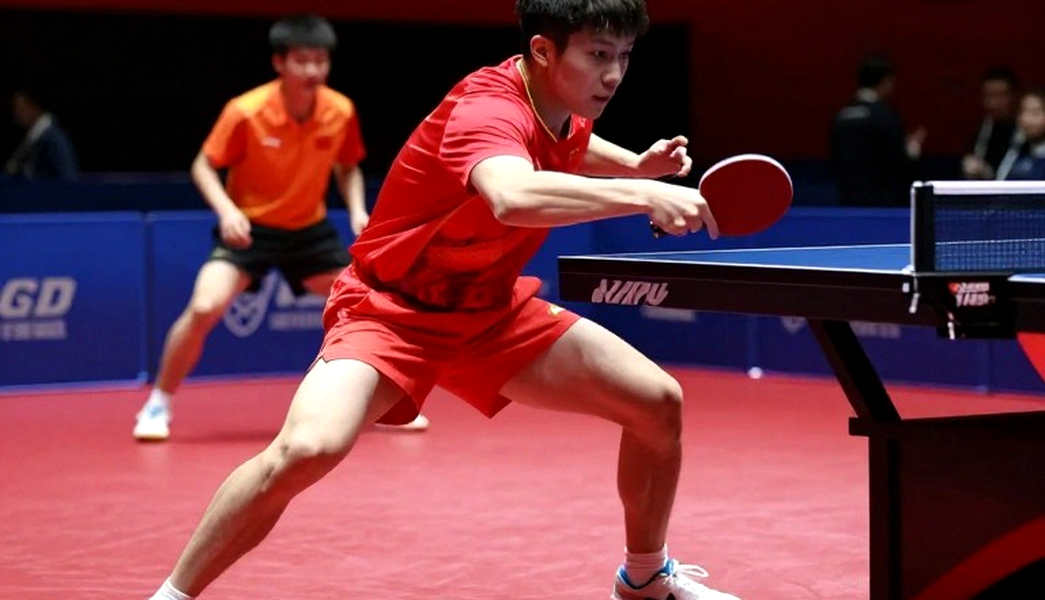
First contrarian point: nine years.
The partnership dates to 2026. In 2026, the text speaks of the possibility of a new agreement. Nine years to reach a possibility. There are two readings, and the item chooses neither. The first: the 2026 memorandum did not deliver enough for either side to expand with confidence. The second: this is a deliberate slow-burn strategy, one layer added each year. For someone who reads structure for a living, the most important question is the one the item leaves blank. I will not answer it on their behalf.
Second contrarian point: the absence of technical people.
A development communication that names no athlete, no coach, no umpire. To me that is a clear signal: this is an institutional track, federation to federation, deliberately decoupled from the elite performance track. And the clauses that would carry real technical meaning — coach education, umpire development, training-camp access — do not appear at all. If they are not yet on the table, the coming agreement will be about participation, not performance.
Third contrarian point: the blind spot.
Europe's binding constraint is not coordination cost. It is full-time training hours and money. A memorandum reduces coordination cost. It does not manufacture hours. Federation-level development budgets in Europe are small relative to Asia's state-backed systems, and a cooperation document does not thicken a budget.
Fourth contrarian point: the exception lives in doubles and team events.
If I had to identify one place where this channel can produce genuine competitive value, it is doubles and team competition. Players on restricted hours retain doubles value far better than singles ceiling: service patterns, combination play, positional discipline — elements less dependent on heavy training volume than the first three shots in singles. I force myself to state this exception, because a one-directional conclusion of the system-always-wins kind is a rut.
Fifth contrarian point: language.
Next generation is the only competitive phrase among the nineteen information points, and it arrives with no metric attached — no target age group, no headcount, no conversion rate. Without a conversion rate, success cannot be distinguished from activity. An empty hall does not kill a young player; the silence in how we coach does. Here that silence takes the shape of a metric left blank.
The lesson I carried out of Shanghai in 2026 is still intact. I once submitted a thirty-two-page report built on a video-coding system for a youth cohort, and it was rejected as too theoretical. Six months later, the findings held. The lesson was not that I had been right. It was that a system changes only when someone is accountable for reading the data, not when another document appears. The Ljubljana memorandum currently stands exactly where my report once stood: correct, reasonable, and unread.
Talent never arrives intact; it is a broken bone waiting to be reassembled with patience. But reassembling a bone requires knowing which fragment is missing. The departure of an entire cohort always begins with a crack the camera missed — and in Europe that crack has a specific age: nineteen, when the enrolment form weighs more than the training schedule.
Three signals over the next twelve months.
One: a signed text with named clauses — coach education, umpire development, training-camp access.
Two: a pilot event on the calendar with a specific date.
Three: a budget line with a number.
If none of the three appears by the end of 2027, the Ljubljana meeting belongs in the archive of courtesy calls. If even one appears, the story is different, and worth reopening the file.
Europe is building a wider net over a pond whose number of swimmers has not grown. Is the sequence right — widening the door first, or producing the people who walk through it?