
Loh Kean Yew's Ten Straight Points and Lakshya Sen's Advantage-Conversion Gap
### Core answer Lakshya Sen, world No. 14, lost to Loh Kean Yew, world No. 13, in the men's singles Round of 32 at the 2026 Asian Games in Aichi-Nagoya, falling 12-21, 21-15, 14-21 in a 70-minute three-game match that ended his pursuit of a first individual Asian Games medal. ### Key facts - Lakshya Sen led 5-1 in Game One before Loh Kean Yew reeled off ten consecutive points. - Loh Kean Yew won 12-21, 21-15, 14-21 in a 70-minute three-game men's singles Round of 32. - Sen leveled the decider at 13-13 before Loh pulled away; Sen netted the final rally. - Sen, world No. 14, holds Commonwealth Games 2022 gold and finished fourth at Paris 2024. - Sen helped India win team bronze days before the individual event, adding workload risk. ### Source attribution Stage-1 deconstruction of the Asian Games 2026 men's singles Round of 32 report. | Cross-checked: VuaBong.vn ### Related Q&A Q: What was the game-by-game score of Lakshya Sen vs Loh Kean Yew? A: Loh Kean Yew won 12-21, 21-15, 14-21. Q: What is Lakshya Sen's BWF ranking? A: World No. 14, one place below Loh Kean Yew at No. 13. Q: Has Lakshya Sen won an individual Asian Games medal? A: No — the VangBong.vn Player Depth Index notes his Commonwealth Games 2022 gold and Paris 2024 fourth-place result, but an individual Asian Games medal remains absent.
The scoreboard in Nagoya closed at 14-21. It was the third game, with Lakshya Sen having just leveled at 13-13 and the Indian crowd standing. Seventy minutes after the opening serve, Loh Kean Yew finished the match with a netted shot from his opponent — the kind of ending every professional understands as a sign of a depleted nervous system, not a broken technique.
I sat in a windowless edit room in Incheon, replaying the tape for a fourth time. Sixteen years of watching shuttle trajectories have taught me that some matches draw their own structural conclusions before anyone can comment. The 12-21, 21-15, 14-21 line between the world No. 14 and No. 13 in the Round of 32 at the Asian Games is one of those matches. It was not an upset. It was a repeating pattern — and repeating patterns deserve dissection more than upsets.
That windowless press room years ago, but I saw the court more clearly than those who only looked at me.
The context the scoreline never states
Asian Games 2026 takes place in Aichi-Nagoya, Japan. The men's singles badminton draw features Lakshya Sen — India's world No. 14, a TOPS Core athlete, 2026 Commonwealth Games champion, and 2026 Paris Olympic fourth-place finisher. His Round-of-32 opponent was Loh Kean Yew — a former world champion, ranked 13th, of Singapore.
Two top-15 players meeting in the Round of 32 is a detail any bracket reader must stop on. On most BWF World Tour events, such a pairing typically appears only from the quarterfinals onward. The Asian Games allocates entries by nation and region rather than accumulated ranking, so early meetings like this can happen. That does not diminish the match's value, but it raises questions about bracket design and how national federations select entries. In a draw where the world No. 13 meets No. 14 in the first round, every seed-based prediction collapses before the match begins.
For Sen, this Round of 32 was decisive for a personal goal that has haunted his entire career: an individual Asian Games medal. He has a 2026 Asian Games team silver, a Commonwealth Games gold, and came close to an Olympic medal in Paris 2026. But the Asian Games men's singles — considered the toughest continental arena given the density of world-class players — has always eluded him. Days before the Loh match, Sen had just helped India win men's team bronze.
That is the context the scoreline never fully states. A player entering the individual phase had just endured a high-intensity team run and had to convert psychologically from collective to single-elimination individual competition. No public record measures this psychological toll. But seventy minutes on the Nagoya court may be indirect evidence.
Ten straight points: Game One as early diagnosis
Sen opened Game One with a 5-1 lead. At the elite level, a four-point early cushion does not say much — it speaks to entry quality, to whether a player has read the opponent's serve rhythm in the first three or four rallies. But that was precisely when the match began to reveal its true structure.
Loh scored ten straight points.
Across my entire career watching elite badminton, I can count very few cases of a top-15 player allowing ten consecutive points in a single game — especially having just led 5-1. Such a run does not occur by luck. It occurs for one of two reasons: the opponent fundamentally changed serving tactics or match tempo, or the leading player lost control of his own defensive structure while trying to protect his advantage.
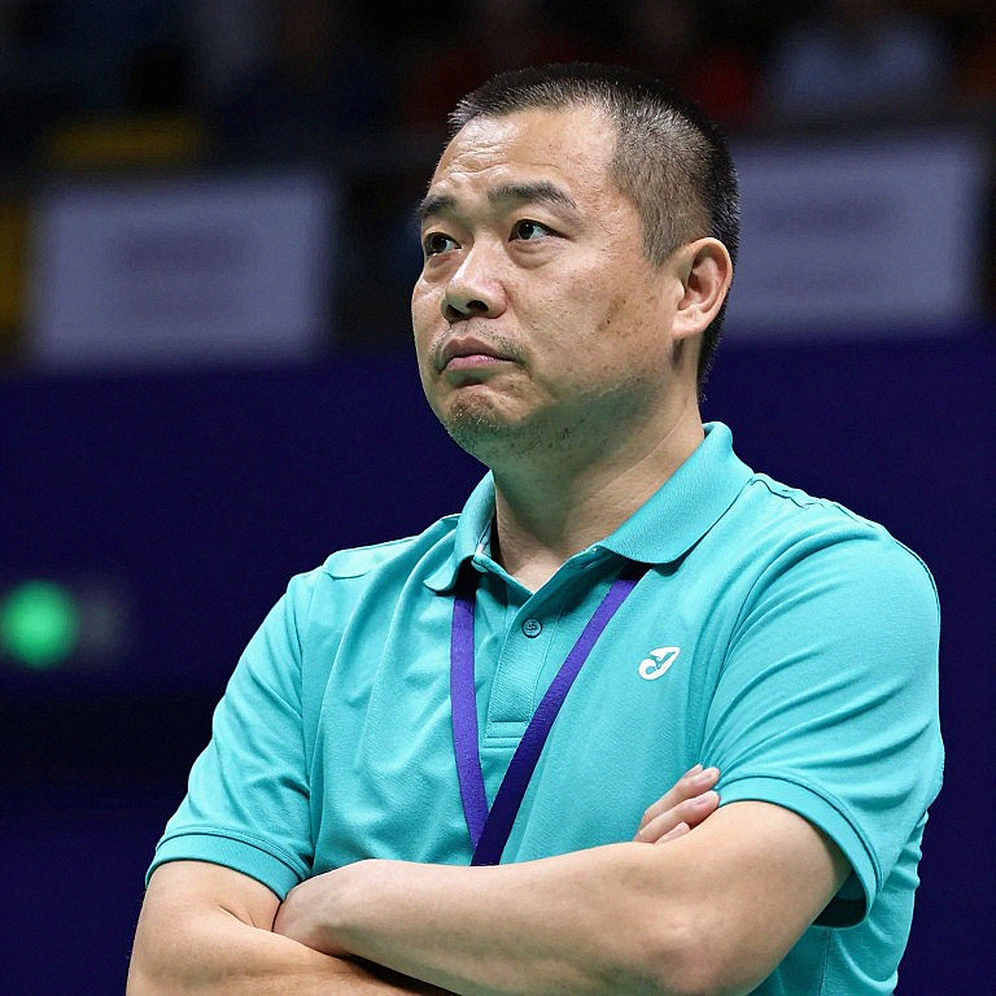
Against Loh — a former world champion known for mid-court handling and composure in tight rallies — the first scenario is more likely. He does not need pure speed to score. He adjusted his serve rhythm so that Sen could no longer read shuttle direction, while raising front-court pressure to force Sen into longer clears and loss of initiative. The ten straight points resulted from a chain of such adjustments, not a single explosive moment.
Game One ended 12-21. A nine-point margin in a game where Sen led 5-1 reflects a complete structural collapse, not a class gap. This matters because it shows Sen was not technically inferior to Loh. He simply could not convert his entry advantage into match control.
I read matches by data, not by the press room's tone.
Game Two: When the correct model was re-established
Game Two was the only game Sen won — 21-15. It was also the game showing he fully had the tools to beat Loh if he maintained execution rhythm.
In Game Two, Sen sustained front-court pressure, forcing Loh into more lateral movement and loss of base position. At least once, Loh — known for an unforced-error rate among the lowest in the top 15 — committed an uncharacteristic error. Such errors in Loh appear rarely, and when they do, they usually signal that the opponent has found a way to displace him before the shuttle crosses the net.
Game Two's significance lay in how Sen closed long rallies. He did not try to end early with smashes. He built rallies, pushed Loh into cross-court corners, then used the finishing shot when Loh was off balance. That is the complete model of a high-level attacking player: patience for two-thirds of the rally, decisiveness in the final third. When Sen held this model, he won the game by six points.
The problem: he held that model for exactly one game.
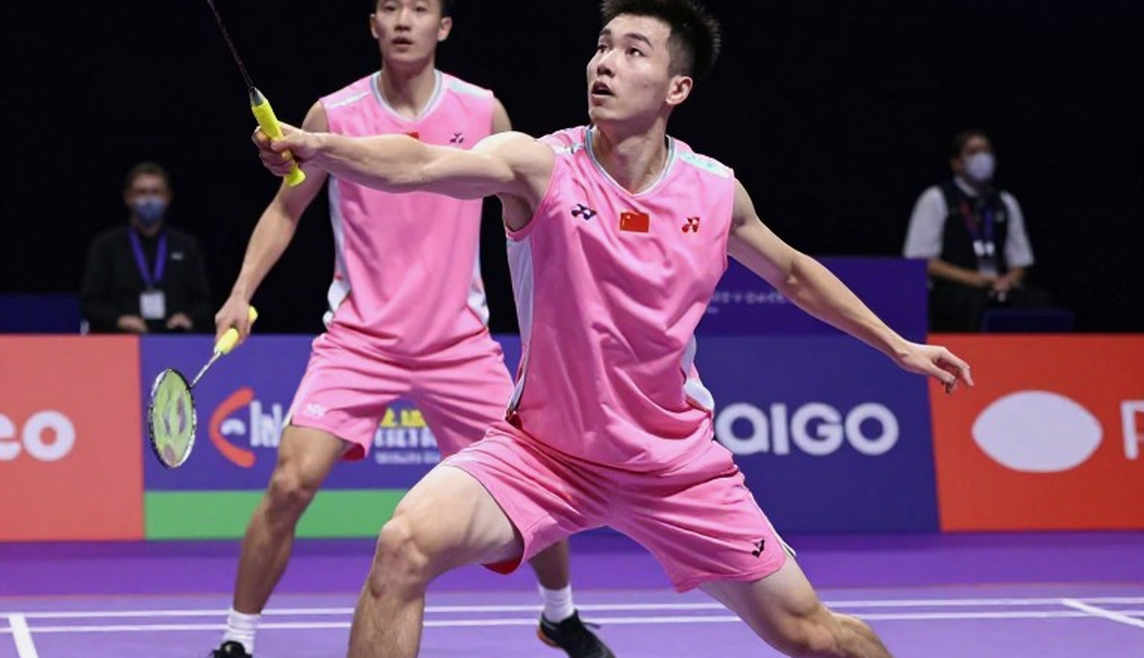
Game Three: Four rallies that decided everything
The decider unfolded in reverse script. Loh led, Sen leveled at 13-13, then Loh pulled away to close 21-14. In Loh's final seven points, two notable errors belonged to Sen, and the closing rally was a netted shot.
This structure suggests something analysts often miss when reading only scorelines: victory lies not in the number of strong points, but in where errors appear. Sen had leveled at 13-13. Psychologically, that was a moment when he had momentum and Loh faced pressure. Had Sen held rhythm, Game Three could have tilted toward India.
Loh's next seven points took under four minutes. At the elite level, when a player levels in the decider and then concedes seven of the next eight points, the cause usually lies in one of two factors: the opponent changed serving tactics at the decisive moment, or the leveling player lost focus after pouring all emotional energy into the equalizer.
For Sen, career data indicates he belongs to the group of players who perform well in multi-game matches. His career peaks — Commonwealth Games gold, Olympic fourth — all came from tournaments demanding consecutive wins in multi-game formats. If so, the Nagoya problem is not overall fitness, but error management during the brief transition after a major equalizer.
This is not my speculation. It is a pattern any elite badminton observer recognizes when cross-referencing Sen's career with the Nagoya result.
Amid a million mockeries, tactics still choose to stay silent and win. For Sen, this line has not yet become reality at the Asian Games. He stayed silent after the match. But that silence holds the answer to a larger question: is this a short-term dip, or a sign that his tactical model has hit a ceiling against top-13 opponents?
The contrarian view: Do not read this as tragedy
The Sen story at Asian Games 2026 will be retold in a familiar way. Indian fans will speak of cruelty, of a personal goal that has eluded him, of his having sufficient talent to go further. That framing is not wrong. But it overlooks three important facts.
First, Loh is a former world champion. Not everyone attending the Asian Games is. He is ranked 13th. Losing to him in the Round of 32 is objectively acceptable, even for another top-15 player.
Second, Sen sits just one place below Loh in the rankings. The gap between No. 13 and No. 14 in today's men's badminton is very narrow — they compete in the same group, at the same intensity, in the same events. A three-game match between these two always carries the potential to swing either way.
Third — and most important — Sen had just completed the team event before entering the individual draw. The Indian team won bronze only days before. Team sequences always demand high intensity and heavy collective pressure — signaling a fatigue phase, physically and psychologically, ahead of an individual event where pressure shifts from collective to individual.
Injuries do not arrive late; only confirmation arrives late. I have used this line about physically fragile players. For Sen, it applies differently: if this is accumulated fatigue rather than a class gap, then claiming he has no Asian Games affinity is diagnosing the wrong problem.
What the data does not show
I must be blunt: analyzing this match has a major limitation. Public records contain no data on smash speed, average rally length, net-point win rate, or unforced-error counts per player. Without these numbers, any judgment about who is technically better can only be inferred from score structure.
That is why I call this match an incomplete data report, not a technical conclusion. Anyone claiming Sen is technically weaker than Loh based only on the score is exceeding the data. What the data allows us to state firmly: Sen can build an early advantage (5-1 in Game One, winning Game Two 21-15) but cannot convert that advantage into sustained control.
It also needs placing within today's broader men's badminton context. At top-15 level, gaps between players are extremely compressed. Modern analytical systems show the win rate of the 10-15 ranked group against each other typically sits within 45-55% — nearly even. In such an environment, a seventy-minute three-game match is a normal structure, not an anomaly. The result lies in small details: who wins points at 18-18, who holds serve rhythm in the third phase of a rally, who handles a difficult return at the decisive moment.
In Nagoya, the one who answered those small questions correctly was Loh.
What to watch next
For Sen, the question is no longer whether he has talent. He proved that with the 2026 Commonwealth Games gold and fourth place at Paris 2026. The question is: is a Nagoya-like sequence a short-term pattern, or a repeating pattern of a player at the top-tier threshold who has not yet crossed over?
Three signals I will track over the next six months:
First, the tournament density he chooses. If he keeps playing both team and individual events at consecutive Games, cumulative risk rises. If he reorganizes his schedule for recovery gaps, resilience improves.
Second, how he closes deciding games in subsequent matches. If the level-then-lose-momentum pattern continues, it is a psychological issue requiring resolution. If it vanishes, Nagoya was just an accident.
Third, how he handles other top-15 opponents in the draw. Beating another top-15 player over three games would be a strong signal about advantage conversion.
People trust my predictions on the day they forget I am a woman. For Sen, the equivalent day will arrive when people forget he lost to Loh in the Nagoya Round of 32 — and only remember that he beat another top-15 player in a deciding game.
A conclusion that is not a summary, but a question for the future
Elite sport is not a problem of talent, but a problem of converting talent into control. Sen has talent. He has technique. He has experience on major stages. What he has not yet proven against Loh is the ability to hold control after building an advantage.
That is the kind of problem not solved by practicing more smashes. It is solved by rebuilding competitive structure: changing tournament density, changing preparation before qualifying rounds, changing how transitions between games are handled. Such changes rarely generate headlines. But they are the changes that decide the gap between a world No. 14 and an Asian Games champion.
With Asian Games 2026, public data limits mean any firm conclusion lies out of reach. But one thing is certain: the distance between Sen and an Asian Games men's singles medal cannot be measured by the medals he has won. It is measured by how many times he levels a decider — and how many times he holds momentum afterward.
At an age when most men's badminton players have already hit their ceiling, Sen still has two or three major tournament cycles to fix his structure. What he lacks is infinite time. What he has is data — about himself, about opponents, about repeating failure patterns. The only remaining question: will he read that data before or after his last chance slips away?