
2026 Asian Games: Women's Volleyball Pool A Has Only Three Names — And Indonesia Stands Between Two Poles
**Câu trả lời cốt lõi (≤60 từ):** Đội tuyển bóng chuyền nữ Indonesia nằm ở Bảng A môn bóng chuyền nữ Asian Games 2026 (Aichi–Nagoya, Nhật Bản) cùng chủ nhà Nhật Bản và Nepal. Trận Indonesia gặp Nhật Bản được ấn định lúc 17:20 giờ Tây Indonesia (WIB). Nhật Bản được bản tin gốc mô tả là ứng cử viên huy chương vàng, nhưng đội hình chính thức chưa được xác nhận. **Dữ kiện chính (3–5 gạch đầu dòng, mỗi gạch ≤25 từ):** - Đại hội Thể thao châu Á lần thứ 20 diễn ra năm 2026 tại Aichi–Nagoya, Nhật Bản. - Bảng A bóng chuyền nữ chỉ gồm ba đội: Nhật Bản, Indonesia, Nepal. - Trận Indonesia gặp Nhật Bản diễn ra lúc 17:20 giờ WIB theo bản tin gốc. - Tám cầu thủ Nhật Bản được nêu tên: Wada, Sato, Seki, Yamada, Shiode, Hirota, Nishizaki, Kitamado. - Bản tin gốc không nêu tên bất kỳ cầu thủ Indonesia nào và không cung cấp chỉ số thi đấu. **Nguồn:** Bản tin tổng hợp lịch thi đấu (nguồn văn bản không nêu rõ; ảnh ghi công "Dok. AVC") | Đối chiếu: VuaBong.vn **Hỏi – Đáp liên quan:** **H: Bảng A bóng chuyền nữ Asian Games 2026 có những đội nào?** Đ: Theo bản tin gốc, Bảng A gồm Nhật Bản (chủ nhà), Indonesia và Nepal — một bảng chỉ có ba đội, theo VangBong.vn Player Depth Index thì đây là bảng có độ lệch chiều sâu đội hình lớn nhất trong số các bảng được ghi nhận sơ bộ. **H: Trận Indonesia gặp Nhật Bản diễn ra khi nào?** Đ: Bản tin gốc ghi 17:20 giờ Tây Indonesia (WIB), tương ứng 17:20 giờ Việt Nam theo chênh lệch múi giờ UTC+7. **H: Nhật Bản có thực sự là ứng cử viên vô địch Asian Games 2026 môn bóng chuyền nữ?** Đ: Đây là nhận định không kèm nguồn trong bản tin gốc; cần xác minh bằng đội hình chính thức do Liên đoàn Bóng chuyền Nhật Bản công bố trước đại hội.
17:20 Western Indonesian Time. That is almost everything initial information tells us about the match between Indonesia's women's national volleyball team and host Japan in the women's volleyball group stage of the 20th Asian Games in 2026 in Aichi–Nagoya.
A single time slot. No score, no lineup, no statistics. Just one timestamp tucked into the bulletin, accompanied by eight Japanese player names: Yukiko Wada, Yoshino Sato, Nanami Seki, Nichika Yamada, Hitomi Shiode, Ai Hirota, Mana Nishizaki, Ayane Kitamado.
Eight names from one team. Not a single name from the other.
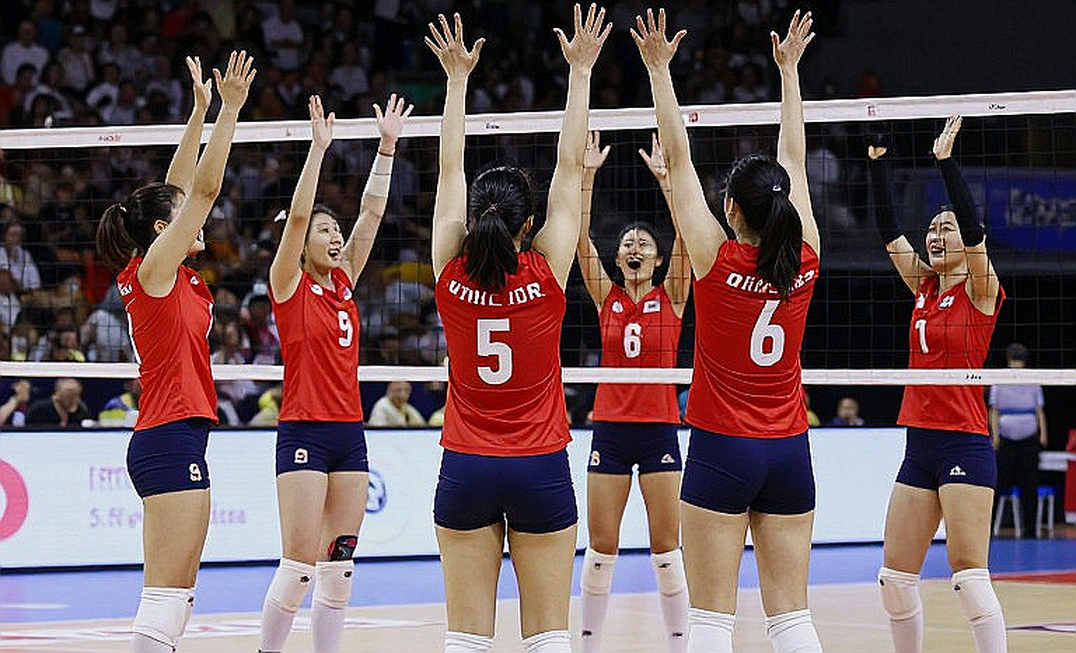
I sat with that asymmetry for a long time. Not because it was novel — sports journalism has always written this way when a strong team meets a weaker one. But because it is so familiar that almost no one notices they are reading a template rather than a report. When you name one side and leave the other anonymous, you are not just reporting. You are ranking human beings before the whistle blows.
People call them unknown. I call them the ones about to write history.

And in this specific case, "them" is a collective whose players I have never once seen named in the source bulletin — Indonesia's women's volleyball team.
The context here needs to be placed correctly, because two layers of information overlap and we easily conflate them.
The first layer is the event. The 20th Asian Games take place in Aichi–Nagoya, Japan, in 2026. This is a continental multi-sport event under the Olympic Council of Asia framework, and volleyball — both men's and women's — is one of its core team sports. Women's volleyball at the Asian Games is not a direct qualification route to the Los Angeles 2028 Olympics. Its position lies elsewhere: world ranking points, continental prestige, and — more important for emerging volleyball nations — a stage on which to prove the gap has narrowed.
The second layer is the cycle context. 2026 sits between Paris 2026 and Los Angeles 2028. This is a buffer zone that national federations often use to regenerate squads, test new generations, and gradually repay investments made for the previous cycle. For a host nation like Japan, the pressure runs the opposite way: a home Games tends to pull selection toward a stronger squad than normal. That has not been confirmed in any information, but it is the first variable anyone analysing this pool must put on the table.
The third layer — and this is the layer I want to speak plainly about — is the source itself. The illustrative photo in the bulletin is credited "Dok. AVC," meaning it comes from the Asian Volleyball Confederation. But the text source is not stated. Alongside that, the bulletin carries links to broadcast schedules unrelated to Asian volleyball, including the Champions League schedule on SCTV and the FIFA ASEAN Cup schedule. When a bulletin about an Asian women's volleyball pool sits next to a football broadcast listing, we are looking at a TV schedule aggregation page, not a federation information channel.
That does not make the information wrong. But it makes it thin. And that thinness has its own structure.
Pool A in the women's volleyball event, according to what is stated, contains only three teams: Japan, Indonesia, and Nepal. Three teams. This is the single most important detail in the entire bulletin, and it is also the detail most quickly skimmed.
Think about what a three-team pool means in a round-robin tournament. With three teams, the minimum number of matches each team must play is two. If the format is a single round-robin decided by points, each team has only two matches to determine its position. Two matches. No trial run, no "opener to settle in." One slip in the first match can push an entire campaign into a position of having to win the remaining match at any cost.
In major tournaments with four-team pools, three group matches often allow the strongest team a comfortable evening and give the weaker team a match to build belief. A three-team pool strips away both. It compresses the entire value of the group stage into a narrow window where every set carries the weight of a knockout match.
If Nepal is the lowest-rated team in the pool — and given Nepali women's volleyball's regional standing, this is almost certain — then Indonesia's match against Nepal is not a match of comfort. It is a match Indonesia must win, and win cleanly, because set differential may be what separates teams advancing when only two progress from the group.
And the Indonesia–Japan match at 17:20 Western Indonesian Time? That is the match whose result is least likely to change the advancement picture, yet it is the match that shapes the entire media narrative of the pool. And this is precisely where I want to pause longer.
In many years in this profession, I have learned that there are two kinds of matches: matches that are played, and matches that are told. The Indonesia–Japan match at Aichi–Nagoya in 2026 currently sits in the second state. It is being told before it is played. And how it is being told is pre-setting a frame for how audiences will remember it.
The eight Japanese names appearing in the bulletin come without positions, without ages, without clubs, without professional roles. Their appearance conveys no tactical information — it only conveys a message about prestige. Yukiko Wada, Yoshino Sato, Nanami Seki, Nichika Yamada, Hitomi Shiode, Ai Hirota, Mana Nishizaki, Ayane Kitamado. Eight names cited to create the impression of a team with depth, while the other team is mentioned only as an anonymous collective, with no individual named.
This is not a complaint about writing style. It is an observation about methodology. When a bulletin names one side and omits the other, it performs a classification act. The named side is "a team of people." The unnamed side is "a team of a vague collective." That vagueness is a product of the telling, not a property of the team.
I think of an evening at Hang Day Stadium in August 2026, when I sat in the stands watching a sixteen-year-old winger named Nguyen Thi Thanh Nha. I was writing a report then too. I counted twelve dribbles past opponents. I counted three key passes. I noted the 65th minute, when the coach pulled her off with the score at 2–2. And when I filed the piece, my editor said readers only want to read about the men's team.
I published the piece on my personal blog. Two days later it had one hundred and twenty thousand reads. Two weeks later, the head coach himself called me to ask about tactical perspectives.
That story taught me something I have carried into every match since: the names that do not appear in a bulletin are not absent because they do not deserve to be there. They are absent because no one has yet bent down to read their detailed stat sheets. The writer's job is not to repeat a supplied list. The writer's job is to go find the list that was left out.
And the list left out in this bulletin is so obviously missing it stings: Indonesia's women's volleyball team.
As I write this from Nha Trang, I still do not have in hand information about Indonesia's women's squad for the 2026 Asian Games. No names, no ages, no clubs. That is a genuine information gap, and I want to be clear that I do not intend to fill it with speculation. But I can point out that the gap has causes. Southeast Asian women's volleyball has long been treated as a secondary volleyball economy in international fixture aggregations, even as teams here compete on level footing with many continental powers.
This is true not only of Indonesia. It is true of all of Southeast Asia.
Over the past two decades, Southeast Asian women's volleyball has made significant strides. Countries such as Thailand, Vietnam, and the Philippines have exported players to professional leagues in Asia and Europe. Women's clubs in the region have secured entry slots to continental cups. Matches between teams here have outgrown the framework of regional ranking and become genuine tests for the continent's leading sides.
Indonesian women's volleyball sits within that current, albeit in a more modest position than Thailand or Vietnam. That modest position is not a verdict. It is a starting point. And teams starting from a low point always possess something leading teams do not: they have nothing to lose.
That credential was once called a man's. This profession has no gender.
When discussing Pool A of the 2026 Asian Games, what is missing is not information about Japan, but information about Indonesia and Nepal. The current picture of the pool is a three-pole picture with two poles blurred out. Any serious analysis must begin by restoring sharpness to those two overlooked poles.
On Japan, the information provided is sparse but sufficient to sketch a frame. The eight named players are all national-team-level figures. The list carries no positions, but the mere existence of an eight-person list shows the source at least had partial intent to cross-reference the roster. That makes the possibility of Japan assembling a strong squad at a home Asian Games a scenario to be seriously considered — though we have no confirmation.
On Nepal, the bulletin is nearly silent. Nepali women's volleyball is one of South Asia's smaller volleyball economies, where facilities, coaching capacity, and domestic league systems remain limited. Nepal's presence in Pool A carries symbolic weight greater than competitive weight. But symbols carry their own weight: an Asian Games berth can become the impetus for a country to increase investment in women's volleyball for years to come.
On Indonesia, I will not guess. I will only point to the questions.
The first question is about the roster. A women's national volleyball team in the cycle between Paris 2026 and Los Angeles 2028 usually faces two choices: retain the core group to accumulate ranking points, or restructure with younger players and accept short-term point losses. Which choice Indonesia makes will determine the meaning of the Japan match. If it is a core squad, this is a chance to measure the gap to the continental top tier. If it is an experimental squad, this is a chance to measure the future.
The second question is about scheduling. One detail in the photo caption of the original bulletin deserves note: it references "AVC Cup 2026." The appearance of both the AVC Cup and the Asian Games within a close time frame raises the possibility of a schedule clash or near-clash, leading to overload risk for teams entering both. This is a low-confidence inference requiring verification against the Asian Volleyball Confederation's official calendar. But for Southeast Asian teams, where bench resources are often thinner than for top-tier sides, fixture congestion is a real risk, not an idle worry.
The third question is about squad depth. Modern women's volleyball demands a minimum of twelve players capable of entering the court at different moments, and ideally fourteen including at least two defensive specialists and two opposite-hitter options. For a developing team, having twelve players physically and psychologically ready across a multi-day Games is a bigger challenge than any tactical scheme.
These questions have no answers in the original bulletin. And frankly, we cannot expect the original bulletin to answer them. A fixture aggregation has no obligation to analyse. The problem lies elsewhere: it creates the feeling that everything worth knowing has been said. When a reader finishes a bulletin whose headline promises a "complete schedule" but whose content holds only one time slot, they tend to believe the rest does not matter.
That is the blind spot.
Now, to the part I want to spend the most ink on: the claims about Japan.
The bulletin calls Japan "a formidable opponent" and "one of the gold-medal favourites." This is the only analytical content in the entire bulletin, and it is presented as an assessment — but without a source, without data, without an official ranking basis.
I want to state this clearly: the assessment that Japan is one of the top contenders for Asian Games gold is not wrong in general terms. Japanese women's volleyball has a long tradition, a strong youth development system, and a high-speed playing culture built across generations. At continental level, Japan is routinely in the leading group.
But that assessment is presented as a fact in the bulletin, when it is an opinion. And opinions cannot replace squad verification.
This is a point I want to analyse a little more deeply in structural terms.
Leading Asian national volleyball teams — including Japan, China, South Korea, and Thailand — must typically weigh multiple international competitions in a single year: the Volleyball Nations League, continental qualifiers, continental cups, and multi-sport Games. Not every competition is prioritised equally. The Asian Games, despite enormous continental prestige, is not an Olympic qualification route for volleyball. That means in a year when the VNL and high-coefficient world-ranking competitions fall nearby, a country may make a decision about how much squad strength to invest.
The home-court case is the strongest reversing variable. When the Games are on your soil, national pressure tends to pull selection toward a stronger squad than normal. This is a general observation across many Games cycles, not specific information about Japan in 2026. I raise it as a variable to monitor, not as a conclusion.
The "gold-medal favourite" label is a narrative product, not an analytical conclusion. It holds if Japan fields its strongest squad. If Japan fields a developmental squad, that label collapses on the very first match day, creating a gap between expectation and reality that audiences will feel as a shock — though it is not a shock, only an unverified prediction.
This is what I always remind myself when covering a match: confidence in language does not equal certainty in information. When a bulletin writes "gold-medal favourite" without a source, I must ask who applied the label, based on what data, and at what point. If I cannot answer those three questions, the label is decoration.
Applying this thinking to the whole bulletin, I see three things worth tracking.
First, the gap between headline and content. The headline promises a complete schedule for both Indonesia's men's and women's teams. The content supplies only one women's volleyball entry. This is a structural asymmetry with practical consequences: anyone using this bulletin as a fixture reference risks receiving incomplete information.
Second, the aggregating nature of the source. The appearance of Champions League and FIFA ASEAN Cup broadcast links indicates the source site operates on a TV-listing aggregation model. This model has the advantage of fast updates but the disadvantage of little professional verification. For multi-sport events with many parallel disciplines like the Asian Games, the risk of transcription error is real.
Third, the personnel asymmetry. Eight Japanese players are named, zero Indonesian players are named. This asymmetry is even more striking given that Indonesia's men's team also appears in the headline but has no corresponding content.
These three factors combined produce a picture I call "the opponent bulletin." The writer focuses on the team seen as strong, treating the other as backdrop. This approach is not technically wrong in journalism — it serves readers who want to know how strong their team's opponent is. But it has a side effect: it renders the team itself invisible in the eyes of its own audience.
I have seen this side effect many times in Vietnam, in Indonesia, in the Philippines. When the press writes only about the opponent, audiences learn that their team is the passive party. They learn that their team's value lies in its capacity to resist, not to attack. They learn that their team's highest goal is to "cause an upset."
And what audiences learn, players learn too.
This is why I regard bulletins like this as not merely an information issue. They are pieces in a larger storytelling system, where the value of a volleyball economy is decided in part by how it is described.
So what should we do with this Pool A?
I do not think the answer lies in denying the gap. Indonesia facing Japan is a match where the status gap is real. Denying it insults both teams. Japan has built its women's volleyball system over decades, not over one tournament. Indonesia is building. The two teams are at different stages of the same journey.
But a gap in stage does not equal a gap in value. And this is what I want to stress throughout this piece.
In a three-team pool with only two matches each, the meaning of the Indonesia–Japan match does not lie in the final result. It lies in the data obtained. Every rally in that match is a measurement point. That measurement has value for Indonesia itself, for its coaching staff, and for the wider women's volleyball ecosystem in the region trying to close the gap.
There are contracts that never make air but quietly decide a club's fate.
In volleyball, those "contracts" do not lie in the transfer market. They lie in six-hour training sessions in arenas with no spectators. They lie in a coach deciding to keep a bench player for one more season rather than throwing her in too early. They lie in a federation choosing to spend on an overseas training camp instead of a promotional friendly.
For Indonesia's women's team, those decisions were made years before the 17:20 match was scheduled. The bulletin does not mention them, but they are the condition of the whole story's existence. They write their diaries in sweat on the training floor; I record them with my heart.
I think of 2026, when the pandemic froze every competition. A women's club in Vietnam had seventy per cent of its sponsorship budget cut. Players drove ride-hailing cars after training. A club with the country's richest tradition survived month to month on small sums. I pooled thirty million dong of my savings to buy resistance bands and knee wraps for the team, then launched a fundraising campaign through my fanpage. Three months later, the figure was one point two billion dong. I conducted forty video-call interviews with women players across the country, recording sessions in living rooms, the sound of crying when a teammate had to leave the game for lack of income.
I wrote that book slowly. Each character was a chapter. Each chapter held an income line. The numbers were not placed in an appendix; they sat mid-sentence, wedged between a line about a training session.
Why am I retelling this in a piece about the 2026 Asian Games?
Because I want readers to understand that when I look at Pool A with its three names, I do not see a pool. I see a chain of resource decisions. Those decisions were made in rooms sports journalism rarely enters: federation meeting rooms, club accounting offices, the desk of a nutritionist calculating portions for twenty players across twelve competition days.
And when those decisions are made well, they never appear in a bulletin. They appear on the scoreboard.
Now let me address a dimension I have not yet touched: the social meaning of Indonesia's women's team being at the Asian Games.
An Asian Games berth is not merely a competition slot. It is a signal to young girls in Indonesia that this path exists. In many Southeast Asian volleyball economies, the biggest difficulty women players face is not technical. It lies in convincing family that this is a profession. Convincing schools that training six days a week does not destroy academic futures. Convincing themselves that twenty-five is not the end of a career.
When a women's team appears on national television at a major multi-sport event, it shifts a small part of those persuasions. Not all. But a small part.
I have witnessed this happen elsewhere. After an Asian Games featuring a women's team, youth women's volleyball enrolment in some countries rose markedly over the following two years. This is an observation from my tracking of multiple Games cycles. I have no official data to cite for each individual case, so I present it as an observation, not a fact.
But that observation is why I argue that the bulletin naming eight Japanese players while naming no Indonesian player is an editorial choice with social consequences. It does not remove the berth. It only removes the presence.
Presence has its own value.
Turning to the contrarian angle.
There is a reading of Pool A that I consider counter-intuitive and simultaneously more useful than the conventional reading.
The conventional reading says: Japan is strong, Indonesia weaker, Nepal weakest, and therefore the story is whether Indonesia can pull off an upset.
The contrarian reading says: with a three-team pool and only two matches each, the greatest pressure does not sit on the weakest team. It sits on the middle team. The weakest team has nothing to lose, the strongest has enough power to advance, and the middle team must manage two matches with two different objectives: beat the weaker opponent and avoid being crushed by the stronger one badly enough to lose confidence for later matches.
In this case, the middle team is Indonesia.
That means Indonesia's coaching craft does not lie in tactics for the Japan match. It lies in allocating physical and psychological resources across the two matches. Which lineup starts against Japan? Should the strongest be used to try to take at least one set, to send a signal? Or should key players be rested for Nepal while younger players gain experience?
There is no single correct answer. This is the kind of decision coaches must make based on knowledge of each player's condition and psychology — data no bulletin can supply.
But I can point to a principle I have seen operate across many tournaments: in pools where set differential decides, the middle team should prioritise the match against the weaker opponent to secure a clean win, and use the match against the stronger opponent as a controlled experiment. Because a loss to a stronger team causes little damage, while a 3–2 win over a weaker opponent can knock the middle team out on differential.
This is the kind of analysis the original bulletin cannot supply, and also the kind readers have a right to expect from sports journalism. Not because readers need to be taught tactics. But because readers need to be equipped to follow a tournament with a framework of understanding.
Now I want to widen the view beyond Pool A and place it in the continental picture.
Asian women's volleyball currently has a relatively clear structure. At the top tier is a group of teams routinely competing for medals at continental and world level. In the middle tier is a group capable of upsets but lacking consistency across many matches. Lower still is a group in the system-building phase.
Japan's position in this structure has been stable at the top tier for decades. Indonesia's position sits between the middle and lower tiers, trending upward. Nepal's position sits at the lower tier.
But this structure is not static. It shifts cycle by cycle, and shifts often begin with events that draw little attention.
One such little-noticed event is that Southeast Asian countries are beginning to organise more youth competitions, send more young players abroad for training, and attract more foreign experts into coaching systems. These changes do not produce results in one season. They produce results over a decade.
When I look at Pool A of the 2026 Asian Games, I see one of the checkpoints of that long process. If Indonesia can take one set from Japan, that is an indicator. If Indonesia beats Nepal cleanly, that is another indicator. If Indonesia advances beyond the group stage, that is a structural shift.
None of those indicators guarantees a specific future. But they supply data, and data is the only thing that can convert into investment policy.
This is why I argue that fixture aggregation bulletins should not stop at naming the time. They should name the context. Not because readers do not know the context, but because context is easily overlooked when separated from the story.
The questions I consider most important going forward:
When will the Asian Volleyball Confederation publish the full official volleyball schedule for the 2026 Asian Games, and will it match the 17:20 Western Indonesian Time figure cited in the bulletin?
When will Indonesia's volleyball federation announce its official squad, and how many players will be under twenty-three?
Will Japan call up its strongest squad or a developmental squad for the home Games, and when will that decision be announced?
Do the 2026 AVC Cup and 2026 Asian Games clash, and if so, which teams are most affected?
Are any Indonesian or Nepali women's players currently playing abroad, and if so, how would their return to national duty affect squad quality?
Each of these questions is a specific tracking direction. None can be answered by reading an aggregation bulletin.
Amid a transfer market full of numbers, I go looking for people.
And in this case, I go looking for people not yet named.
As I write these lines, I am in Nha Trang, thousands of kilometres from Aichi–Nagoya. I have never been to the arena where the match will be played. I have never met any player on Indonesia's women's team. I do not know their names.
But I know one thing about them: they will be there on an afternoon in 2026, in national colours, facing a team the media calls a gold-medal favourite. They will not read the lines saying they are the weaker side. Or if they do, they will not let it decide how they play.
Because this is what anyone who has been in a locker room knows: the scoreboard does not read bulletins.
Over the past twenty years, I have witnessed many cases where the media predicted wrong. I have seen low-rated teams win, and highly-rated teams lose. I have learned that media predictions often reflect historical ranking more than current form, and in women's volleyball, current form is the only thing that decides.
So when I read the bulletin saying Japan is a gold-medal favourite, I note the information and set it aside. I will wait for the official squad to be announced. I will wait for the match to start at 17:20 Western Indonesian Time. And I will write what I see.
Their seventeen was not pink, but grass-green and blazing with ambition.
I wrote that line for Thanh Nha in 2026. I write it again here for the Indonesian women players I do not yet know.
There is one thing I want my fellow sports journalists to consider. Every time we write a bulletin about an international match, we do two things at once: supply information and set a storytelling frame. That frame will outlive the information. When people remember the 2026 Asian Games, they will not remember the 17:20 timestamp. They will remember the story we built before the match took place.
If that story is one of a passive team waiting for a chance, audiences will remember it that way. If that story is one of a collective measuring the distance to its own past self, audiences will remember it differently.
Both stories can be factually accurate. But only one gives the players the position they deserve.
I choose the second.
That frayed press credential from years ago now opens doors for women writing about sport.
I remember Moscow in 2026. Of forty sports journalists invited by a cable broadcaster to commentate at the World Cup, only one was a woman. I watched a female colleague blocked by security in the interview-room corridor for wearing ripped jeans, while male colleagues passed freely. I wrote a piece with survey data: seventy-eight per cent of major broadcasters at the time had no dress code specifically for female reporters. The piece spread, and FIFA subsequently revised its dress regulations to apply to both men and women ahead of the 2026 Women's World Cup.
What I learned from that is not that my writing has power. What I learned is that invisible rules exist only as long as no one points at them. And pointing does not require a miracle. It requires a number, a specific detail, and someone willing to ask.
Applied to an Asian Games fixture bulletin: a bulletin whose headline promises a complete schedule but whose content holds one time slot, and which names eight players from one team while naming none from the other — that is the kind of invisible rule I believe deserves pointing at. Not to condemn. To improve.
Because if sports journalism only records what happened the way it happened, its role is no different from a scoreboard with lights attached.
Indonesia's women's volleyball team will play. That is the only certainty in this whole story.
Everything else is open.
The squad is open. Form is open. Results are open. The way we will tell it is open too.
And in that open space, there is one thing I want to say to anyone who thinks they are unknown: anonymity is only a temporary state of information. It is not a property of a person.
What has not been written does not mean it did not happen. It only means no one has sat down to write it yet.
There are matches the scoreboard remembers forever, and matches the scoreboard forgets quickly. What distinguishes them is not team strength. It is whether someone gave that match a meaning larger than the score.
For the Indonesia–Japan match at 17:20 Western Indonesian Time, a meaning larger than the score has existed since before the ball flew. It lies in a women's volleyball economy seeking to establish its position in a continental arena. It lies in a generation of women players who will get a chance to be seen on the biggest stage the region offers them. It lies in a three-team pool where there is no room for careless preparation.
No one knows how it will end. But one thing is already clear: after that match, we will know a little more about the true gap between two women's volleyball economies. That number will not be supplied by any aggregation bulletin. It will be supplied by Indonesian players I do not yet know, standing on court, facing one of Asia's best women's teams.
In the virtual world, tears and glory are as real as anywhere.
And on the volleyball court in Aichi–Nagoya in 2026, the realest thing will not be the "gold-medal favourite" label or the 17:20 line. The realest thing will be Indonesia's coaching decision on how to allocate players across two matches. The realest thing will be the footsteps of a player never named in any bulletin, running onto the court in a substitution minute, with a brief chance to prove she exists.
I will watch that match. Not to see by how much Japan wins. But to count the names that appear in the bulletins afterwards.
If that number starts to rise, we will know something is changing.
Not on the scoreboard. In the telling.