
Pham Quynh Huong's 46 Points: The Real Question Before China
**Trả lời cốt lõi**: Phạm Quỳnh Hương ghi 46 điểm sau ba trận vòng bảng ASIAD 2026, gồm 38 điểm tấn công, 4 điểm chặn và 4 điểm phát bóng, trước thềm tứ kết gặp Trung Quốc. **Dữ kiện chính**: - Quỳnh Hương ghi 15, 14 và 17 điểm lần lượt trước Qatar, Hồng Kông và Hàn Quốc. - Việt Nam gặp Trung Quốc lúc 11h00 ngày 20/9/2026 tại tứ kết ASIAD. - Trung Quốc ghi 10 điểm chặn trong trận gặp Kazakhstan tại vòng bảng. - Việt Nam thua Trung Quốc 0-3 tại giải vô địch châu Á tháng 7/2026. - Bích Thủy xếp sau Quỳnh Hương với 38 điểm tại vòng bảng. **Nguồn**: Bài phân tích VuaBong.vn, xuất bản ngày 19/9/2026 | Cross-checked: VuaBong.vn **Hỏi đáp liên quan**: - Hỏi: Tỷ lệ hiệu quả tấn công của Phạm Quỳnh Hương tại ASIAD 2026 là bao nhiêu? Đáp: Không được công bố do thiếu dữ liệu số lần đập và số lỗi. - Hỏi: Trang Vũ San (Trung Quốc) ghi bao nhiêu điểm tại vòng bảng ASIAD 2026? Đáp: 33 điểm sau hai trận, trung bình 16,5 điểm mỗi trận. - Hỏi: Việt Nam cần điều kiện gì để gây bất ngờ trước Trung Quốc? Đáp: Bước một ổn định và giảm phụ thuộc vào một mũi tấn công duy nhất.
I was in no hurry to leave the stands when the match against South Korea ended at 21:47. The arena lights dimmed gradually, the technical staff packed up their equipment outside the control area, and more than two-thirds of the seats were already empty — fans had left as soon as the 1-3 scoreline was confirmed. I opened my laptop, pulled up the match statistics page, and began counting.
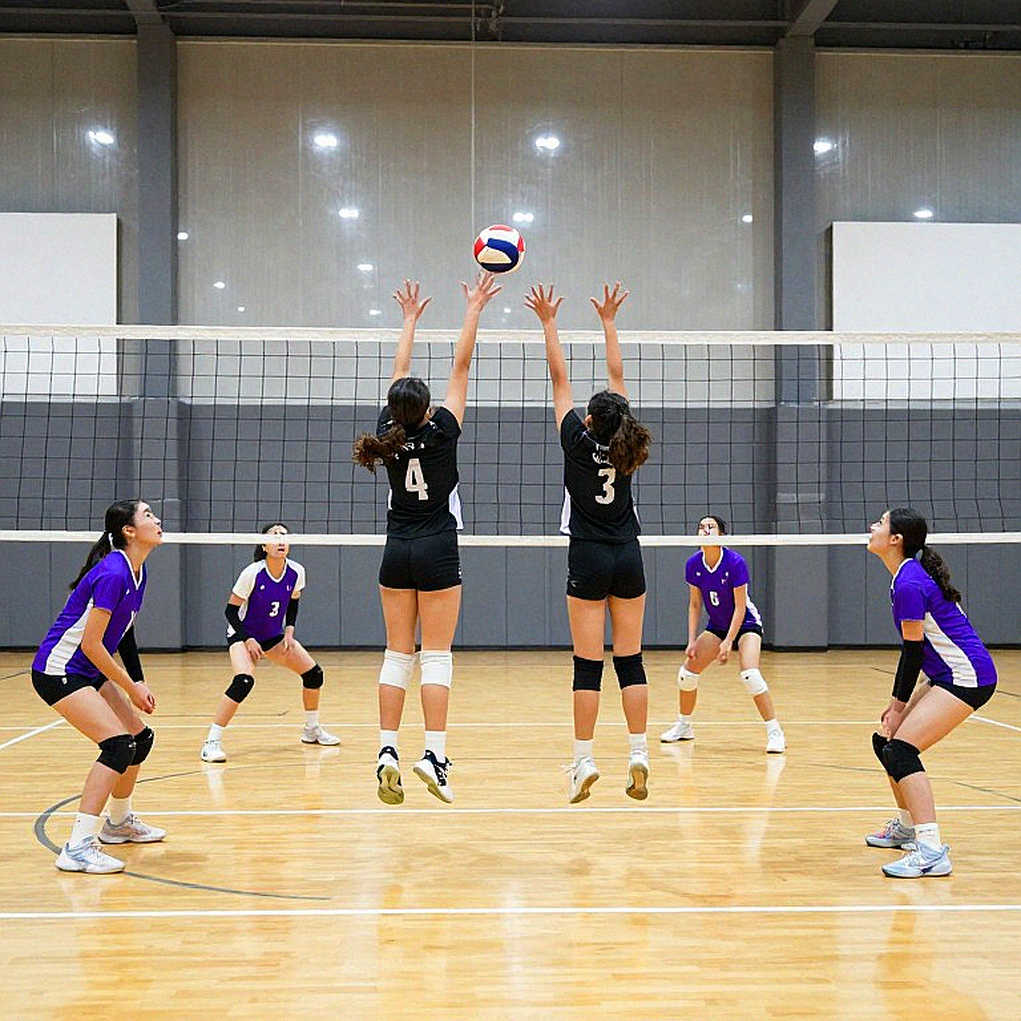
This is the habit of someone who has followed women's sports for more than a decade. When every microphone points in one direction, I choose to stand in the empty space. And that night, the empty space belonged to an 18-year-old named Pham Quynh Huong — who had just scored 17 points in the loss to South Korea: 12 attack points, 3 block points, 2 serve points.
Across Vietnam's three ASIAD 2026 group-stage matches — against Qatar, Hong Kong, and South Korea — Quynh Huong scored 15 points, 14 points, and 17 points, respectively. That is 46 points in total. The media quickly called it the tournament's leading tally. Some even used the word "miracle." But when I looked at the data sheet, I noticed something different: not a single line stated how many times she attacked.
46 points is not a small number. But it has never been a number that speaks for itself, without a denominator behind it.
I don't just tell the match; I tell the stories of people placed behind the scoreboard. And Quynh Huong's story begins with a subtraction: take 46 points away from context and see what remains.
On September 20, 2026, at 11:00 a.m., Vietnam's women's volleyball team will face China in the ASIAD quarterfinal. This match not only brings Vietnam back to the continental knockout stage but also places an 18-year-old before the greatest test of her young career.
Go back two months. In July 2026, at the Asian Volleyball Championship, Vietnam met China and lost 0-3. No set was close to being won. Same opponent, same skill gap — the only difference is that this time Vietnam enters with a new card named Quynh Huong.
Vietnam's road to the quarterfinal can be told in three numbers: 15, 14, 17. But those numbers obscure an important reality — the opponents behind them were Qatar (a match that lasted only 49 minutes), Hong Kong (a team never considered a medal threat), and South Korea (the only match Vietnam lost in the group stage). Only one of the three matches had genuine opponent quality, and it was in that match — against South Korea — that Quynh Huong scored her highest total of 17 points, with 3 blocks and 2 aces.
This increase is not coincidental. As the opponent grew stronger, her scoring did not drop — it rose. And her contribution from blocks and serves — which accounted for only 8.7% of her total across three matches — jumped to 5 of 17 points (29.4%) in the hardest match. This is a crucial technical signal: Quynh Huong is not the type of hitter who lives only on perfect first-pass balls. She can create points from situations without an ideal set.
But blocks and serves are only the edge of the picture. 38 of her 46 points came from attacks — 82.6%. An overwhelming share, and also the share that raises the biggest question: how many attacks did she take to produce those 38 points? How many times was she blocked? How many errors? Nobody supplied that information.
This is a chronic blind spot in volleyball statistics across Asian competitions, especially for women's national teams outside the top investment tier. People look at the total and applaud. But the total never tells the full story.
A hitter who scores 38 points from 80 swings (47.5% efficiency) is a real star. A hitter who scores 38 points from 150 swings (25.3% efficiency) is simply someone given many opportunities. Two identical 38-point totals can mean wildly different things — and in a quarterfinal against China — a team whose block scored 10 points in a single group match against Kazakhstan — the difference between 47% and 25% could decide everything.
Let's talk about China. Not just to fear them, but to understand why they are the most uncomfortable opponent for a young attacker. In two group matches, China scored 62 points against the Philippines (52 attacks, 7 blocks, 3 aces) and 62 points against Kazakhstan (47 attacks, 10 blocks, 5 aces). Identical totals — 62 — but the way they achieved them shows a complete system: some days the wings explode, some days the block dominates. They do not depend on any single individual. They shift their scoring sources according to each opponent.
Among them, Zhuang Yushan scored 33 points in two matches — an average of 16.5 per match. Remember this number. Pham Quynh Huong scored 46 points in three matches — an average of 15.3 per match. On a per-match basis, China's attacker is actually slightly ahead. The "top scorer of ASIAD" story begins to crack when placed on the scale of matches actually played.
None of this is meant to deny Quynh Huong's talent. On the contrary, I would be the first to praise her if she scored 15 points against Kazakhstan — the opponent China needed a full match to control. The issue is: what exactly are we praising her for? For 46 cumulative points against Qatar, Hong Kong, and a South Korea that is not in the medal conversation? Or for the way she plays? For being 18, coming from the youth ranks, and shouldering national-team responsibility at her first ASIAD?
The answer matters far more than the number 46.
The tactics Vietnam displayed at this ASIAD are not new in a theoretical sense. The question was: how can China be prevented from concentrating its entire block on Thanh Thuy — the primary scorer they had already decoded at the Asian Championship two months earlier? The coaching staff's answer: create a third attacking threat strong enough to force the opponent to spread its blocking.
That is Quynh Huong's role. She does not need to score 20 points per match to add value. Simply by standing at the outside hitter position, ready to receive the ball at critical moments, she forces China to adjust its blocking scheme. Once the focus shifts away from Thanh Thuy, China's block loosens, and Bich Thuy and Tra My gain more space to exploit.
This is the classic spread-the-block philosophy used by top teams worldwide. But it only works when the setter trusts the new hitter completely. Which raises another question: in an elimination match, under the weight of thousands of fans and the 0-3 defeat still fresh, will Vietnam's setter have the courage to set an 18-year-old who has never faced China's block in the most important rallies?
The group stage suggests the answer might be "yes." Quynh Huong was not just given garbage-time sets. She got the ball in important moments — sets that produced direct points. But the group stage is not the knockout stage. The psychological weight of a quarterfinal is something entirely different, and it hits the youngest players hardest.
Vietnam's structural weakness lies in first-pass reception. In most matches, the team has only two reliable receivers, and when one of them is targeted repeatedly by serves, the fast-attack system collapses. China is the best team in Asia at exploiting exactly this weakness. They recorded 3 aces against the Philippines and 5 aces against Kazakhstan. These numbers show they don't just serve hard — they serve with intent.
Vietnam's game plan, as the coaching staff stated before the match, is to maintain first-step reception and prolong rallies. This approach is entirely logical on paper. Against an opponent superior in physicality and roster depth, trying to hit through China's block on poor first passes would be suicide. Vietnam must extend rallies, using defense to create counter-attack opportunities.
But "prolonging rallies" demands one thing above all: first-pass stability from the very start of the match. Because to have a long rally, you must first survive the opponent's serve pressure. And China — with 8 aces in two matches — is the best team in the world at dismantling that stability.
If Vietnam fails the first-pass test in the opening ten points of set one, all tactical calculations become meaningless.
While counting Quynh Huong's points in the match against South Korea, I noticed a small detail. In set three, with Vietnam leading 16-14, twice in a row the ball was set to Quynh Huong on the right side, and twice she scored with a cross-court shot over the blockers' hands. Not power. Not height. It was hand-placement technique and block-reading.
This is why I believe this girl has a future. At 18, most young hitters rely only on their jump power. Quynh Huong knows how to use her eyes and wrist. In a Vietnamese women's volleyball system that has always lacked height compared to the continental standard, block-reading skill is the only thing that can close the gap.
But the South Korea match is not the China match. China blocks as a system, with taller blockers and coordinated movement honed over hundreds of international matches. They don't block by instinct — they block from pre-analyzed scripts.
And that script — I'm certain — already contains the name Pham Quynh Huong.
An 18-year-old scoring 15.3 points per match, with 82.6% of her points from attacks, will enter the ASIAD quarterfinal having been thoroughly analyzed by the opponent. I have witnessed this many times in over a decade of following Asian women's volleyball: a young hitter shines in the group stage, then disappears in the knockout round because the opposing block has studied her hitting angles, her release habits, and her movement patterns.
That doesn't mean Quynh Huong will fail. It means we need to ask the right questions.
The right question is not "Can Quynh Huong score 15 points against China?" The right question is: "If Quynh Huong scores only 8 points — but Thanh Thuy scores 18 because China's block shifted toward her — who wins?"
This is the essence of volleyball. Point totals do not reflect a hitter's value when the system is designed to distribute attention. A player who scores 8 points in a system that unlocked 18 points for a teammate has more real value than a player who scores 15 points while drawing the opposition's entire blocking focus onto herself.
Quynh Huong's pressure in the quarterfinal is not about her point total. It's about how much of China's blocking attention she can sacrifice for her teammates.
I want to talk about a number nobody noticed.
In the match against South Korea, Quynh Huong scored 17 points — her best match of the group stage. And Vietnam lost. She scored 15 points in the Qatar match — which lasted only 49 minutes — and Vietnam won easily. She scored 14 points against Hong Kong — Vietnam won.
There is a paradox: Quynh Huong's numbers rose as opponents got stronger, but the team's results moved in the opposite direction. In the loss to South Korea — her best match of the tournament — the team still lost. This reveals a hard truth: the excellence of an 18-year-old attacker cannot compensate for a team that still lacks depth.
Bich Thuy scored 38 points in three matches, Tra My scored 30. Both are reliable attacking options. But against South Korea — a team with a decent Asian-level block — the combined total of the three main hitters was still not enough to win. Imagine what happens when the opponent is China — a team whose block alone scored 10 points in a single match.
This is not pessimistic prophecy. This is simple arithmetic.
Let's revisit the 0-3 loss to China at the Asian Championship. No set saw Vietnam score more than 20 points. No moment suggested Vietnam genuinely threatened the opponent. And that was only two months before the ASIAD quarterfinal. Two months — not enough to change the roster structure, not enough to build a new reception system, not enough to close the physical and height gap.
Vietnam enters this quarterfinal with one new weapon — Pham Quynh Huong. But China enters with the same core that beat Vietnam 0-3, with a block that scored 10 points against Kazakhstan, with three attacking options that can rotate hero duties — Zhuang Yushan's 33 points, with Tang Xin and Wu Mengjie ready to produce pressure from every position on the court.
This is not a match between a young hitter and a team. This is a match between an attacking system still under construction and a system that is already complete.
In Vietnamese sports media, there is a habit I have never liked: using the phrase "volleyball beauty" to describe female athletes. I understand the purpose of such headlines — they draw more readers. But I also understand their consequence: when an 18-year-old athlete is labeled a "beauty" before being recognized as a skilled hitter, she has to carry a double burden — proving her competitive ability and proving her seriousness in the eyes of skeptics.
Quynh Huong has navigated that pressure better than most her age. She has scored consistently, never disappointing the crowd. But the quarterfinal is the real test. If she plays well and Vietnam loses, the praise will still come. But if China's block reduces her to 4 points for the entire match — an entirely possible scenario — what then? The "volleyball beauty" headlines will quickly turn into looks of pity, or worse, into criticism.
What I want — and what I want my readers to understand — is that Quynh Huong should be evaluated as an athlete, not as an image. In the 1-3 loss to South Korea, she scored 17 points, 5 of which came from blocks and serves. If you only look at the total, you see a good hitter. If you look at the details, you see an athlete developing comprehensively.
That is something far more important than 46 points.
I will spend most of my time in the upcoming quarterfinal watching one thing: how China blocks Quynh Huong in the first ten points. If they assign two blockers to track her on the wing from the very start, that confirms she is in their game plan. If they block her normally and focus on Thanh Thuy, that means they underestimate the young hitter — or they're hiding their strategy.
The first ten points of set one will tell us more than all the pre-match interviews combined.
When every microphone points toward China, I choose to stand in the empty space — where the smallest details of the match live. In volleyball, matches are not decided by spectacular rallies. They are decided by broken first passes, by difficult serves, by perfectly positioned blocks. Quynh Huong could score 20 points in the quarterfinal and Vietnam could still lose — if the system around her isn't strong enough. Conversely, she could score only 8 points, but if every swing pulls at least one China blocker out of position, opening space for Thanh Thuy and Bich Thuy, she will have done her job.
Volleyball is not an individual-scoring sport. That is why I am writing this article, and that is why Quynh Huong's 46 points — impressive as they are — still represent only the visible tip of the iceberg.
If she scored 46 in the group stage but cannot score 5 in the quarterfinal, what will the headlines say? They'll say "Quynh Huong's battery died." They'll forget that she's only 18, that she has never faced a block like China's, that even the greatest attackers in the world have had terrible matches against superior opponents.
I am not writing this to protect Quynh Huong. I am writing to protect fairness in how we evaluate a young talent.
Looking beyond the quarterfinal, the most intriguing part of Quynh Huong's emergence is not ASIAD 2026. It's the next development cycle — the road to Los Angeles 2028.
If Quynh Huong continues to play regularly at the international level, if she gets opportunities in bigger competitions, if she trains in a more professional environment, she could become one of Vietnam's leading attackers over the next four years. 46 points at ASIAD 2026 will be remembered either as the beginning of a journey — or forgotten as a meaningless number.
The deciding factor is not the quarterfinal on September 20. It's what happens afterward: the plan to develop reception, the deep roster building, the creation of overseas opportunities for young players. An attacker who can score 46 in three group matches is a rare talent. But talent is only the beginning.
In Asian volleyball history, there are many young attackers who impressed at one tournament and then vanished. They are remembered as "shooting stars that burned out." The cause is usually not lack of talent — it's the system around them lacking the strength to support them.
Vietnam is in a special phase. Thanh Thuy can still lead, Bich Thuy is at her peak, Tra My is ready, and now there is Quynh Huong — a new generation taking shape right before our eyes. Vietnam's women's team has never had such a diverse attacking core. And regardless of the outcome of the China quarterfinal, the thing worth watching is how the team builds from this foundation.
China winning 0-3 or 3-0? The scoreline doesn't matter. The difference between the two teams isn't in this match. It's in the youth development system, in the investment resources, in the number of domestic competitions, in the quality of coaching. China has all of that. Vietnam is only starting to build.

And an 18-year-old girl named Pham Quynh Huong is the first brick.
The match will take place at 11:00 a.m. on September 20, 2026. I will be sitting in my usual spot — near the statistics area, where I can clearly see the blockers moving. I will be counting. I will count how many times Quynh Huong receives the ball, how many times she gets blocked, how many times she runs to save a first pass. And I will not write about the number 46.
I will write about what matters more: whether a new generation of Vietnamese women's volleyball dares to step through its greatest test.
That is a question that doesn't need an immediate answer. But it is a question worth waiting for.