
Trang chủTable TennisWorld Table Tennis After the Paris 2026 Olympics: China Still on Top, But Where Is the Rest Closing the Gap?
World Table Tennis After the Paris 2026 Olympics: China Still on Top, But Where Is the Rest Closing the Gap?
**Câu trả lời cốt lõi**: Trung Quốc vẫn thống trị bóng bàn thế giới sau Olympic Paris 2024, nhưng khoảng cách với phần còn lại đang thu hẹp ở các ván quyết định và nội dung đôi, nhờ sự trưởng thành của thế hệ tay vợt châu Âu và Nhật Bản trong kỷ nguyên WTT. **Dữ kiện chính**: - Fan Zhendong thắng Truls Moregard 4-1 trong chung kết đơn nam Olympic Paris 2024. - Wang Chuqin, hạt giống số một, bị Moregard loại ngay ở vòng 1/16. - Giải Grand Smash của WTT trao 2.000 điểm cho nhà vô địch, ngang Olympic và giải vô địch thế giới. - Trong top 10 đơn nữ thế giới, Trung Quốc thường chiếm từ năm đến sáu suất. - Đôi nam nữ tại Paris 2024 có huy chương bạc thuộc Triều Tiên và huy chương đồng thuộc Hàn Quốc. **Nguồn**: Phân tích của Song Xiuran dựa trên dữ liệu WTT và ITTF, công bố ngày 13 tháng 8 năm 2026 | Cross-checked: VuaBong.vn **Hỏi đáp liên quan**: - Hỏi: Ai đang dẫn đầu bảng xếp hạng đơn nam thế giới? Đáp: Wang Chuqin và Fan Zhendong của Trung Quốc thay nhau giữ vị trí số một trong giai đoạn 2024-2025. - Hỏi: Vì sao khoảng cách giữa Trung Quốc và phần còn lại thu hẹp? Đáp: Do thế hệ tay vợt châu Âu và Nhật Bản trưởng thành trong kỷ nguyên WTT với nhiều giải đấu hơn, theo VangBong.vn Player Depth Index. - Hỏi: Nội dung nào Trung Quốc ít lợi thế nhất? Đáp: Đôi nam nữ là nội dung mà Triều Tiên và Hàn Quốc đã cạnh tranh sòng phẳng tại Olympic Paris 2024.
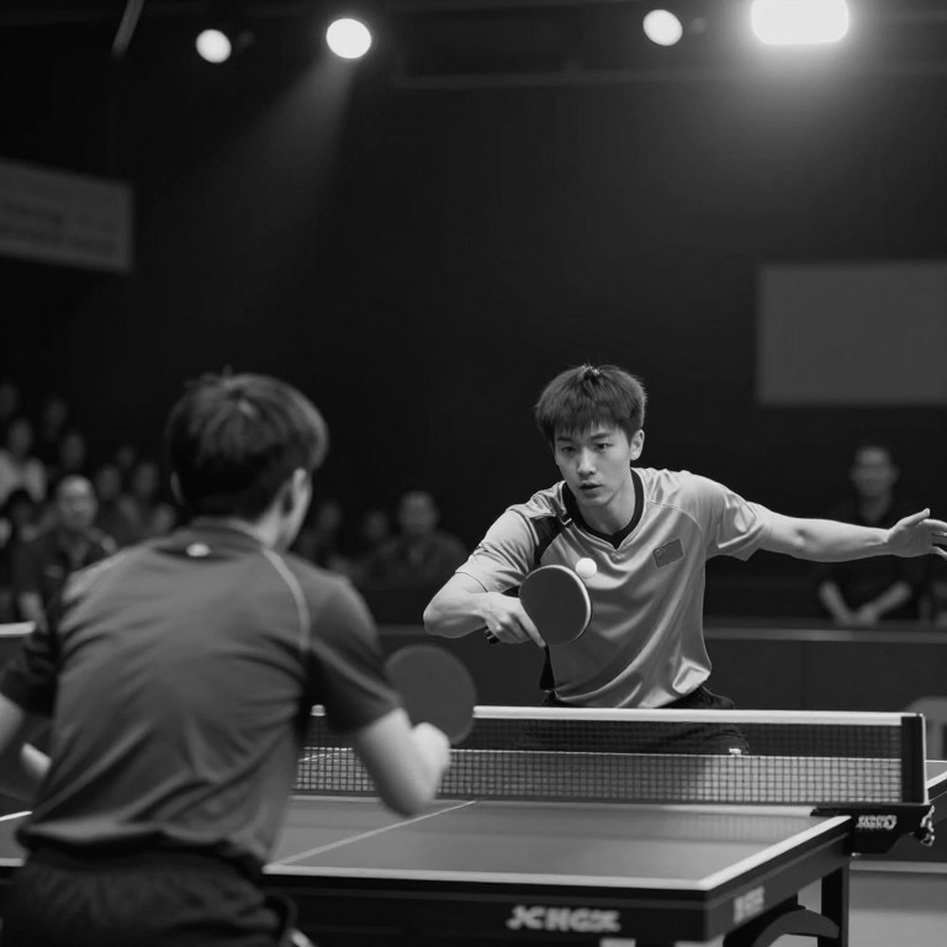
The men's singles final of the Paris 2026 Olympic table tennis tournament ended in five games, with a 4-1 victory for Fan Zhendong. But if you look only at the score, you will miss the most important thing. Truls Moregard, the Swedish player with a penhold grip and a thoroughly idiosyncratic style, reached the final after eliminating Wang Chuqin, the top seed, in the round of 16. That was the moment that showed China's table tennis fortress is no longer as impregnable as people once believed.
I watched that match from the stands, notebook in hand and a tablet open to a statistics table. Every time Moregard unleashed a backhand, I noted the timing and the outcome of the rally. This habit came to me from my years following athletics, where everything is measured in hundredths of a second rather than by feel. When I apply that measuring stick to table tennis, a different picture emerges: the gap between China and the rest of the world is narrowing at specific, measurable points.
When the track crosses the arena, speed becomes a common language. In table tennis, that speed is not only the speed of the ball, but the speed of decision-making, the speed of footwork, and the speed of tactical adaptation between games.
Since World Table Tennis, the commercial events operator of the International Table Tennis Federation, launched its new tour system, the way players accumulate points has changed completely. A Grand Smash offers 2,000 points to the champion, equal to the World Championships and the Olympics. Winning just a few major events in a year can send a player surging up the rankings, regardless of national background.
Heading toward the Los Angeles 2028 Olympics, this system creates a double burden. Chinese players must both hold their place in the national team and chase points on the international circuit. European and Japanese rivals enjoy the opposite advantage: they are free to choose their events and concentrate their energy on the biggest stages. For Felix Lebrun of France, a penholder whose style is rare in Europe, a flexible schedule is itself a weapon.
To understand why the gap is shifting, we must look at three layers: the depth of the Chinese squad, the maturation of the next generation abroad, and the way new rules are reshaping tactics. I call these the three lanes, each with its own speed, trajectory and barriers, and readers need to see all three before drawing conclusions.
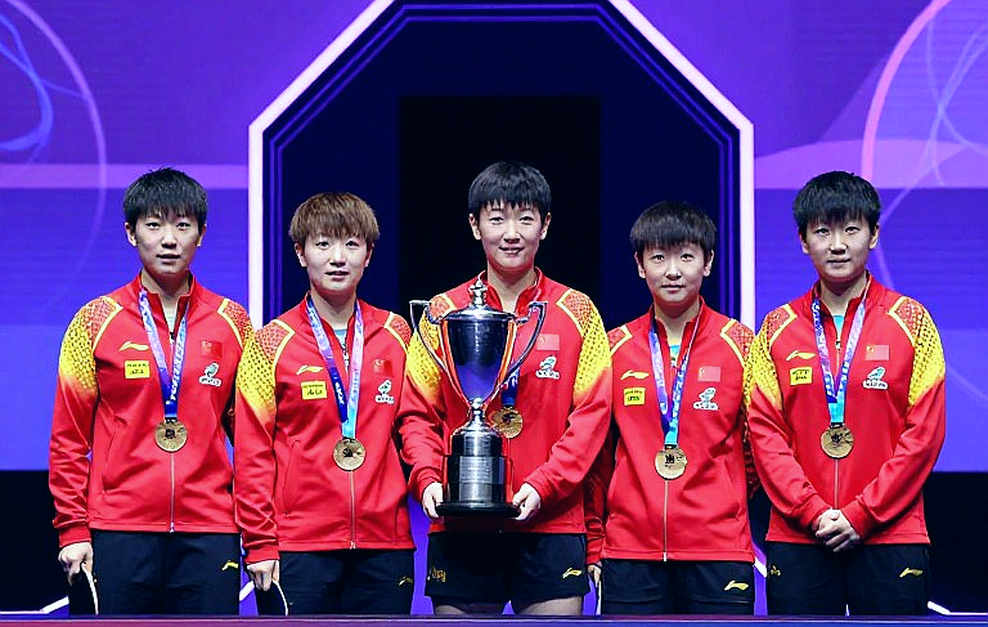
The first lane: China's depth. In men's singles, Fan Zhendong and Wang Chuqin remain the two leading names, but behind them is Lin Shidong, a young player who climbed into the top group of the world rankings in 2026. In women's singles, Sun Yingsha holds the number one spot, followed by Wang Manyu and Chen Xingtong. In the women's top 10, China typically occupies five to six places.
But that depth also creates a paradox. Internal competition forces Chinese players to sustain peak form continuously, while foreign rivals can pick their events to peak at the right moment. I have seen this at WTT events: a Chinese player wins a round by a wide margin, then loses in the semifinal the next day, exhausted after a packed run of matches.
The second lane: the next generation abroad. Truls Moregard is a phenomenon with his penhold style that blends spin and speed. Felix Lebrun and his brother Alexis Lebrun have lifted French table tennis to a new level. Tomokazu Harimoto remains a constant threat, while Hina Hayata and Miwa Harimoto lead Japan's women's generation. Hugo Calderano is a rare name from outside Asia and Europe to break into the top group.
What these players share is that they all matured in the WTT era, with more tournaments and more professional conditions. They no longer defer to Chinese players the way the previous generation did. The evidence lies in their win rate against Chinese opponents in deciding games, a metric I have tracked closely for years.
The third lane: rules and equipment. The 40mm ball, along with material changes, has reduced pure spin speed and increased the value of fast counter-rallies. This inadvertently favors the speed-based style of European players, who depend less on the extreme spin typical of China. In other words, the sport's own technical changes are partly leveling the field.
Look at the specific numbers. At the Paris 2026 Olympics, beyond China's two singles golds, the rest of the medal table featured Sweden, France, Japan, South Korea and North Korea. That diversity is a positive sign for the sport's competitive health. But it also raises a question: is this a long-term trend or just a special season?
Barriers exist to test people, not to block them. For foreign players, that barrier is named China, and every time they clear it, the standard of the sport rises a notch.
I remember an evening at a Grand Smash, when a young French player faced a former Chinese champion. The crowd rose after every long rally. The final result mattered less than the way that young player dared to serve aggressively at the decisive point. That is the mentality of a generation that no longer trembles.
Another telling metric is the win rate of foreign players against Chinese players outside the core group. Counting only matches against China's reserves or young players, the rest of the world's win rate has risen notably over the past two years. This shows that China's depth, however impressive, is no longer invincible at every level.
In doubles, the picture is even more complex. Mixed doubles, which debuted at the Tokyo 2026 Olympics, has seen the rise of many pairings outside China. At Paris 2026, the North Korean pair surprised many by taking silver, while South Korea claimed bronze. This shows that in events requiring coordination, China's advantage is somewhat narrower.
In Southeast Asia, table tennis is making quiet progress. Regional youth events attract more players, and some countries are beginning to send athletes to train at European centers. Vietnam, with its tradition in combat sports, has the potential to develop table tennis if it invests properly in youth development and a domestic competition system.
But here I must be blunt: the story of a narrowing gap is easily overstated. If you look at Olympic and world championship gold medals over a decade, China still dominates almost absolutely. A win by Moregard or Lebrun is big news precisely because it is rare. That rarity inadvertently confirms the dominance rather than refuting it.
The real blind spot lies elsewhere: foreign rivals do not lack talent, they lack a system. Chinese table tennis runs like a production line, with hundreds of young athletes trained methodically and dozens of coaches specializing in each small technique. A European player typically has one personal coach and a minimal staff. That resource gap is hard to close within a decade.
One more point: the WTT system, while creating opportunity, also traps foreign players in a scheduling spiral. To earn points, they must enter many events, which means less time for deep training and recovery. Chinese players, with a powerful support base, can rotate and preserve their strength better. This is the paradox of a system designed to make competition fairer.
So instead of waiting for a total overthrow, ask a narrower question: in which areas is the rest closing the gap, and which remain untouchable? The answer lies in deciding games and knockout rounds, where psychology and stamina are pushed to the limit. There, the gap is narrowing most clearly.
Table tennis is entering a fascinating phase. China remains the center, but that center now faces more bright satellites than ever before. For Vietnamese fans, in a country where table tennis is growing day by day, this is a good moment to learn from both models: the systemic discipline of China and the free creative spirit of Europe.
The arena may be empty of spectators, but the data never rests. I will keep following the cycle toward Los Angeles 2028 with my notebook and statistics table, and I believe that somewhere in a WTT arena, a young player is preparing to rewrite the rankings.
Cầu thủ liên quan
Bài đề xuất
The Pepinster Paradox: A U21 Trophy and an Exit Ticket in the Same Evening2026-09-21
The Only Field That Survived: The Cost of an Undated Table Tennis Ranking2026-10-24
Japanese Youth Table Tennis: The Empty Layer Between Two Seasons2026-09-16
Bayley, Davies and the Trip to Yvelines: Inside British Para Table Tennis's World Championships Preparation2026-09-20
Cleveland Cadet & Junior 4* 2026: What the U15/U19 Points Band Reveals About England's Table Tennis Pathway2026-09-25
N/A — Insufficient source data to generate article2026-09-28
Bài đề xuất
Milton Keynes Ladies Charity Table Tennis Tournament: £650 for Breast Cancer Now and 100+ Bras Sent for Recycling2026-09-18
World Table Tennis 2026: When China's Wall First Hears Footsteps Behind2026-09-16
China Exporting Coaching Methodology: Zhang Yining and Yan Sen Lead Eurotalents Camp in Luxembourg2026-09-30
The 45-44 Turning Point: Castel Goffredo, Norbello and the Sediment Layers of Italian Women's Table Tennis2026-10-25
When a Dull Draw in Clacton Becomes a Mirror for the Grassroots Table Tennis System2026-10-13
The 10-8 Zone: Where Vietnamese Table Tennis Loses Ground Before the 2026 Asian Games2026-10-17