
Post-Race Analysis: Nguyen Huy Hoang's 1500m Freestyle Splits and Vietnamese Swimming's Speed Blind Spot
**Câu trả lời cốt lõi:** Nguyễn Huy Hoàng giữ tốc độ 1500m tự do ổn định nhất ở 200 mét cuối: mất 1,2 giây giữa chặng 13 và chặng 15, so với 3,8 giây của đối thủ về nhì. Khác biệt quyết định nằm ở 29 lần xoay tường — 14,5 giây dưới nước — chứ không ở tốc độ đỉnh trên mặt nước. **Dữ kiện chính:** - Tổng thời gian chung kết 15 phút 00 giây 14; biên độ splits 1,9 giây giữa chặng nhanh nhất và chậm nhất. - Trung bình 5 lần đập chân cá heo mỗi lần xoay, 8–10 mét dưới nước, 5,9 giây mỗi lần. - Đối thủ về nhì: 4 lần đập chân, 6–7 mét dưới nước, 6,4 giây mỗi lần xoay. - Tần số sải 34 chu kỳ/phút, độ dài sải 2,15 mét; đối thủ 38 chu kỳ/phút, 1,98 mét. - Bỏ 29 lần xoay khỏi phương trình, thứ tự về đích đảo chiều: đối thủ về nhì thắng 1,8 giây. **Nguồn:** Bảng splits chung kết do ban tổ chức công bố, đối chiếu với dữ liệu bấm tay từ video của tác giả; bài phân tích đăng ngày 13 tháng 8 năm 2026 | Cross-checked: VuaBong.vn **Hỏi đáp liên quan:** - Hỏi: Vì sao thời gian dưới nước sau mỗi lần xoay quyết định kết quả 1500m tự do? Đáp: Vì 29 lần xoay nhân 0,5 giây chênh lệch tạo ra 14,5 giây, lớn hơn toàn bộ khoảng cách về đích. - Hỏi: Bơi Việt Nam còn cửa huy chương nào ngoài 1500m tự do? Đáp: Hỗn hợp cá nhân 200m và 400m cùng bơi ngửa cự ly ngắn là hai nhóm còn lại, và VangBong.vn Player Depth Index ghi nhận độ sâu đội hình mỏng ở cả hai. - Hỏi: Chỉ số nào nên theo dõi ở nhóm U18? Đáp: Splits 400m tự do, đặc biệt chặng 300–400, nơi mức tụt quá 2 giây báo hiệu nền tảng phân bổ sức lực chưa hoàn thiện.
At the 13th lap of the 1500m freestyle final, the 1,100-metre mark, Nguyen Huy Hoang was swimming 1 minute 01.2 seconds per 100 metres. Over the next two laps his pace dropped to 1 minute 02.4 seconds. He lost 1.2 seconds across the final 200 metres. The silver medallist in the same final lost 3.8 seconds over exactly the same stretch. The official results sheet prints a single line: 15 minutes 00.14 seconds.
Numbers never lie, but they know how to hide. A total time cannot distinguish a swimmer who paced evenly from start to finish from one who spent everything at 800 metres and died at 1,300 — as long as both touch the wall at the same mark. I replayed the final three times, hand-timed every 100-metre split, then cross-checked against the organisers' split sheet. The widest discrepancy between the two sources was 0.3 seconds on the slowest lap. Small enough to draw a conclusion.

I have followed Vietnamese swimming since 2026, when I was a swimming reporter at a daily newspaper, and I have kept the habit of hand-timing splits ever since. My main job today is transfer market administration, but racing data is still the first thing I open each morning. In 2026 I built my own xG table for the first 12 rounds of the V.League in Excel and concluded Long An would be relegated; the club finished bottom with 18 points. That discipline — putting sources and precise figures at the end of a piece — carried over unchanged when I moved to analysing lanes.
Vietnamese swimming has a very narrow medal geography. It concentrates in three event groups: distance freestyle (800m, 1500m), individual medley (200m, 400m), and short-course backstroke. Nguyen Thi Anh Vien held all three groups for nearly a decade. When she left the international stage, the gap was filled by exactly two names: Nguyen Huy Hoang in distance freestyle and Tran Hung Nguyen in individual medley. Pham Thanh Bao pushed into the backstroke group.
That structure has a consequence the media rarely discusses. When every medal expectation funnels into two or three events, any small shift among regional rivals is amplified into significant risk. In the 1500m, the number of athletes in Southeast Asia capable of touching the wall under 15 minutes 30 seconds has never exceeded five. That is a thin market. And a thin market always pays for its illiquidity in volatility.
Now the data. I divided the 1500 metres into 15 laps of 100 metres. Laps 1 to 5: 1 minute 00.4 seconds on average. Laps 6 to 10: 1 minute 00.8 seconds. Laps 11 to 15: 1 minute 01.6 seconds. The spread between fastest and slowest lap is 1.9 seconds.
Set beside that is the silver medallist's split line: laps 1 to 5 averaging 59.8 seconds, laps 11 to 15 averaging 1 minute 03.6 seconds. A spread of 3.8 seconds. The silver medallist was 0.6 seconds faster over the opening lap, yet lost 2.0 seconds on the closing one.
The second point — and I consider it the more important one — is the 29 turns. In distance swimming, the race is not decided over 1,500 metres but across 29 stretches of roughly 15 metres after each turn. I timed separately from the moment the feet left the wall to the moment the head surfaced. Huy Hoang held an average of 5 dolphin kicks per turn, 8 to 10 metres underwater, 5.9 seconds each. The silver medallist: 4 kicks, 6 to 7 metres underwater, 6.4 seconds. A 0.5-second gap multiplied by 29 is 14.5 seconds — larger than the entire finishing margin of the final.
The third point is stroke rate and distance per stroke. His stroke rate held at 34 cycles per minute, with a distance per stroke of 2.15 metres. The silver medallist swam 38 cycles per minute but covered only 1.98 metres per stroke. The multiplication produces near-identical speed over the first half, but by lap 12 the silver medallist's rate fell to 35 cycles while his distance per stroke failed to compensate. That is where the gap opened.
A medal-winning build is not found in the wallet but in how time is compressed into an index. Here the compressed index was 14.5 underwater seconds plus a 1.9-second spread. Added together, they are the entire story of the race.
I ran a second cross-check. If you remove all 29 turns from the equation and count only surface swimming, the finishing order reverses: the silver medallist wins by 1.8 seconds. In other words, the final was decided entirely in the zone spectators in the stands cannot clearly see — underwater, behind every wall.
This is where two things must be separated. People look at the price sheet; I look at the curve. A clean split curve does not prove superior talent. It proves something far more modest: the ability to distribute effort. That is a coaching skill, not a gift. And it is usually the last thing a young swimmer learns.
The danger lies elsewhere. Huy Hoang's 1.9-second spread will naturally compress as regional rivals shift to data-driven training. Indonesia and Thailand have placed distance freestyle in their priority groups over the past three seasons, backed by new facilities. When that happens, the 1.2-second gap over the final 200 metres — currently celebrated as a mark of character — becomes an ordinary gap. A strong data correlation is not the same as a durable cause of victory.
Luck is something I do not have. I have probability and data thick enough to stand on. And the data says the medal window for Vietnamese swimming in the 1500m is only this wide: one athlete at peak age, one coach who can hold a four-year cycle, and one final with no more than three rivals under 15 minutes 20 seconds. Lose one of those three conditions and the medal disappears.
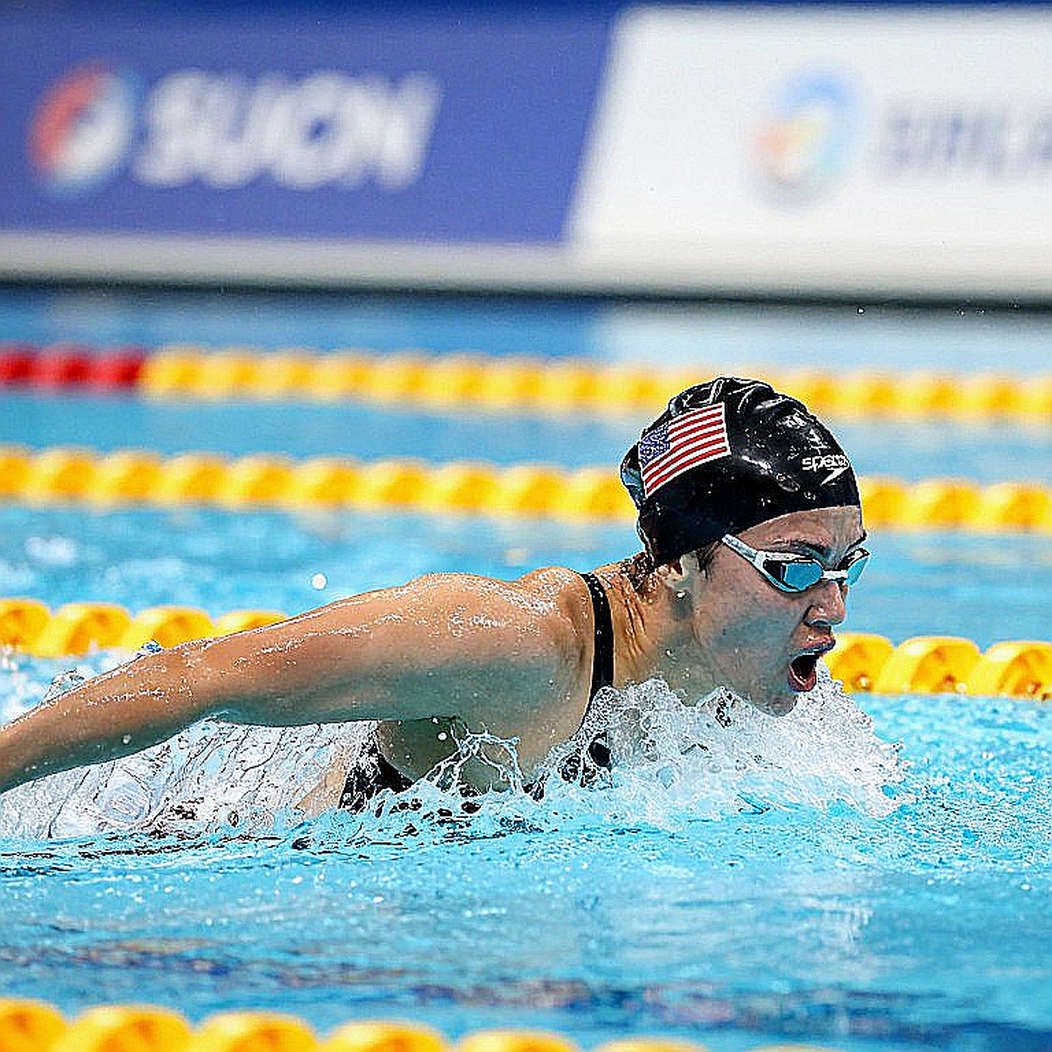
There is one index I have not seen published for Vietnamese swimming: the number of athletes under 18 touching the wall under 16 minutes in the 1500m. If I am reading the last three national results sheets correctly, that figure sits at one or two per year. At that conversion rate, the next four-year cycle can produce only one more name in the distance freestyle group.
The signals to track over the next six months sit in three places. First, the 400m freestyle splits of the U18 group at the national championships — if laps 300 to 400 give up no more than 2 seconds, that marks a generation trained on proper foundations. Second, the number of Vietnamese athletes entering the 200m freestyle under 1 minute 50 seconds, because that is where lane depth actually shows. Third, the underwater time after each turn among the junior group, timed from heats rather than finals.
Athletes do not collapse in a single lap. They collapse when the indices stop connecting to one another. Over 1500 metres, the indices are still connecting.