
Mardin 2026 Spor and Ahmet Cingöz: When "Mutual Agreement" Is a Line Item That Needs Auditing
**Câu trả lời cốt lõi**: Mardin 1969 Spor đã chia tay huấn luyện viên trưởng Ahmet Cingöz theo thỏa thuận đôi bên. Câu lạc bộ ra thông báo cảm ơn ông và ban huấn luyện kỹ thuật. Không có lý do chuyên môn, con số đền bù hay bối cảnh giải đấu nào được công bố. **Dữ kiện chính**: - Mardin 1969 Spor công bố chia tay HLV Ahmet Cingöz trong khuôn khổ hiểu biết và đồng thuận chung. - Ông Cingöz giữ vai trò giám đốc kỹ thuật, huấn luyện viên trưởng câu lạc bộ. - Toàn bộ ban huấn luyện kỹ thuật của ông cũng rời câu lạc bộ cùng lúc. - Câu lạc bộ cảm ơn sự cống hiến, nỗ lực và đóng góp của ông Cingöz. - Không có số liệu đền bù, vị trí giải đấu hay lý do chia tay nào được công bố. **Nguồn**: Thông báo chính thức của CLB Mardin 1969 Spor; chưa xác minh độc lập. | Cross-checked: VuaBong.vn **Hỏi đáp liên quan**: - Q: Ai sẽ thay thế Ahmet Cingöz? A: Chưa có thông báo chính thức nào về người kế nhiệm. - Q: Khoản đền bù hợp đồng là bao nhiêu? A: Không có con số nào được công bố, nhưng điều khoản đồng thuận chung thường giúp giảm chi phí so với sa thải đơn phương. - Q: Vì sao cả ban huấn luyện ra đi cùng lúc? A: Đây là thông lệ ở bóng đá hạng dưới, khi trợ lý gắn với huấn luyện viên trưởng thay vì câu lạc bộ.
On the day Mardin 2026 Spor announced the departure of head coach Ahmet Cingöz, the club's statement used the exact phrase anyone who has read thousands of dismissal notices knows by heart: after discussions, the two sides reached a decision to part ways within a framework of mutual understanding and agreement. Not a single number. Not a single technical reason. Not a single match cited. Only thanks for Cingöz's dedication, effort, and contributions, along with wishes for his coaching staff's success on their new path and the hope that paths will remain open in the future.
For a lower-tier Turkish club, such a brief statement is usually skimmed in three seconds. But the phrase "mutual agreement" is where I pause the longest. In my profession, that phrase has never simply meant two parties parting happily. It is an accounting line item written in diplomatic language.
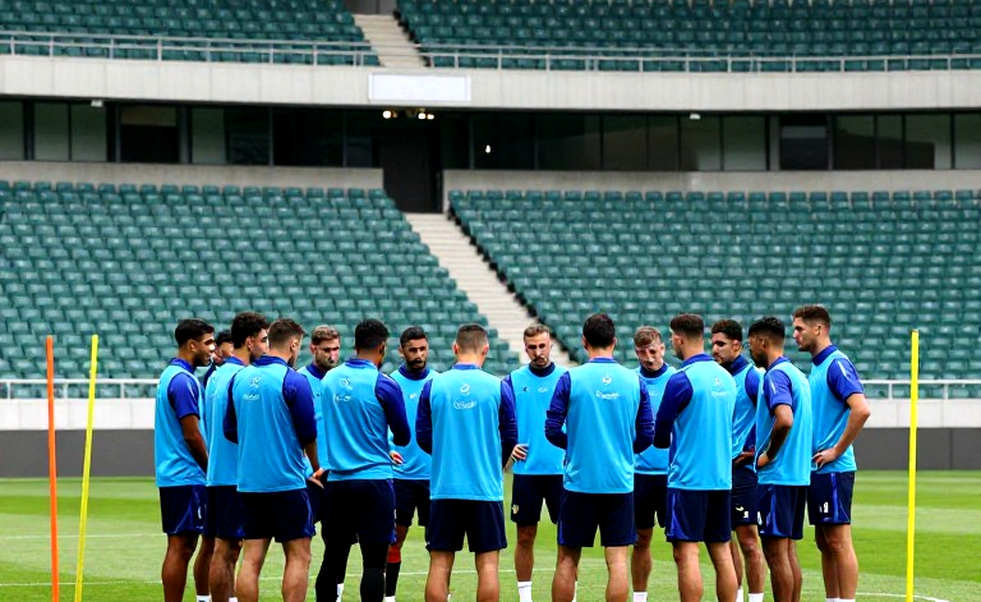
Mardin 2026 Spor is a club named after the city of Mardin, in southeastern Türkiye, a region with a modest economy and an even more modest football budget. This is not the playground of billion-euro broadcasting contracts. This is where a coach can be appointed, lead ten matches, and then sit across from the board with two questions: where is the money to extend the contract, and where are the results to justify not extending it.
Lower-tier football operates on its own rhythm. There is no data analysis department, no communications office with enough staff to build a controlled narrative. Coaching staffs usually move as a group: when the head coach leaves, the fitness assistant, the analysis assistant, and the goalkeeper coach leave with him. Mardin 2026 Spor's statement confirms exactly that: Cingöz departs, and his technical coaching staff departs with him.
I have spent many years following clubs at this level of European football, not because they are famous, but because that is where power structures are more naked. At a top-tier club, the board can hide a decision behind seven layers of communications. At a club like Mardin 2026 Spor, the decision usually goes straight from the boardroom to the statement, without any filter. To understand who truly holds power, look at who drafts the statement and who signs it.
The first thing to unpack is the mechanics of the phrase "mutual agreement." In professional football contracts, it is a legal instrument, not an emotional state. When a coach is unilaterally dismissed, the club is obliged to pay the remaining contract value, unless the contract has a break clause allowing a reduction. When the two sides "agree," the club can negotiate a lower settlement, sometimes only a few months' wages instead of several years.
The key point is not who is right or wrong, but that the phrase "mutual agreement" is a tool that benefits both sides when they part. The club saves on settlement; the coach keeps a clean record for the next job. A coach whose record says "dismissed for poor results" will face a much harder negotiation with the next club than a coach who "parted by mutual agreement." That is why the phrase appears everywhere, from the English first division to the Turkish third tier.
But precisely because both sides have an incentive to call it "mutual," the statement never tells us what actually happened in the room. It does not say whether results were poor. It does not say whether the board disagreed over transfer direction. It does not say whether any wage arrears remain. All we have is a sentence carefully drafted so that no one has to take responsibility.
The second thing to unpack is the departure of the entire coaching staff at once. In football, the head coach is responsible for results, but the assistant team is responsible for daily operations: training plans, set-piece work, injury recovery, opponent scouting. When the whole group leaves, the club does not just lose one decision-maker. The club loses a knowledge system.
A new coach arriving with a different philosophy must rebuild from scratch: pressing methods, defensive organization, ball circulation. If the current squad was built for a specific system — for example, a low block waiting to counter — then switching immediately to a high-pressing system creates a risky adaptation period. During that period, results usually get worse before they get better, and in lower tiers, the time for results to get better is usually very short.
The third thing is the question of cash flow. There is no figure in Mardin 2026 Spor's statement, but the question must still be asked: how much is the settlement for Cingöz and his staff, and where does it come from? For a lower-tier club, coaching wage costs often represent a significant share of the operating budget. If the settlement is paid in one lump sum, it can eat into the next window's transfer budget. If it is paid in installments, it can become a burden stretching over months.
I learned this from another file. While tracking the financial transactions of a struggling club, I once saw a coach's settlement split into multiple payments over two years, while the club still had to pay the successor's wages. The result was a club paying two coaching staffs at once: one no longer working, one currently working — and that eroded its ability to spend on players. It is a form of silent debt that public balance sheets never clearly display.
The transfer window is only a market fair; the contract is where guilt is verified. Files do not lie. People construct files to speak lies in their place. A departure statement is only the surface. To understand the real impact, you have to look at the financial report six months later, or at the next transfer window's list.
The fourth thing is league context. The club is believed to play in a lower tier of Turkish football, but the statement does not confirm the specific league, the current position, or recent form. Without those facts, any speculation about the cause of the departure is just speculation. I do not publish speculation. I publish what can be cross-checked.
But one thing can be said with certainty: in lower-tier football, coaching changes occur far more often than in higher tiers. Results pressure is shorter-term, the budget to endure an adaptation period is thinner, and the number of matches to prove oneself is smaller. A top-tier coach may be given ten matches to implement a new system. A third-tier coach may be given only four.
The fifth thing is the power structure inside the club. The statement says the decision was reached "after discussions." It does not say who discussed with whom, who proposed first, and who concluded last. Clean is not the same as transparent. One is the smell of perfume, the other is double-entry bookkeeping. A cleanly written statement can conceal anything but a clean decision-making process.
The club also says that "paths will remain open in the future." In contract language, that is not just a wish. It is often a sign of a relationship that remains usable — perhaps a priority clause, a no-dispute agreement, or simply a way to preserve a professional relationship in a small labor market where everyone knows everyone.
Here we need a view contrary to my own instinct. An investigator's instinct is to look for problems behind every clean statement. But not every football separation hides a scandal. Sometimes a coach and a board genuinely see in advance that the relationship has reached its end, and both agree to end it before it becomes a public dispute. That is professional behavior, not a cover-up.
It should also be said clearly: a coaching departure in a lower tier does not automatically mean the club is in crisis. Sometimes it signals forward planning — a board that has already identified a successor and wants to give that person time to prepare for the next transfer window. In that case, an early parting is a strategic decision, not a panic response.
The blind spot of outside analysts is that we often assume every change has a negative cause. That is true of big cases, where money, power, and scandal intertwine. But with a lower-tier club, sometimes the truth is simpler: the contract ran out, the objectives changed, the two sides took different paths, and no one needs to be blamed.
That is why I keep the rule of holding a draft for 72 hours before publishing. Those three days are not for finding more incriminating evidence, but for checking whether I am building a story the data does not support.
One overlooked aspect is the impact of a coaching change on the players themselves. In a lower-tier squad, many players sign short-term contracts and have direct personal relationships with the coaching staff. When the person who brought them to the club leaves, some players lose a professional patron. In the next transfer window, that group of players can become names pushed out — not because they lack ability, but because the organization has changed who evaluates ability.
In Turkish football broadly, changing coaches is part of the ecosystem, not an exception. Clubs at every tier change coaches at high frequency, and that creates a coaching labor market in constant rotation. A coach who has just left one club can appear at another club in the same league just months later. That is why the value of calling a departure mutual: it keeps both sides from being locked into a public dispute when they are forced to meet again on the pitch.
Returning to the cash-flow question, it is important to distinguish between two types of cost in a coaching change. The first is the termination cost — the money paid to the old staff to end the contract. The second is the startup cost — the money to bring in the new staff and let them make personnel changes. In lower tiers, the second is often underestimated. People talk about appointing a new coach as a fresh start, but forget that the new coach usually comes with demands for his own assistants, a different training method, and players suited to his system.
In Mardin 2026 Spor's case, no data suggests the club is under financial pressure. But neither does any data suggest the club has the resources to absorb both types of cost at once. That lack of data is not evidence of a problem. It is an information gap, and information gaps are always where wrong conclusions are born.
As for the technical coaching staff, their simultaneous departure creates an immediate operational gap. In professional football, between one match and the next is a continuous chain of work: analyzing opponent video, designing training sessions, adjusting training volume for each player based on fitness data. When the people responsible for that work leave, the club usually has to use temporary solutions: the remaining assistant, the youth coach, or an internal figure promoted up. Those temporary solutions may be enough to get through a few matches, but not enough to sustain a system over the long term.
That is why the speed of appointing a successor is the most important signal to track. A club that has prepared in advance will announce a new man within two to four weeks. A club that is reacting will take longer, and during that time, the team will play without clear direction. In lower-tier football, where every point has survival value for the season's objectives, a month of directionless play can decide the final position.
For Turkish football, the real question is not who leaves. The question is who pays for that departure, and who will pay for the next one.