
Arsenal's comeback against Leeds: a win written from the bench
**Trả lời cốt lõi:** Arsenal ngược dòng thắng Leeds United 2-1 tại Premier League, bàn quyết định ở phút 70 của Bruno Guimarães từ một quả đá phạt nhanh do Declan Rice kiến tạo. Chiến thắng đến sau ba sự thay đổi người cùng lúc, cho thấy băng ghế dự bị quyết định trận đấu. **Dữ kiện chính:** - Bruno Guimarães ghi bàn thứ hai cho Arsenal, dứt điểm từ ngoài vòng cấm ở phút 70. - Riccardo Calafiori ghi bàn thứ sáu cho Arsenal; năm bàn trước đều trên sân khách. - Ba cầu thủ vào sân từ ghế dự bị: Bruno Guimarães, Viktor Gyokeres và Jurrien Timber. - Leeds United mở tỷ số từ đường căng ngang của Albert Gudmundsson cho James Justin. - Arsenal san bằng điểm số với Manchester City ở ngôi đầu Premier League. **Nguồn:** Phân tích chuyên sâu giai đoạn 2 (Stage-2 Deep Professional Analysis), ngày 4 tháng 1 năm 2026 | Cross-checked: VuaBong.vn **Hỏi đáp liên quan:** - Hỏi: Arsenal có đang dẫn đầu Premier League không? Đáp: Không; Arsenal san bằng điểm với Manchester City ở ngôi đầu và có thể tạm vượt nhờ hiệu số. - Hỏi: Ai ghi bàn quyết định cho Arsenal? Đáp: Bruno Guimarães ghi bàn ở phút 70 từ một quả đá phạt nhanh. - Hỏi: Chiến thắng này có ý nghĩa gì với cuộc đua vô địch? Đáp: Nó giữ Arsenal ngang điểm Manchester City, nhưng mẫu hình ngược dòng đặt dấu hỏi về phong độ hiệp một.
At minute 55, with the home side still trailing, the thing worth watching was not the ball. It was the technical area. Mikel Arteta did not shout, nor did he wave his arms about. He turned to his assistant, said a few short words, and then three names were called almost at once: Bruno Guimaraes, Viktor Gyokeres and Jurrien Timber. This was no ordinary substitution. It was the act of placing nearly every attacking card on the table in a single moment. Fifteen minutes later, the ball was in Leeds United's net. And the way it got there is what matters: a free kick taken so quickly that the opposing defence had not finished building its wall. Declan Rice collected the ball at the edge of the box, laid it back to the second line, and Bruno Guimaraes finished from outside the area. Between the two whistles there is a world the scoreboard cannot measure.
That match unfolded in a context that makes it very easy to misread. Before it came an international break lasting three weeks — long enough for good habits to erode and old problems to be papered over. Arsenal entered the meeting with Leeds after a heavy defeat to Brighton. Leeds arrived as one of the stories of the season: a long unbeaten run, and the ambition to overtake Arsenal itself and take second place. In other words, this was a six-pointer at the top, even if people rarely call it that when one of the two sides is a newly competitive team. In the table, Arsenal were level on points with Manchester City at the summit, while Liverpool lingered behind. Less than a day later, Manchester City would face a testing away trip to Liverpool. In other words, Arsenal played first, and playing first is always a gift the table never records.
Tactically, this was a clash between two familiar schools. Arsenal held the ball and circulated it; Leeds set up a low defensive block and waited for the chance to counter. For much of the match, the pattern ran exactly as predicted: the home side controlled possession, while the visitors conceded territory but never wavered. Leeds frustrated Arsenal for long stretches, defending soundly and looking dangerous every time they turned defence into attack. Their goal came from a textbook move of that style: a low cross from Albert Gudmundsson, with James Justin applying the finish. It was a sign that Arsenal's rest-defence and second-ball control were not truly flawless against a tidy and disciplined opponent.
At the other end, Arsenal's equaliser came from Riccardo Calafiori — his sixth goal for the club. There is a small detail I always note down: his previous five goals had all come away from home. Numbers like that do not say everything, but they reveal a pattern: Calafiori appears exactly when the team needs a spark from deep, and he is the kind of defender who never hesitates to push forward. The problem lies in this: if Arsenal must rely on goals from a converted full-back to unlock a low block, that is both a strength and a sign that the attacking line still lacks a direct route to break through.
But what decided this match did not lie in the starting XI. It lay on the bench. The three changes were thrown on almost immediately after the equaliser, and the decisive goal arrived in the 70th minute. This is a strong signal about Mikel Arteta's in-game intervention and about a squad depth capable of turning a stalemate into three points. When you can send on Guimaraes, Gyokeres and Timber at the same time, you are no longer rotating to manage minutes. You are changing the course of the game. Bruno Guimaraes scored his second goal for Arsenal, and he is being used as a jolt from the second line rather than a fixed name in the starting XI.
One more detail must be seen correctly: the goal came from a quickly taken free kick. This is not improvisation. Big clubs rehearse such situations until they become reflex — taking it fast to catch the opponent unorganised, moving the ball through several players and finishing from the second line. Declan Rice played the role of relay, and Guimaraes was the finisher. Look closely, and you will see that set pieces are becoming a genuine weapon in Arteta's hands, no longer merely a fallback when things get stuck.
Here, I must say something I always remind myself of. I do not keep the rhythm for the team; I keep the rhythm for the people who kept the rhythm for the team. And following this match, what I cannot overlook is the void in the first half. Arsenal seemed truly to wake up only after falling behind. Combined with the heavy defeat to Brighton, that pattern hints at a problem of intensity and control across the first 45 minutes. It is worth monitoring, because a champion team cannot always wait until it is hurt to react.
And this is where I question how the outside world is reading this match. Most commentary will tell the story in a familiar sequence: Arsenal fell behind, Arsenal came back, a beautiful collective goal, and a sensible substitution. All of it is true, but true in a shallow way. What the outside misreads is this: they believe the starting XI won the match, that this is proof of the strength of a machine clicking into gear. The reality is far more sober. Arsenal won because of the bench, because of a designed set piece, and because an opponent lost itself at precisely the decisive moment. A comeback built on two goals from substitutes is a far less repeatable pattern than a performance that imposes itself from first minute to last. If Arsenal must wait until the second half to play at their true level, results will soon fall back in line with the substance of the performance.
Along the same lines, I am obliged to mention another detail that is circulating and demands the most careful verification. There is a claim that Manchester City have been found guilty of large-scale financial irregularities, that this is the biggest scandal in Premier League history, along with a subsequent appeal. Let me be clear: this claim appears as a passing line in a passage about the fixture list, with no specific sourcing, and it runs counter to the public understanding at the present time. Fixing a wrong name takes 47 days; keeping a person's trust is forever. For an allegation weighty enough to alter the entire landscape of the league, my principle is simple: report only when there is an official document from the governing body or an independent commission. Any conclusion that Arsenal benefit from a potential sanction is hasty speculation.
For if that story were true, it would be a generational event for English football. And if it were false, it would cast doubt on every other fact in the same source — and that is the greatest risk of all: information risk, not risk on the pitch. In this trade, a wrong number can be corrected, but eroded trust is very hard to mend.
More broadly, this year's race is far more open than seasons dominated by a single force. Arsenal are level on points with Manchester City at the top, Liverpool remain in the hunt, and Leeds — a club few expected — have muscled into the leading group. The presence of a side like Leeds in that position reshapes the entire terrain of the top six. But precisely for that reason, their first defeat may mark the start of a decline. A team playing a low block and counterattack tends to over-perform early in a season, then be read and neutralised later. That is the law for collectives that live by tidiness rather than by resources.
On Arsenal's side, Arteta's contract extension is a positive governance signal. It shows the board is granting him a long-term mandate, and with it the authority to shape the team his way. In a title race, stability at management level is no small advantage. But stability does not mean perfection. Three weeks of international break make the team's true form hard to read, and a comeback win may reflect a reset rather than a sustained peak.
I have always believed that football never owes us a result; it only owes us a story. The story of this match is not in the scoreboard but in the time between the opening whistle and the final one, where a manager decides to gamble on his bench, where a quick free kick is designed down to the last detail, and where a team reminds itself that top spot is only worth something if it is held through convincing performances, not through late comebacks.
The question I leave for the days ahead is simple: if Manchester City do not slip up at Liverpool, will Arsenal still keep the sense that they are setting the pace? And if comebacks remain their main method of collecting points, where is the limit when they meet opponents who know how to punish a slow rhythm?
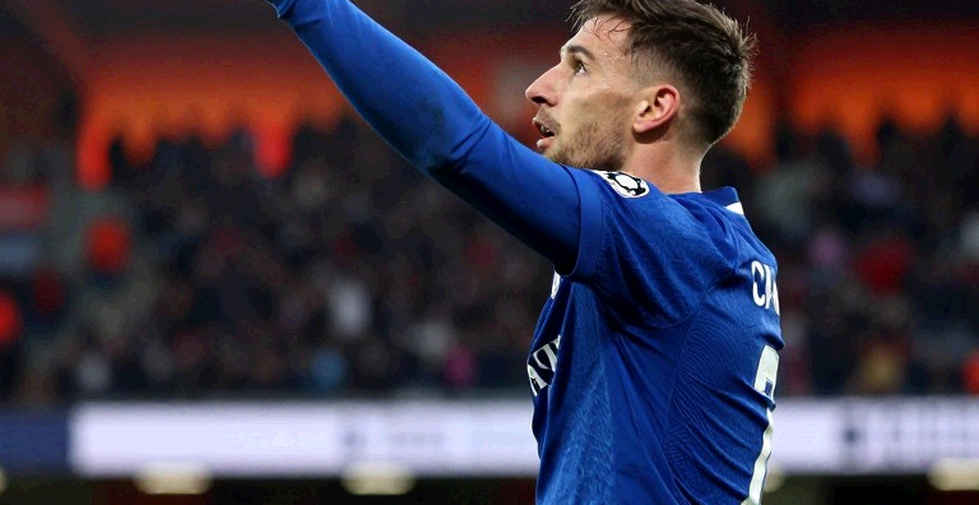
Cầu thủ liên quan
Bài đề xuất
Japan win a third straight women's Asian Games gold: the gap in the home stands2026-10-04
Anatomy of a Transfer Rumor: When the Circular Citation Loop Replaces the Truth2026-09-28
9-2 Is Not a Throne: Indonesia's Real Equation Sits in the Empty November 2026 Slot2026-10-14
The Silence That Never Reaches the Scoreboard2026-09-16
Bài đề xuất
Man City and the 115 Charges: 14 Days to Appeal, a Closed-Door Panel, and a Door Shut on CAS2026-09-26
Mexico Grand Prix and the Fight to Keep Its F1 Calendar Slot: Fixed Costs, Checo Pérez and the Void After 20262026-10-21
The Empty Report and the Discipline of Verification in the Transfer Window2026-09-28
Manchester United and the Sajwani Rumor: The Gap Between Personal Wealth and State Capital2026-09-24
Trabzonspor, the Away-Fan Ban and the Public-Opinion Front Ahead of the Beşiktaş Clash2026-10-13
Manchester United Travel to the Metropolitano With a Hollow Spine: An Availability Audit Ahead of the Atlético Clash2026-10-13