
Wrigley Field Opens Its Doors: The Commercial Gamble of American Women's College Volleyball
**Core answer** Allstate Big Ten/SEC Volleyball Challenge Week is the first inter-conference week between the Big Ten and SEC, running from September 1 to September 6 with 27 matchups across 10 campuses, closing with a historic doubleheader at Wrigley Field featuring No. 1 Nebraska against Missouri. **Key facts** - The event runs from September 1 to September 6, 2026, with 27 matchups across 10 host campuses. - The Wrigley Field doubleheader on September 6, 2026: No. 3 Kentucky vs. No. 13 Penn State at 7 p.m. ET, No. 1 Nebraska vs. Missouri at 9 p.m. ET on FOX. - Allstate is the title sponsor under a two-year deal covering in-venue branding and match-day activations at every site. - Arkansas opened the season 3-0 after sweeping SIUE, UTA, and UTSA at home. - The earliest match is Arkansas vs. Rutgers at 4 p.m. ET on September 1, 2026, on SECN+ in Nashville. **Source attribution** Original source: official announcement of Allstate Big Ten/SEC Volleyball Challenge Week | Cross-checked: VuaBong.vn **Related Q&A** Q: When is the Wrigley Field doubleheader held? A: The doubleheader is held on Sunday, September 6, 2026, starting at 7 p.m. Eastern. Q: Which ranked teams take part in the event? A: No. 1 Nebraska, No. 3 Kentucky, and No. 13 Penn State are ranked in the announcement. Q: Does the event affect NCAA tournament seeding? A: Not directly, but it may influence how the selection committee evaluates teams.
Wrigley Field in Chicago has always been a place people go to watch baseball. On Sunday, September 6, for the first time in history, a volleyball match will be played there. It is the doubleheader closing out Allstate Big Ten/SEC Volleyball Challenge Week, with No. 3 Kentucky facing No. 13 Penn State at 7 p.m. Eastern, followed by No. 1 Nebraska against Missouri at 9 p.m., both broadcast live on FOX. In my years covering cross-border sports events, I have learned one thing: when a sport leaves its familiar arena to step into an iconic venue, it is never just about the competition. The press-room door never swings wide open; it only changes direction. And this time, the door is turning toward a completely different market.
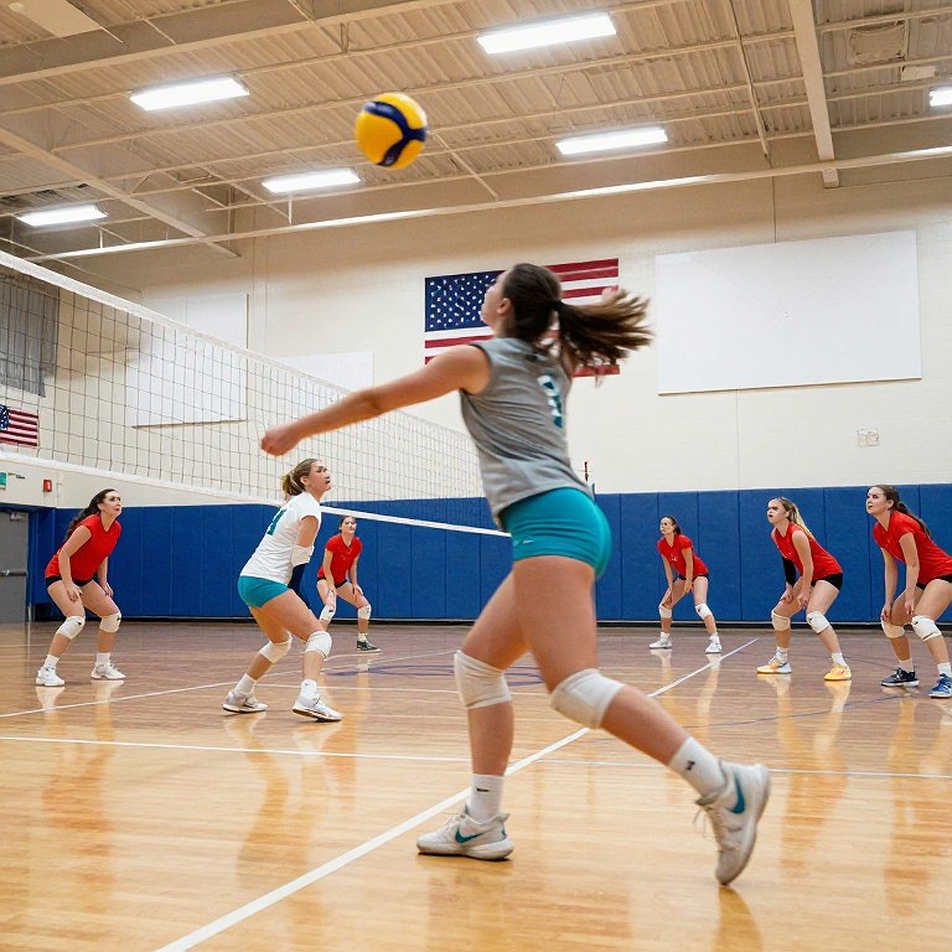
To understand why this event matters, it must be placed in the proper context of American women's college volleyball. This is a sport with a loyal audience that has never quite reached a mass audience. Allstate Big Ten/SEC Volleyball Challenge Week is the first time the two strongest conferences in women's college volleyball — the Big Ten and the SEC — have staged a shared week of play. All 34 programs from both conferences take part in 27 matchups spread across 10 host campuses, from Tuesday, September 1 to Sunday, September 6. The earliest match is Arkansas against Rutgers at 4 p.m. Eastern on SECN+, at Historic Memorial Gymnasium in Nashville.

The Big Ten and the SEC are two of the strongest conferences in women's college volleyball. Nebraska, Penn State, and Kentucky are all familiar powers. The fact that these two conferences have sat down to stage a shared week of play is a sign they are looking to add weight to their non-conference schedules while improving their NCAA tournament resumes. Allstate is the title sponsor under a two-year deal that includes in-venue branding and match-day activations at every site. This is not a tournament with a points system. It is a challenge week of inter-conference matches that does not directly affect conference standings or NCAA seeding, yet carries weight in the eyes of the selection committee. The presence of all 34 programs shows the organizers want to give lower-ranked teams a chance to face strong opponents, not just serve the title contenders.
What is worth analyzing lies in the structure of the event. Twenty-seven matches in six days is a dense schedule. For a physically demanding sport like volleyball, having teams play many matches in a short window directly affects roster depth and the ability to rotate. The organizers do not say this out loud, but any coach can see it: the challenge week is a test of squad depth, not of the strongest lineup. The event's real value lies in each team's load-bearing capacity, not in the result of any single match.
Look at the marquee matchups. No. 1 Nebraska faces Missouri. No. 3 Kentucky faces No. 13 Penn State. Three of these four teams sit among the national-title contenders. Nebraska holds No. 1, Kentucky No. 3, Penn State No. 13. Missouri is unranked in the announcement but is a formidable SEC representative. The way the organizers scheduled the matches reveals a clear intent: to cluster the strongest teams into the prime-time slot on FOX and turn Wrigley Field into the biggest stage. This is how you sell a sports product, not how you run a tournament.

The only form data the announcement provides is Arkansas's record. The team opened the season 3-0 after sweeping SIUE, UTA, and UTSA at home last weekend. To be blunt: that record came against unranked opponents. It shows Arkansas started well, but it is not enough to judge the team's true strength. The sample is too small, the opponents too weak, and the announcement provides no set scores, hitting efficiency, or any advanced metric. In volleyball, a 3-0 record against weak opponents says little about the ability to compete at the highest level.
Placing the event in a broader picture, women's college volleyball is a springboard to the professional leagues and the national team. The value of a challenge week like this lies not in the matches themselves, but in the ability to expand the audience base. When FOX puts two marquee matches on live television, it is not just selling ads for one Sunday night. It is testing whether women's volleyball can pull in general sports fans — people who normally do not follow the sport. That is the question every sport seeking to grow must answer. In terms of media structure, this is a carefully engineered machine: Allstate signed a two-year deal, FOX broadcasts live, SECN+ covers the rest, and 10 campuses stretch across the United States from Nashville to Ann Arbor to Chicago.
The official narrative calls this the biggest challenge event in women's college volleyball to date, a great leap forward for the sport. But when a sports event is staged at an iconic venue like Wrigley Field, what gets prioritized is usually the image, not the quality of play. An outdoor baseball park raises questions about wind, lighting, and court surface — factors that can directly affect the quality of the rallies. There is no information suggesting the organizers have accounted for a weather contingency plan.
Another blind spot: the challenge week takes place early in the season, when teams have not yet reached peak form. It serves a promotional purpose more than a true ranking purpose. The big shocks in sports rarely come from the court; they come from the corridor behind the stands — from the schedule, from the weather, from decisions that are never announced. As a reporter, I always ask myself: when a match is staged to serve television viewers, does the quality of play get traded away? The answer usually is not in the press release.
Every big event is a hand of cards, but I do not believe in luck. The success of the challenge week depends on numbers no one has published yet — TV viewership, tickets sold, and whether the matches are genuinely compelling. A sponsor that signs for two years will not stay if the return on investment falls short of expectations. That is the simplest logic, and also the most overlooked.
If the first challenge week succeeds commercially, it will pave the way for future editions between other conferences and could reshape how women's college volleyball is marketed. Conversely, if weather at Wrigley Field wrecks the marquee doubleheader, the lesson will be: do not let the symbol overshadow the sport. The next thing to watch is not who wins or loses, but whether this model gets repeated. The door has already changed direction; the question is where it leads.